



What Nobody Tells You About Living in Westwood Lakes

Amit Bhuta
I use non-traditional marketing to inspire the most motivated buyers to pay the max for Miami luxury homes...
I use non-traditional marketing to inspire the most motivated buyers to pay the max for Miami luxury homes...
There are so many things to talk about Westwood Lakes, even if it seems nobody outside Miami-Dade has ever heard of it.
The lakes, the lush landscaping, the ranch-style homes, and those peaceful streets that give off that "hidden gem" vibe — this neighborhood could be mistaken for a Pinterest mood board by someone who had an unlimited budget and a soft spot for palm trees.
Here, you could say "I'll be there in five minutes" and actually mean it, and that in itself is enough to make you want to move.
Retirees love it, families love it, even people who claim to hate the suburbs secretly love it.
No doubt, Westwood Lakes is the neighborhood equivalent of a five-star review with zero complaints.
Or, maybe not.
Let's see what keeps these residents up at night.
Here are five things nobody tells you about living in Westwood Lakes.
 (21).png?w=1140)
1) Nobody's Running This Neighborhood — And No One's Complaining
Westwood Lakes has no mayor, no city commission, and no local official preparing a speech beside a ceremonial pair of scissors.
It is an unincorporated community, so Miami-Dade County handles zoning, permits, police services, waste collection, road concerns, and other government business.
Most days, the lack of a separate city government isn't a major concern.
The houses remain standing, the garbage still leaves, and nobody has organized a march demanding a Westwood Lakes municipal seal.
That said, since local zoning matters go through the county and the Westchester Community Council rather than a city hall carrying the neighborhood’s name, government questions are less personal because the department answering the phone serves a much larger area than these few residential blocks.
It can also spare Westwood Lakes from maintaining another layer of local officials, offices, fees, and election signs tied to lampposts every few years.
The important part is knowing which county department handles the problem before beginning the traditional Miami ritual of being transferred three times.
Westwood Lakes is recognized as a residential community rather than a miniature city with its own political personality.
Nobody is running it from a neighborhood office, but Miami-Dade is handling the paperwork somewhere in the background.
 (22).png?w=1140)
2) Spoiler: The 'Lakes' in Westwood Lakes Are Storm Drains With Better PR
The lakes look peaceful from a backyard patio, which is exactly how they avoid discussing their full-time job.
They are part of the area’s stormwater and drainage system, collecting runoff rather than just existing purely so the neighborhood could have a prettier name.
While water views, birds, extra space behind the house, and fewer immediate rear neighbors still add genuine appeal, this also means lakefront living comes with more practical questions than choosing where to place the outdoor chairs.
A buyer needs to understand the shoreline, water access, maintenance responsibility, drainage patterns, and whether any fence, dock, patio, or structure near the water was properly approved.
Flood risk must also be checked by address because living beside a drainage feature does not guarantee that the drainage will always keep up.
Heavy rain, shallow groundwater, low spots, and clogged systems can create problems even when the lake appears calm enough for a brochure photo.
Standing water may also invite mosquitoes, wildlife, and the occasional bird that behaves as though the backyard was included in its mortgage.
Not every Westwood Lakes home touches the water, and living near a lake is not the same as having private or public access to it.
The lakes bring character to the neighborhood, but they are working infrastructure wearing excellent landscaping.
 (23).png?w=1140)
3) Built in the 1950s, Remodeled by Everyone Since
A Westwood Lakes house may have started life with three bedrooms, one carport, and a floor plan that assumed nobody owned twelve kitchen appliances.
Decades of owners have expanded, enclosed, replaced, divided, paved, covered, and upgraded those original homes to suit changing families.
That history creates a neighborhood with mature yards, practical lots, and houses that rarely look identical once someone gets past the basic shape.
It also means a property can contain several generations of construction decisions beneath one fresh coat of paint.
An enclosed patio may now serve as a family room, a former garage may have become a bedroom, and a driveway may have expanded until the front lawn filed a missing-person report.
Some alterations were permitted, inspected, and completed properly, while others may exist mainly because no one asked difficult questions at the time.
The inspection needs to examine roofs, plumbing, electrical systems, drainage, windows, additions, and any waterfront structures that are exposed to decades of South Florida weather.
County permit records should confirm whether the legal description of the house matches the amount of living space being advertised.
Insurance companies will also judge the roof, wiring, openings, and repair history.
In Westwood Lakes, the house may have excellent bones, but someone still needs to check what every previous owner attached to it.
 (24).png?w=1140)
4) 85% of Your Neighbors Have Been Here Longer Than Your Longest Relationship
Westwood Lakes has the social memory of a place where changing the curtains may qualify as neighborhood news.
High homeownership and strong residential stability have helped create blocks where families remain for years, relatives live nearby, and several generations know the same houses by the previous owners.
Spanish is common in everyday life, while Cuban and broader Latin American traditions shape family routines, food, conversations, and the unofficial neighborhood information system.
Many older residents have aged in place rather than trading their homes for the newest development farther west.
That continuity can make the neighborhood feel settled because people recognize the cars, the dogs, the grandchildren, and the exact hour someone usually waters the lawn.
It also means new arrivals may be entering a community where relationships were formed long before the moving truck found the correct driveway.
The welcome can be warm, but anonymity may not survive its first weekend.
Longtime neighbors often know which homes were expanded, which families are related, and who once planted the mango tree now hanging over the fence.
Westwood Lakes changes slowly because much of its identity is tied to households adapting their homes.
The neighborhood may forget a name for a week, but it will remember who used to live in the house and what they did to the garage in 1998.
 (25).png?w=1140)
5) You'll Need a Car for Literally Everything Except Sitting by the Lake
Westwood Lakes saves its peace for the residential streets and places most essential errands beyond them.
The interior is filled mainly with homes, lakes, schools, and parks rather than a walkable strip of cafés, groceries, and shops.
Bird Road, Miller Drive, SW 107th Avenue, and other surrounding corridors carry the restaurants, stores, services, and traffic that keep daily life moving.
A destination may be nearby in miles while still requiring a car because the route was designed around major roads rather than pleasant wandering.
Bus service exists along several surrounding corridors, but its usefulness depends on the exact house, schedule, transfer, and destination.
The neighborhood works more smoothly when grocery runs, appointments, work trips, and takeout pickups can begin with a set of car keys.
Traffic on the surrounding roads can also turn a short errand into a longer commitment, especially during school hours or the evening rush.
Once back inside the neighborhood, the atmosphere can shift quickly to peaceful streets, modest parks, mature trees, and backyard water views.
That contrast can make Westwood Lakes feel removed from commercial noise without being geographically isolated.
Walking by the lake is optional, but driving to nearly everything else is part of the membership package.
WHO GETS THE MOST OUT OF LIVING IN WESTWOOD LAKES?
Those who want quiet streets, familiar faces, and room for real life
Westwood Lakes offers mature homes, established yards, quiet interior streets, and lakes that give certain backyards more breathing room than a fence six feet away.
Its long-term ownership creates a settled atmosphere where houses look lived-in rather than staged for a grand opening.
Many homes have also been expanded over the years, making the neighborhood perfect for larger families, multigenerational routines, and anyone whose household has outgrown the original 1950s floor plan.
Westwood Lakes handles family life with driveways, extra rooms, nearby relatives, and enough outdoor space for gatherings that were supposedly going to be small.
Spanish is part of the neighborhood’s everyday rhythm, while Cuban and broader Latin American traditions show up through food, family schedules, porch conversations, and someone carrying a container.
The lakes add privacy and visual space in certain properties, even though they're mostly for drainage rather than providing a luxury resort experience.
The residential interior can remain peaceful while stores, restaurants, parks, schools, and services sit along the surrounding roads.
That separation works well when home is expected to be the quiet part of the day rather than another stop surrounded by commercial activity.
Westwood Lakes also makes sense when an established neighborhood with history sounds more appealing than a new development where every tree arrived on the same truck.
Its strongest appeal comes from combining stability, space, family continuity, and a residential pace that has no interest in reinventing itself every six months.
WHO MAY WANT TO KEEP LOOKING?
Anyone who needs walkable errands, new construction, or complete anonymity
Westwood Lakes' interior contains homes, lakes, parks, and schools, while most shopping, dining, and services sit along Bird Road, Miller Drive, SW 107th Avenue, and other surrounding corridors.
A grocery store may be close in miles but still separated by traffic, heat, wide roads, and a walking route that could double as a practical joke.
Public transit can help from certain addresses, but usefulness depends on the route, schedule, transfer, and whether the final destination cooperates.
The housing also requires a tolerance for history because many properties have spent decades collecting additions, enclosed patios, converted garages, replacement systems, and renovations from several different design periods.
Some houses have been carefully maintained, while others may contain enough undocumented creativity to keep an inspector talking through lunch.
Lakefront properties add another layer through drainage, shoreline responsibility, insects, wildlife, flood research, and structures built near the water.
The neighborhood’s strong social memory may also be uncomfortable for anyone who prefers to arrive, leave, renovate, and host loud parties without becoming a recurring topic.
Westwood Lakes is not built around constant novelty, nightlife, or spontaneous sidewalk entertainment.
It offers a quiet home base, but it expects the car, the inspection report, and the permit search to participate in the arrangement.
Anyone searching for a fresh-build neighborhood with walkable coffee and neighbors who never notice anything may need to continue driving.
AN HONEST TAKEAWAY
What living in Westwood Lakes really comes down to
Westwood Lakes is a neighborhood that makes more sense from the driveway than from a marketing brochure.
Its value is in established homes, long-term neighbors, mature streets, family connections, and the calm created by keeping most commercial activity outside the residential core.
The lakes give the area its name and some homes a valuable backyard view, but they're also part of drainage and are the root of practical questions that blue water on a map does not answer.
Older housing can provide space and character, yet every addition, converted room, roof, window, pipe, and electrical panel deserves research.
The strong ownership culture gives Westwood Lakes continuity, although it can also make the neighborhood socially observant in ways that newcomers may discover before finishing the first moving box.
Daily errands remain convenient by suburban standards, provided convenience includes starting the car.
None of these traits is especially flashy, and Westwood Lakes would probably consider flashiness an unnecessary exterior alteration.
Its appeal comes from being practical, familiar, and comfortably removed from the busiest parts of the surrounding roads.
Its challenges come from aging homes, car dependence, water-related homework, and the fact that quiet neighborhoods often hide their complications behind well-kept lawns.
Westwood Lakes works when peace and stability matter more than novelty and walkability.
Living in this community ultimately comes down to accepting an older home, a close community, a working lake, and a car that will be included in nearly every plan.
-topaz-upscale-4x-4.jpeg)
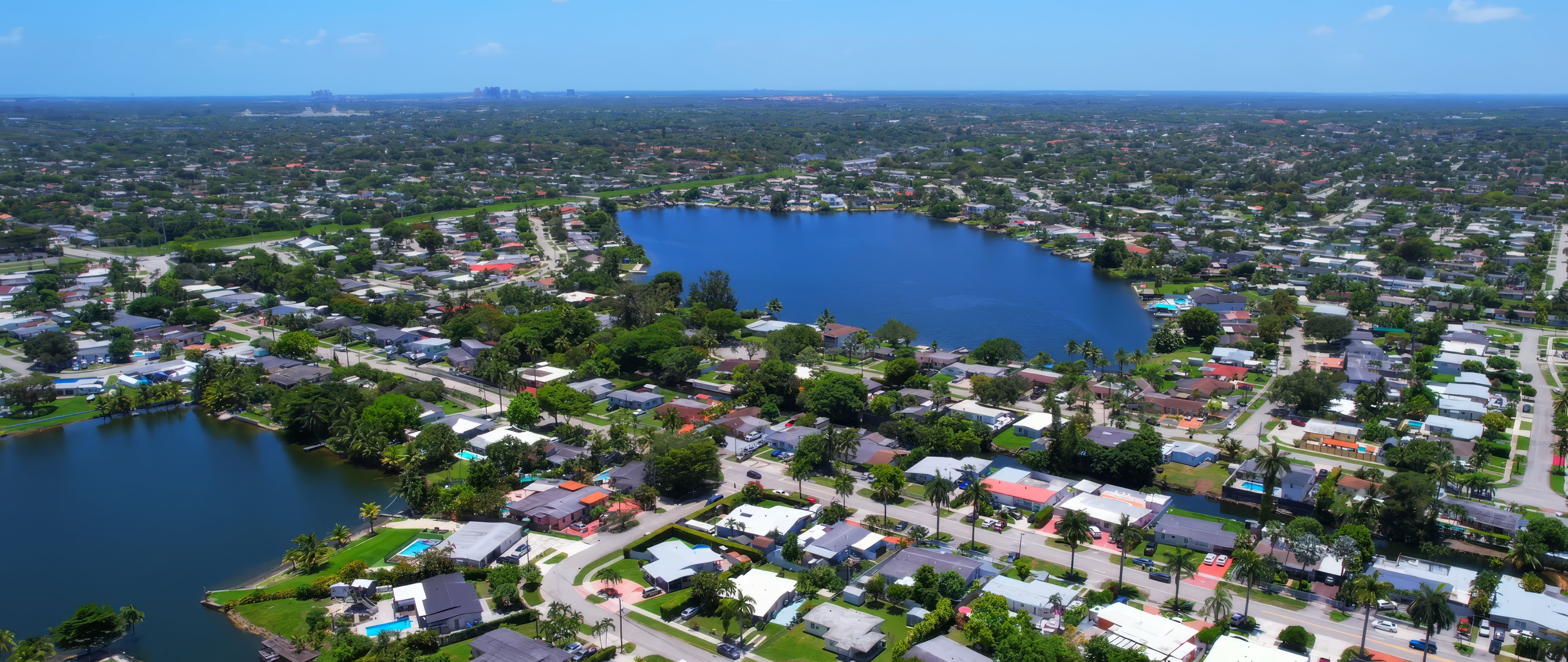
Westwood Lakes, Miami, Florida - EVERYTHING You Want to Know
Get comfortable, kick back, and grab your favorite snack. We're taking you on an easy...
.png)
The Ultimate Guide to Miami-Dade's Top 25 Gated Communities for Single-Family Homes
Discover Miami's top gated communities in this essential guide for luxury home buyers...


Miami's BEST Restaurants in EVERY Neighborhood
Check out the absolute BEST restaurants in every neighborhood of Miami, including the best...
Selling Your Home?
Who are we?
We are the ALL IN Miami Group out of Miami.
We are Colombian, Filipino, Cuban, German, Japanese, French, Indian, Syrian, and American.
We are Christian, Hindu, and Jewish.
We are many, but we are one.
We sell luxury homes in Miami, Florida.
Although some of our clients are celebrities, athletes, and people you read about online, we also help young adults find their first place to rent when they are ready to live on their own.
First-time buyers?
All the time!
No matter what your situation or price range is, we feel truly blessed and honored to play such a big part in your life.