



What Daily Life Looks Like in West Little River

Amit Bhuta
I use non-traditional marketing to inspire the most motivated buyers to pay the max for Miami luxury homes...
I use non-traditional marketing to inspire the most motivated buyers to pay the max for Miami luxury homes...
There's a lot of talk about what's coming to West Little River, especially with new housing projects taking shape around the neighborhood.
What doesn't get enough attention is the community of families, longtime businesses, and everyday routines that have shaped its residential streets and busy commercial roads for years.
In Northside, people pick up groceries, catch the Metrorail, and head to work while local shops prepare for another day of customers.
On NW 22nd Avenue, Shaker's Conch House keeps the neighborhood's Caribbean food traditions going, serving seafood favorites that have brought customers back for decades.
Even the local school day has its own surprises, with students at Turner Tech learning veterinary skills and caring for farm animals, something you probably wouldn't expect in the middle of northwest Miami.
These familiar places are part of what makes West Little River home, which is why the new developments bring both opportunities and questions about how the area might change.
After all, there's plenty to look forward to, but these residents still have businesses to run, places to be, and their own lives to live.
Here’s what a typical day is like in West Little River.
The Barnyard-Lab Student
.png?w=1140)
Early Morning — The Work Gloves Aren't for Construction
Most students check whether they've packed their notebooks, but this 17-year-old Haitian-American student also needs to remember her animal-care gloves.
She's enrolled in the Veterinary Science and Agribusiness Technology Academy at William H. Turner Technical Arts High School, where learning can involve livestock, veterinary equipment, and a fair amount of hands-on work.
Her morning starts at her family's West Little River house, where she checks her school materials and reviews the tasks she might be assigned for the day.
The neighborhood's modest houses and familiar residential streets are part of her usual trip to Turner Tech on NW 19th Avenue.
Unlike students who spend most of their school day behind a desk, she has opportunities to work with animals and explore careers in veterinary medicine and agriculture.
She's especially interested in becoming a veterinary technician, but she's discovering that caring for animals involves a lot more cleaning and preparation than playing with them.
With her gloves, notebooks, and supplies packed, she's ready for another school day that might include a few unexpected noises from the animal enclosures.
 (2).png?w=1140)
Late Morning — On the Animal-Care Roster
Goats, chickens, rabbits, and other animals aren't what most people expect to find at a high school in northwest Miami.
But Turner Tech's Veterinary Science and Agribusiness Technology Academy gives students opportunities to learn livestock care and management through supervised activities.
Today, she's helping check the feeding areas and following instructions for caring for the animals assigned to her group.
She's learning to focus on details like feeding schedules, cleanliness, and changes in animal behavior, which are important in keeping livestock healthy.
Working with animals also means accepting that they don't always cooperate, especially when it's time to clean their enclosures.
Still, she enjoys the practical experience because it helps her understand the responsibilities that come with an animal-care career.
The program also prepares students for opportunities such as livestock competitions at the Miami-Dade County Youth Fair, where their work can extend beyond the classroom.
For her, these activities are making a possible career feel much closer than something she only reads about in a textbook.
 (1).png?w=1140)
Afternoon — From Hooves to Health Charts
The animals have been cared for, but there's still plenty to learn about what happens when one needs medical attention.
Her next academy lesson focuses on veterinary-assisting skills, including animal anatomy, health observations, and safe handling techniques.
Using classroom materials and practice equipment, she works through an exercise on recording an animal's condition and recognizing information that a veterinary professional might need.
She checks her notes carefully, knowing accurate records are as important as being comfortable around animals.
Turner Tech's veterinary-assisting pathway prepares students for the Certified Veterinary Assistant examination, giving them a chance to develop useful career skills before graduating.
She's beginning to understand how the practical work she enjoys connects to the science behind animal care.
The lesson also helps her appreciate why veterinary professionals need patience, especially when their patients can't explain what's bothering them.
By the end of class, she has a few more terms to study and a better idea of what she wants to pursue after high school.
 (3).png?w=1140)
Evening — An Animal-Care Story on the Mic
Her latest school experience makes for an interesting podcast episode, and North Central Branch Library has offered a program that teaches teenagers how to create one.
On a scheduled Introduction to Podcasting 101 workshop day, she heads to the library on NW 27th Avenue to learn how to plan, record, and edit audio.
The workshop lets participants explore storytelling through sound, which is different from the science-based activities that make up much of her school day.
She decides to use her animal-care experiences as the subject of a short recording, explaining what students do at Turner Tech's agricultural facilities.
Working with a microphone and recording equipment takes practice, especially when she hears her own voice for the first time.
She tries another take, this time focusing on the details that might surprise listeners who have never heard of livestock training at an urban Miami school.
By the end of the session, she's learned a little about audio production and how to explain her interests to people outside her academy.
It's a reminder that the skills she's developing in West Little River don't have to lead to just one career path.
The Conch-Window Shift Lead
 (6).png?w=1140)
Early Morning — Before the Fryer, a Grocery Basket
A grocery list comes before the restaurant orders for this 47-year-old Bahamian-American seafood worker.
He has a shift ahead at Shaker's Conch House, but first he's stopping at Presidente Supermarket on NW 27th Avenue to pick up a few things for home.
The store carries everyday groceries and familiar Latin American and Caribbean ingredients, making it a practical stop for residents planning meals around different family traditions.
He compares prices on a few staples, checks the produce section, and makes sure he hasn't forgotten anything that would require another trip later.
Cooking for a living doesn't mean he gets a break from grocery shopping, although he'd probably prefer not to spend his morning thinking about two different menus.
He keeps the errand short because the restaurant opens for lunch, and he has plenty of preparation to finish before customers begin placing orders.
Once he takes care of groceries, he heads toward NW 22nd Avenue, where another workday is about to begin at a business with decades of neighborhood history.
 (5).png?w=1140)
Late Morning — The Conch Can't Be Rushed
Preparing conch takes more work than most customers see when they open their takeout containers.
At Shaker's Conch House, he joins the kitchen team in getting the seafood and side dishes ready for the lunch crowd.
The family-owned restaurant has served customers since 1989, building a reputation for fried conch, fresh fish dinners, and other dishes with Bahamian influences.
He helps prepare the conch, paying attention to its texture and ensuring each portion is ready to cook.
Experience matters when working with seafood, especially when the goal is to serve something tender rather than a meal that gives customers' jaws an unexpected workout.
The kitchen also has to prep fish, shrimp, and sides, so everyone needs to keep track of what should be ready first.
For him, this work is part of a food tradition that has found a lasting place in West Little River.
He knows customers come for familiar flavors, and keeping those dishes consistent is why the restaurant has remained part of the local food scene.
 (4).png?w=1140)
Afternoon — The Takeout Counter Sets the Pace
A customer wants fried conch with macaroni and cheese, while another order calls for fish and a different set of sides.
The kitchen at Shaker's Conch House has to keep these requests straight, especially when several orders arrive at once.
The restaurant focuses on takeout, so much of the work involves preparing meals, packing containers, and ensuring the right food reaches the right customer.
He checks an order before passing it to the counter, where another employee is helping customers collect their meals.
Some customers already know exactly what they want, while others take a little longer to choose from the menu.
Some regulars who have been visiting the restaurant for years don't need much convincing to order their favorites, though.
He appreciates those familiar faces, particularly when the lunch rush settles down enough for a quick conversation.
That said, he always has another order to prepare, and the afternoon continues with the steady movement of a small neighborhood seafood business.
 (7).png?w=1140)
Evening — Handball Is Off the Clock
His restaurant shift is done, and the only thing he needs to catch now is a handball.
He's meeting a friend at Arcola Lakes Park on NW 83rd Street, where the lighted handball and racquetball courts give residents a place to play after work.
The park also has tennis courts and other recreational facilities, but he prefers handball's quick movements and simple rules.
He starts with a few easy rallies before the game becomes more competitive, especially when his friend begins aiming shots toward the corners of the wall.
After spending most of the day standing in a kitchen, running around a court might sound like an unusual way to relax.
But he enjoys the exercise, and the game gives him something to concentrate on that has nothing to do with seafood orders.
There's also time to catch up on work, family news, and whatever else has happened since they last played, in between games.
He heads home pleasantly tired, knowing the next workday will bring another round of customers and plenty more time on his feet.
The Northside Street Chronicler
 (10).png?w=1140)
Early Morning — Portraits on the Front Steps
A good neighborhood portrait doesn't always need a fancy background, especially when the front porch already tells part of the story.
This 36-year-old Afro-Cuban photographer is working on a personal project documenting the people and places of West Little River, where she also rents a home.
Her morning appointment is with a longtime resident who has agreed to be photographed outside their home.
She takes a few pictures near the front steps, using the porch chairs, potted plants, and familiar surroundings to give the portrait some context.
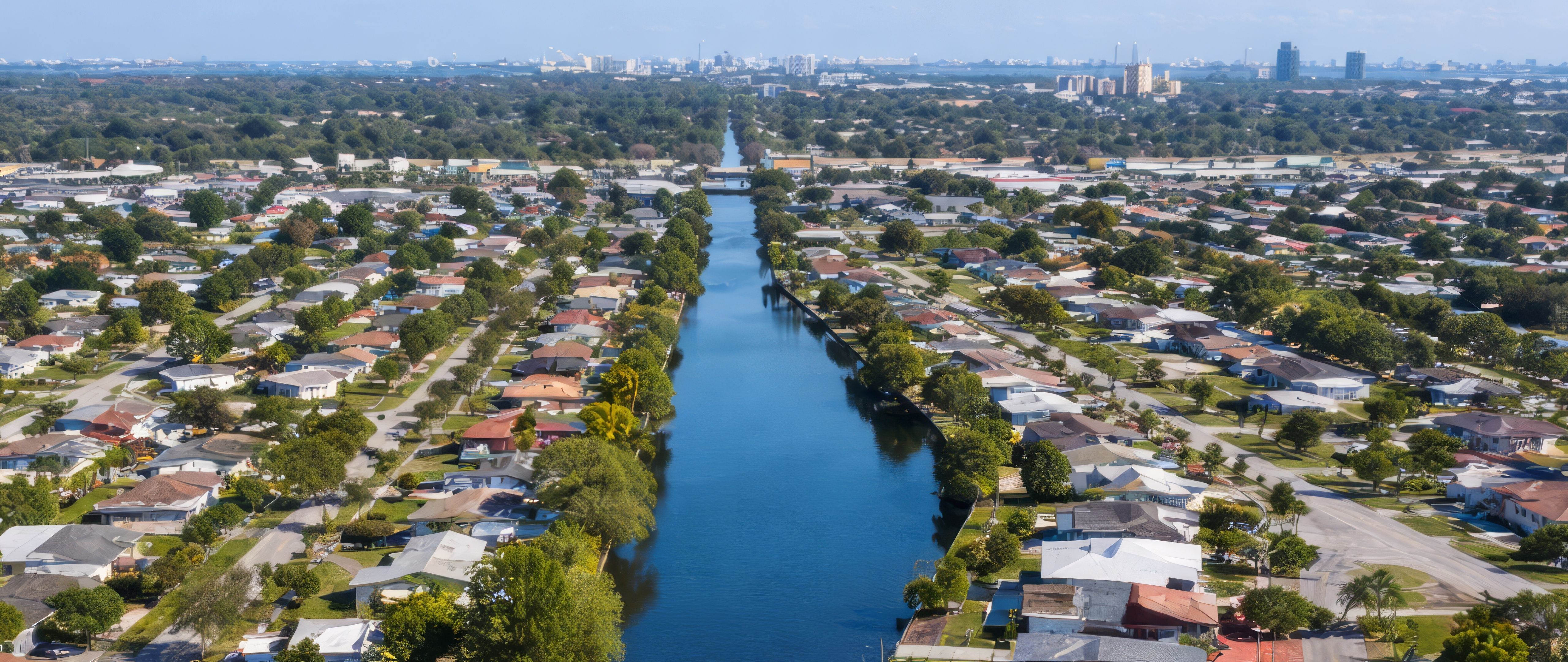
West Little River's residential streets have modest single-family homes, older properties, and homes that have been maintained or changed over the years.
She enjoys noticing those differences, from the way residents arrange their yards to the small improvements they've made to their homes.
During the session, she asks her subject about the neighborhood and how the street has changed since they first moved there.
The conversation gives her an ideal background for the photographs, reminding her that a house can look much the same from the outside while the people living there have experienced decades of change.
 (8).png?w=1140)
Late Morning — Northside Is Not Just a Memory
Northside Shopping Centre has been part of the area's commercial life for decades, and it remains an important stop for people running everyday errands.
She heads to the shopping center on NW 27th Avenue to document its current businesses and the customers who continue to use them.
Although the property has faced vacancies and redevelopment discussions, stores such as Dollar Tree and other retailers continue to operate there.
She snaps photos of storefronts, shoppers carrying bags, and the ordinary activity around the shopping center.
These aren't the dramatic images people usually associate with neighborhood redevelopment, but they're important to her project.
A commercial property can have empty spaces and still be important to the people who rely on its remaining stores.
She also photographs some of the older building details to help explain how the center has changed over time.
For her, the goal isn't to pretend Northside looks exactly as it once did, but to show that its present-day businesses and customers are part of the story, too.
 (9).png?w=1140)
Afternoon — A Train Platform and a Building Plan
Northside Metrorail Station gives her another perspective on how people move through West Little River.
Located near NW 79th Street and NW 32nd Avenue, the station connects the area to Miami-Dade's rail network and nearby bus services.
She spends some time taking photos of the elevated tracks, station entrances, and passengers arriving or leaving in the afternoon.
The surrounding streets are also attracting development interest, including plans for additional housing and commercial space near the station.
One proposal, Northside Town Station II, calls for hundreds of apartments in multiple phases, although those plans shouldn't be confused with buildings already completed.
She reviews the development information while comparing it with the streets and properties she can see today.
Having more housing near public transportation makes sense, but she's also interested in how those changes might affect nearby businesses and residents.
Her photos capture the area before some of those proposed changes take place, giving her a record of a familiar transportation hub at an important moment in its development.
 (11).png?w=1140)
Evening — The Photo That Needs Context
The photos from her afternoon are still on her camera, along with several shots taken near the Residences at Palm Court construction site on NW 95th Street.
The mixed-income housing project broke ground in December 2025 and is planned to include 316 apartments for families and older residents.
It replaces older public housing, making it one of the more significant residential changes in West Little River.
At her home workspace, she begins sorting the photos and writing captions that explain what each location represents.
She wants readers to understand the difference between existing homes, active businesses, construction projects, and developments that are still awaiting approval.
It's especially important when discussing housing, since people may have very different opinions about the changes happening around them.
She compares her images with the notes from her morning portrait session, paying attention to what residents have said about the neighborhood they know.
The finished project won't answer every question about West Little River's future, but it will preserve a record of the community as it exists during this period of change.
For her, that's enough reason to keep photographing the streets she calls home.
THE BIGGER PICTURE OF LIFE IN WEST LITTLE RIVER
What do these three different routines tell us about West Little River?
New housing can change how West Little River looks, but it won't be the only thing that shapes life here.
For residents who have spent years building their homes, careers, and businesses in the area, progress also means being able to afford to live in this neighborhood.
That matters in a community where longtime homeowners and renters share established residential streets, often with very different financial circumstances.
The neighborhood's Black, Caribbean, and Latin American influences have helped shape its businesses and traditions, giving West Little River an identity that goes well beyond its development plans.
Local schools, shops, and public facilities are also important because they provide services and opportunities people already use.
The nearby Northside Metrorail Station is an advantage for residents who depend on public transportation, but getting around the wider neighborhood can still be difficult without a car.
Meanwhile, older shopping centers and independent businesses face the challenge of serving existing customers while adapting to changes in the surrounding area.
New investment could improve housing, commercial spaces, and neighborhood facilities, particularly in places that have needed attention for years.
But larger developments also raise reasonable concerns about affordability, rising costs, and whether residents will benefit from those improvements today.
You can welcome better housing and services while still worrying about what might happen to familiar streets and businesses.
And that's an important distinction for West Little River, where the community's history isn't confined to old photos or stories about what used to be there.
It's present in the people who work, study, shop, and build their lives every day, often without much attention from anyone outside the neighborhood.
What comes next could bring meaningful improvements, but those changes will matter most if existing residents have a place in them.
West Little River already has a community worth investing in, and its future should offer that community more opportunities to thrive.
West Little River, Miami, Florida - EVERYTHING You Want to Know
Grab your go-to snack, cue up a playlist that fits the vibe, and get ready to explore ever...

The Ultimate Guide to Miami-Dade's Top 25 Gated Communities for Single-Family Homes
Discover Miami's top gated communities in this essential guide for luxury home buyers...


Miami's BEST Restaurants in EVERY Neighborhood
Check out the absolute BEST restaurants in every neighborhood of Miami, including the best...
Selling Your Home?
Who are we?
We are the ALL IN Miami Group out of Miami.
We are Colombian, Filipino, Cuban, German, Japanese, French, Indian, Syrian, and American.
We are Christian, Hindu, and Jewish.
We are many, but we are one.
We sell luxury homes in Miami, Florida.
Although some of our clients are celebrities, athletes, and people you read about online, we also help young adults find their first place to rent when they are ready to live on their own.
First-time buyers?
All the time!
No matter what your situation or price range is, we feel truly blessed and honored to play such a big part in your life.