



What Daily Life Looks Like in Westchester

Amit Bhuta
I use non-traditional marketing to inspire the most motivated buyers to pay the max for Miami luxury homes...
I use non-traditional marketing to inspire the most motivated buyers to pay the max for Miami luxury homes...
Most neighborhoods can't say their local university used to be an airport, but Westchester can.
But while the planes are long gone, the community around FIU, which occupies the former Tamiami Airport site, has kept much of its original character.
Along Coral Way, older shopping plazas have welcomed generations of customers, with new storefront signs slowly replacing names that longtime residents still remember.
A few streets away, modest family homes turn spare rooms into workspaces, and relatives with very different schedules share dining tables.
FIU brings students, museum exhibits, and campus activities into the picture, adding another dimension to this largely residential neighborhood.
Oh, and there's plenty to do beyond work and school, too, from bowling leagues at Bird Bowl to tabletop gaming sessions at the public library, where a few dice can keep adults entertained for hours.
Yes, it's true — Westchester has changed quite a bit over the years, but its familiar streets are still full of people finding new ways to work, connect, and make the most of their community.
Here’s what a typical day is like in Westchester.
The Bird Road Window-Letterer
 (2).png?w=1140)
Early Morning — Before the Vinyl Hits the Glass
The first thing she checks isn't her inbox but the spelling on a new storefront sign.
A single wrong letter could mean cutting the whole thing again, so this 54-year-old Cuban-American signmaker takes her time arranging vinyl lettering in the spare room she's turned into a workspace.
Her cutting machine, rolls of colored vinyl, and half-finished orders occupy shelves that once held family belongings.
Running a business from her Westchester home saves her the cost of renting a workshop, although it also means work can spill into the rest of the house.
Outside, the neighborhood's modest single-story homes and driveways are familiar sights as she loads her tools into the car.
She's got a storefront waiting on Coral Way, and the measurements need to be right before she makes the first cut.
 (1).png?w=1140)
Late Morning — The Plaza Has a New Name
A shop at Westchester Shopping Center needs new window lettering, and she's the one installing it.
The shopping plaza has served the area since 1959, but its businesses have changed considerably over the years.
While she smooths the vinyl against the glass, the shop owner comes outside to check the placement and asks whether one line can move a little higher.
She's heard that request plenty of times, which is why she never packs her tools away until everyone is happy.
Working along Coral Way also means seeing the neighborhood change one business at a time, from older storefronts getting new signs to tenants setting up shop for the first time.
Some of her clients have been in Westchester for decades, while others are still figuring out where everything goes.
She enjoys working with both, especially when the newer owners appreciate a little advice from someone who knows the area.
 (3).png?w=1140)
Afternoon — Two Menus, One Lunch Break
Tasca de España on Coral Way asks her a unique lunch question: Spanish or Indian food?
The restaurant serves both, so she can order garlic shrimp one visit and butter chicken the next without changing her usual lunch spot.
Today, she's in the mood for something from the Indian menu, and a proper sit-down meal sounds better than eating in her car.
Her phone is still within reach, though, because running her own business means customers can call even when she's halfway through lunch.
She reviews an afternoon order while waiting for the check, then makes a quick note about a color adjustment another client requested.
It's one of the conveniences of working around Westchester's commercial streets, where restaurants and everyday services are close enough to fit into a busy workday.
.png?w=1140)
Evening — Sixty Lanes and One Unforgiving Spare
She replaces her work polo with a bowling shirt, and the vinyl measurements can wait until tomorrow.
Bird Bowl on SW 40th Street has been around since 1956, and its bowling leagues give regulars a reason to return beyond an occasional birthday party.
She joins her teammates for their scheduled league night, checks the scoreboard, and prepares for her first turn.
After a day of taking precise measurements, she finds that getting a bowling ball to travel exactly where she wants is a different challenge.
A difficult spare earns a few comments from her teammates, although she's quick to point out their mistakes when it's their turn.
The competition is friendly, but everyone is still keeping score.
For someone who spends much of her workday dealing with clients alone, a regular group to see and play with every week is a welcome change.
By the time she heads home, she's already thinking about her next project, though her teammates would probably prefer that she concentrate on improving her spare conversion rate.
The Two-Shift Campus Neighbor
 (8).png?w=1140)
Early Morning — The House Has Three Schedules
The kitchen table is already occupied by a lunch bag, a set of car keys, and the museum notes she printed the night before.
At 25, this Venezuelan-American FIU student shares her Westchester home with relatives whose work schedules rarely match her university commitments.
Someone needs the car before noon, another person is preparing breakfast, and she's trying to remember whether her museum assignment is due today or tomorrow.
Living with family has its advantages since she's balancing college expenses and a career in arts education.
However, it also requires some cooperation, especially when several adults need the same household spaces at different hours.
Fortunately, FIU's Modesto A. Maidique Campus is nearby, so she doesn't have to plan her entire morning around a long commute.
Once everyone has sorted out the car situation, she heads out with her notes, laptop, and canvas bag.
 (10).png?w=1140)
Late Morning — Explaining Art Without Museum Voice
A museum tour works better when visitors are comfortable asking questions, something she's learning through her internship at FIU's Patricia & Phillip Frost Art Museum.
The museum's Rubin-Ladd internship gives students experience preparing educational activities and guiding visitors through exhibitions.
Today, she's helping a small group examine an artwork, encouraging them to describe what catches their attention before explaining its background.
It's a different experience from sitting through lectures, especially when someone notices a detail she hadn't considered herself.
She also appreciates the museum's Latin American and Caribbean art collection, which lets her explore subjects connected to the cultures she grew up around.
Since the Frost Art Museum offers free admission, students and community visitors can explore its galleries without buying tickets.
She hopes to work in museum education after graduation, and every tour gives her another chance to practice speaking to people who don't necessarily know much about art.
 (9).png?w=1140)
Afternoon — Eight Pounds of Breathing Room
FIU's Graham Center has a Student Food Pantry that she frequents weekly.
Located in Room GC 319, it allows currently enrolled students to collect up to eight pounds of groceries during a weekly visit.
She brings her student ID and chooses a few pantry staples, checking what she already has at home before adding anything to her bag.
The pantry carries items such as canned goods, grains, and other nonperishable food, making it useful for students trying to manage their expenses.
They don't have to prove financial hardship, so the service is accessible without any paperwork.
She knows that living with family doesn't eliminate the cost of studying, transportation, and everyday necessities.
A few groceries won't cover every expense, but they'll help with meals during another busy week.
 (11).png?w=1140)
Evening — The Dining Table Is Still Her Desk
Dinner is almost ready when she opens her laptop at the same table everyone uses for breakfast.
Her museum notes are spread beside a stack of readings, and she's trying to finish an assignment before the family needs the space.
A relative asks about her day, which turns into a conversation about the exhibition she's been working on and what visitors thought of it.
The discussion continues as plates are brought out, and she moves her things aside so everyone can eat together.
After dinner, she takes out her laptop again, along with the notes she promised herself she'd finish earlier.
There's no dedicated study room, and interruptions are part of sharing a home with several adults.
Still, having relatives nearby and a university within the neighborhood gives her a practical way to pursue her education while managing living expenses.
She'd appreciate a little more privacy, but for now, the dining table gets the job done.
The Saturday Campaign Designer
 (4).png?w=1140)
Early Morning — Clients First, Dragons Later
His client has requested another adjustment to a design, which means this 36-year-old Salvadoran-American freelancer has a little more work to finish before his Saturday plans.
His home studio is packed with drawing supplies, graphic novels, and artwork he's collected over the years.
A drawing tablet takes up most of the desk, while several character sketches and handwritten game notes fill the rest of the space.
He spends the morning refining a commissioned illustration, checking the colors, and preparing the files for delivery.
After he sends the project, he finally works on his tabletop role-playing character.
He enjoys having a creative job, but there's a difference between designing something for a customer and drawing whatever he wants.
His character sheet needs a few changes before the afternoon game, and unlike his client, the people he'll be playing with won't mind if his imaginary adventurer has an unnecessarily elaborate outfit.
 (5).png?w=1140)
Late Morning/Noon — The Card Sleeve Exchange
Pro-Play Games on SW 107th Avenue opens at noon, giving him enough time for a quick visit before his afternoon commitment.
The store specializes in trading cards, collectible products, gaming accessories, and organized tournaments.
He's looking for a fresh pack of card sleeves for his collection, but the selection of individual cards gives him another reason to browse.
A conversation with another customer turns into a discussion about deck-building strategies and which cards are worth keeping.
He enjoys the artwork as much as the games themselves, often shifting his focus to the illustrations and design choices other collectors might overlook.
It's one reason he enjoys having a specialty hobby shop close to home instead of relying entirely on online orders.
Eventually, he checks the time and remembers that he has another game to attend, this time involving character sheets rather than trading cards.
 (7).png?w=1140)
Afternoon — There's a Dungeon Master on Coral Way
A set of colorful dice, several character sheets, and a hand-drawn map cover a meeting table at Westchester Regional Library.
He's attending a scheduled Saturday gathering of The Brimstone Society, a tabletop role-playing club that welcomes players interested in games such as Dungeons & Dragons and Daggerheart.
Today's adventure involves a fictional problem the group is trying to solve together, with each player explaining what their character wants to do.
His freelance design background comes in handy when he draws characters or helps visualize the setting, although the other players have plenty of their own ideas.
The group spends time discussing possible decisions, comparing character abilities, and occasionally laughing when a perfectly reasonable plan goes wrong.
He enjoys the social side as much as the game because the library offers a place where people with the same interests can meet without having to organize everything themselves.
Westchester's public library may look like an ordinary neighborhood branch from the outside, but its community programs offer more than books and quiet reading areas.
 (6).png?w=1140)
Evening — Pupusas After the Final Roll
The game is over, but the discussion continues over pupusas at El Atlakat on Bird Road.
He meets a couple of fellow players at the Salvadoran restaurant, where the menu includes familiar dishes such as pupusas served with curtido and salsa.
Having grown up with Salvadoran food, he appreciates finding those familiar flavors close to home, particularly when he's spending the evening with friends.
They talk about the afternoon's game, upcoming plans, new card releases, and whatever projects everyone has been working on.
One friend still thinks their characters made the wrong decision during the adventure, which starts another debate that nobody seems particularly eager to finish.
There's time for another pupusa before they call it a night.
For a freelancer who spends many hours working independently, these gatherings are a regular chance to meet people and enjoy hobbies that have nothing to do with deadlines or client revisions.
He heads home with a few ideas for his next character drawing and, thankfully, no more design changes waiting for him tonight.
THE BIGGER PICTURE OF LIFE IN WESTCHESTER
What do these three different routines tell us about Westchester?
Westchester has spent decades becoming a place where people can build their lives without reinventing everything around them.
Its established homes, familiar commercial streets, and community institutions provide a sense of continuity that faster-changing parts of Miami lack.
They find comfort in knowing where to find everyday services, especially when family, work, and personal commitments already demand so much attention.
However, this convenience comes with a trade-off: Westchester's spread-out layout and busy commercial roads make having a car almost a requirement.
Its residential character also creates different experiences for different generations, with longtime homeowners enjoying roots that younger residents may struggle to establish for themselves.
Sharing a family home can make education and early careers more affordable, although it often means giving up some privacy and independence.
For small-business owners, the neighborhood's established customer base provides opportunities, but keeping up with new competitors and changing shopping habits is part of the work.
FIU adds another interesting dimension, bringing students, cultural programs, and educational opportunities into an area known primarily for its suburban homes.
The neighborhood's strong Hispanic identity is equally significant, but its residents come from different countries and generations with their own traditions, ambitions, and experiences.
That diversity becomes more meaningful when people can gather around common interests rather than only within their own families or cultural circles.
Public institutions such as the library help make those connections possible, especially for residents who might not otherwise have access to affordable activities or meeting spaces.
Westchester may not offer the walkable entertainment districts or waterfront scenery associated with other Miami neighborhoods, but it has developed its own network of places that residents genuinely use.
Its greatest strength is the opportunity to create a fulfilling routine without needing every part of life to happen somewhere new or exciting.
All that makes Westchester a community shaped by generations of change, where people can still find room to build something of their own.
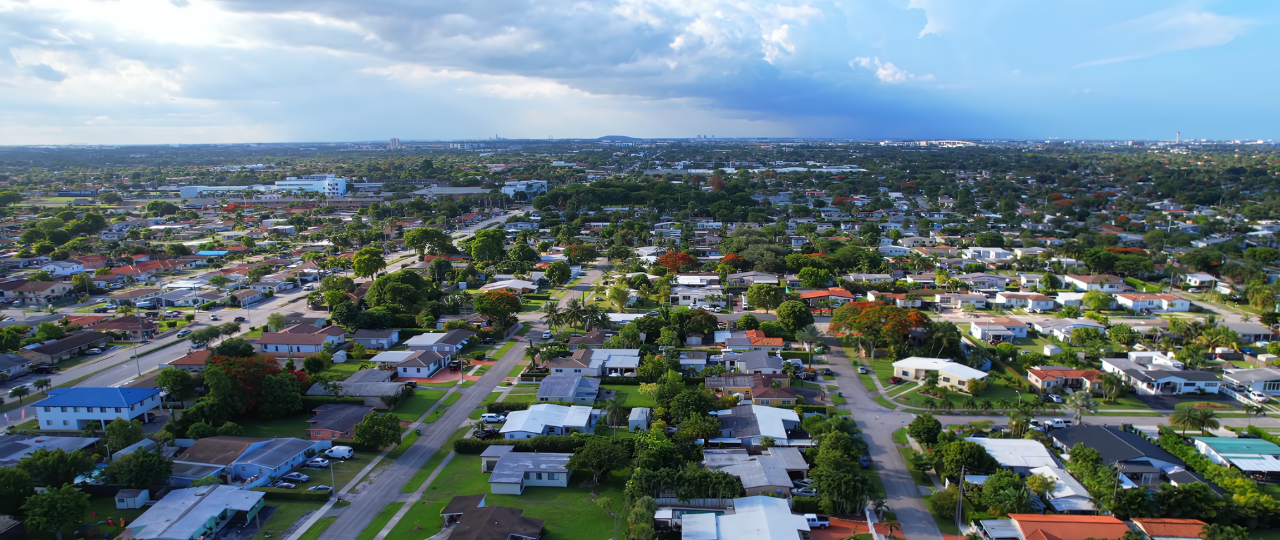
Westchester, Miami, Florida - EVERYTHING You Want to Know
Let's venture across the BEST of Westchester, stylin' and thriving! By the end o...
The Ultimate Guide to Miami-Dade's Top 25 Gated Communities for Single-Family Homes
Discover Miami's top gated communities in this essential guide for luxury home buyers...


Miami's BEST Restaurants in EVERY Neighborhood
Check out the absolute BEST restaurants in every neighborhood of Miami, including the best...
Selling Your Home?
Who are we?
We are the ALL IN Miami Group out of Miami.
We are Colombian, Filipino, Cuban, German, Japanese, French, Indian, Syrian, and American.
We are Christian, Hindu, and Jewish.
We are many, but we are one.
We sell luxury homes in Miami, Florida.
Although some of our clients are celebrities, athletes, and people you read about online, we also help young adults find their first place to rent when they are ready to live on their own.
First-time buyers?
All the time!
No matter what your situation or price range is, we feel truly blessed and honored to play such a big part in your life.