



What Nobody Tells You About Living in The Redlands

Amit Bhuta
I use non-traditional marketing to inspire the most motivated buyers to pay the max for Miami luxury homes...
I use non-traditional marketing to inspire the most motivated buyers to pay the max for Miami luxury homes...
Ever wonder why everyone who visits The Redlands leaves saying, "I could totally learn to love farm life"?
They're not wrong — for about a weekend.
The wide-open land, the working farms, the total absence of a Starbucks on every corner — it all makes The Redlands feel like an escape from the rest of Miami-Dade's chaos.
Heck, even the air smells different, like dirt is a guest of honor in this party.
But "peaceful" and "practical" don't always get along, and this neighborhood makes sure you find out the hard way.
And soon, you’ll realize that what looks like a slower life can turn into a longer one, commute-wise and otherwise.
The locals will just smile and let you discover for yourself.
Here are five things nobody tells you about living in The Redlands.
.png?w=1140)
1) Five Acres Sounds Great Until You're the One Mowing It
A five-acre property can make an ordinary backyard look like a decorative coaster.
The listing photos show fruit trees, open skies, and enough room to avoid learning your neighbor’s entire morning routine through a shared wall.
The thing is, they rarely show the irrigation checks, fence repairs, fallen branches, invasive plants, pest control, equipment storage, and endless outdoor projects waiting beyond the camera frame.
Sure, you may not mow every inch, but you could be managing groves, shade houses, drainage areas, outbuildings, livestock space, or several hundred trees that do not care about your plans this weekend.
Many Redlands properties fall under agricultural zoning that allows farming and single-family residences on five-acre lots, with rules governing lot coverage, setbacks, structures, and permitted uses.
That freedom is valuable, but it is not unlimited freedom with a farmhouse filter placed over it.
Before adding a guesthouse, dividing land, opening a business, storing equipment, or converting part of the property, owners need to understand what the zoning permits rather than relying on the ancient legal doctrine of “but the previous owner said it was fine.”
The acreage also changes the economics of routine maintenance because every fence line is longer, every landscaping decision is larger, and every neglected corner has enough room to establish its own government.
Privacy is the reward.
Property management is the subscription fee.
 (1).png?w=1140)
2) Rural Bliss Has a Noise Ordinance for a Reason
Silence in the countryside is less a guarantee than a time slot.
One morning may begin with birds and rustling palms, while the next may be with farm machinery, nursery trucks, workers unloading equipment, or a rooster who has rejected the concept of subtlety.
Those sounds belong to an agricultural community doing agricultural work, not to a meditation app with especially convincing sound effects.
Then there is the newer layer of rural activity created by event venues and agritourism businesses.
Miami-Dade allows qualifying agricultural properties to operate rural event venues, with attendance limits reaching 150 guests on sites under ten acres and 300 guests on larger properties, and permitted event hours extending until 11 p.m.
The county’s 2024 agritourism ordinance added noise regulations, while the latest Redland planning report records repeated community concerns about event venues, traffic, parking, crowds, alcohol, light pollution, and businesses that disturb the area’s quiet character.
Not every home sits beside a wedding venue, packing house, nursery, or particularly ambitious petting zoo.
However, buyers should research nearby land uses with the same enthusiasm they bring to inspecting its space potential.
A peaceful road at 10 a.m. on a Tuesday may have a completely different vibe during harvest activity, wedding season, or a popular farm event.
Country quiet has competitors, and some of them own tractors while others have hired a DJ.
 (2).png?w=1140)
3) Milk Run? That'll Be 40 Minutes and a Tractor Delay
The nearest gallon of milk may look close on a map, but The Redlands measures errands in turns, traffic, farm vehicles, and how deeply your house is tucked into the countryside.
Living in this rural slice generally means building daily life around the car rather than assuming groceries, schools, restaurants, medical appointments, and repair services are conveniently gathered around the next corner.
The open roads can be pleasant when traffic cooperates, which is the transportation equivalent of saying dinner will be quick once everyone agrees on a restaurant.
Krome Avenue provides a major connection through the agricultural area to other South Miami-Dade routes, so it carries residents alongside commercial, agricultural, and regional traffic.
That said, nearby transportation studies have documented rising traffic volumes, high-crash locations, limited roadway capacity, and sections operating at failing service levels, which helps explain why a modest distance can become a scheduling decision.
A tractor, nursery truck, school queue, lane closure, or poorly timed left turn can add several chapters to what was supposed to be a minor errand.
Deliveries and service calls may also require more coordination because a plumber, appliance technician, or takeout driver cannot teleport past the same roads you use.
None of this makes rural living impossible, but forgetting one grocery item will no longer be a quick correction.
It's going to be a sequel.
 (3).png?w=1140)
4) Nobody Warns You That "Off-Grid Adjacent" Means DIY Everything
A house can look charmingly self-sufficient until the well pump, septic system, drainage, and electrical backup plan all request separate budget meetings.
The Redlands is not an off-grid community, but many agricultural properties rely on private wells for water and septic systems for wastewater rather than receiving both services through conventional municipal networks.
That arrangement gives homeowners more direct responsibility for systems that suburban residents may barely think about until a utility bill arrives.
Buyers need to know where the well and septic components are located, when they were last serviced, whether permits and records exist, how many people the systems can support, and what warning signs should never be answered with, “Let us give it another week.”
Water management adds another complication because the county identifies groundwater and rainfall as the primary causes of surface and root-zone flooding in the Redland agricultural area.
A property that looks perfectly dry during a sunny showing can reveal an entirely different résumé after prolonged wet-season rain.
Higher groundwater can also interfere with septic system performance and pose risks to nearby drinking-water wells, turning drainage and wastewater into interconnected concerns rather than two unrelated inspection boxes.
Owners may need pumps, generators, drainage maintenance, water testing, septic service, storm preparation, and contractors who understand rural properties rather than treating them like oversized suburban yards.
Being handy is useful, but having the phone numbers of handier people is better.
Independence is appealing until three essential systems choose the same holiday weekend to stage a coup d'état.
 (4).png?w=1140)
5) Buy Today, Argue About Tomorrow — Welcome to the Redlands Debate Club
Buying into The Redlands means joining a community where even defining The Redlands can begin a lengthy discussion involving maps, boundaries, land-use codes, and several people pointing at the same road for completely different reasons.
A county charrette involving hundreds of participants found no consensus on the area’s precise boundaries, although the groups broadly agreed on preserving a peaceful, rural, agriculture-oriented environment and limiting uses that create excessive noise, crowds, and traffic.
The disagreement becomes sharper when the conversation shifts from what should be protected to how local farms can remain financially viable.
Traditional agriculture needs land and freedom to operate, while agritourism can provide additional income through dining, markets, tours, events, and visitor attractions.
Residents may support those businesses in principle but become considerably less enthusiastic about parking overflow, outdoor lighting, alcohol service, amplified music, and a line of cars stretching past their driveway.
Miami-Dade created the Miami-Redland Agritourism District in 2024 to expand certain agritourism opportunities while placing restrictions on noise and related activities, illustrating how the county is trying to encourage rural business without turning the agricultural area into an entertainment district wearing a straw hat.
At the same time, county policy treats agriculture as a long-term land use and identifies the protection of viable farmland as a planning priority, while recent public discussions continue to warn about development pressure and the gradual loss or conversion of working land.
That leaves homeowners living inside an ongoing negotiation among preservation, housing demand, tourism, commercial activity, property rights, and the basic need for farmers to make money.
One resident sees a charming farm-to-table venue.
Another sees seventy headlights, portable speakers, and a valet stand preparing to become a permanent character in the neighborhood.
The version of The Redlands you buy today may remain recognizably rural, but buyers should not assume its identity is frozen in place.
Every proposed change will probably arrive with a planning document, a public meeting, and at least one microphone that should have been muted five minutes earlier.
WHO GETS THE MOST OUT OF LIVING IN THE REDLANDS?
Those who expect their breathing room to come with real responsibilities
The Redlands fits a life that needs more room than a standard driveway and a fenced patch of grass can provide.
Here, extra land can become an orchard, a workshop, an equestrian setup, a nursery, or simply enough distance to stop hearing the neighbor argue with their blender.
The area gives privacy a physical form through long driveways, thick greenery, wide lots, and homes that do not appear to have been arranged with a ruler.
It also suits a routine that does not depend on cafés, pharmacies, schools, and grocery stores being gathered within a five-minute radius.
The Redlands asks for patience with longer drives, slower roads, outdoor maintenance, and household systems that sometimes require more attention than the house itself.
In return, it offers a version of Miami-Dade where mornings can begin with birds, fruit trees, damp soil, and no elevator stopping on the wrong floor.
When land has a purpose beyond making the listing photos look impressive, this setup will serve its purpose.
Gardening, farming, keeping animals, collecting vehicles, running an agricultural business, or simply protecting personal space all fit naturally into the area.
The Redlands also favors a household that can handle minor inconvenience without treating every tractor delay as a personal attack.
Its best qualities reveal themselves slowly through seasons, routines, and the satisfaction of shaping a property over time.
The Redlands does not merely provide more square footage but room for an entire way of living.
WHO MAY WANT TO KEEP LOOKING?
People who prefer shorter drives and simpler routines
The Redlands can turn a harmless preference for convenience into a weekly argument with geography.
A quick errand may involve a long driveway, several rural roads, Krome Avenue, and a farm vehicle moving at the determined pace of someone with nowhere urgent to be.
The area offers fewer spontaneous shortcuts for forgotten ingredients, late-night cravings, emergency school supplies, or pet care when the dog has eaten something that requires expensive medical attention.
It also places more responsibility on the property, from wells and septic systems to drainage, generators, fencing, landscaping, and storm preparation.
That arrangement can be rewarding because it signals independence, but exhausting when homeownership was supposed to end at changing an air-conditioning filter twice a year.
The peace also deserves a realistic audition because working farms, trucks, animals, event venues, and weekend visitors can all contribute their own soundtrack.
The Redlands is rural, but it is not an empty movie set waiting silently for someone to admire the sunset.
Its roads, businesses, and agricultural operations have stuff to do, and those jobs will not always coordinate with nap schedules or video calls.
A household that needs predictable travel times, nearby medical care, frequent deliveries, dense social options, or minimal property upkeep may find the distance less charming by month three.
The space can also feel isolating when privacy was wanted in theory, but regular access to people, services, and activity was needed in practice.
The Redlands is generous with land, but it does not include complimentary convenience with every acre.
AN HONEST TAKEAWAY
What living in The Redlands really comes down to
The Redlands is one of the few places in Miami-Dade where the horizon can still be more vast than the development plan.
Its appeal comes from land, greenery, privacy, agriculture, and the welcome sense that not every square foot has been assigned a parking space.
That beauty is genuine, but it is tied to work, distance, weather, infrastructure, and an ongoing debate over what the area should become.
The Redlands does not separate the dream from the responsibility because it is part of what keeps the dream from turning into another subdivision.
The groves need tending, the roads need patience, the property needs planning, and the septic system would prefer not to be remembered only during a crisis.
Even the quiet has conditions because farms operate, visitors arrive, weddings happen, and roosters remain famously uninterested in neighborhood diplomacy.
Still, The Redlands offers something increasingly rare: enough space for daily life to have edges, pauses, and a little dirt under its fingernails.
It can make ordinary routines harder while making the larger picture feel more meaningful.
The tradeoff is not between good and bad living but between convenience and control, closeness and privacy, simplicity and self-reliance.
The Redlands works when its complications are accepted as part of its character rather than treated as defects that someone forgot to disclose.
Living in this community means choosing the whole landscape, not only the peaceful portion visible from the porch.
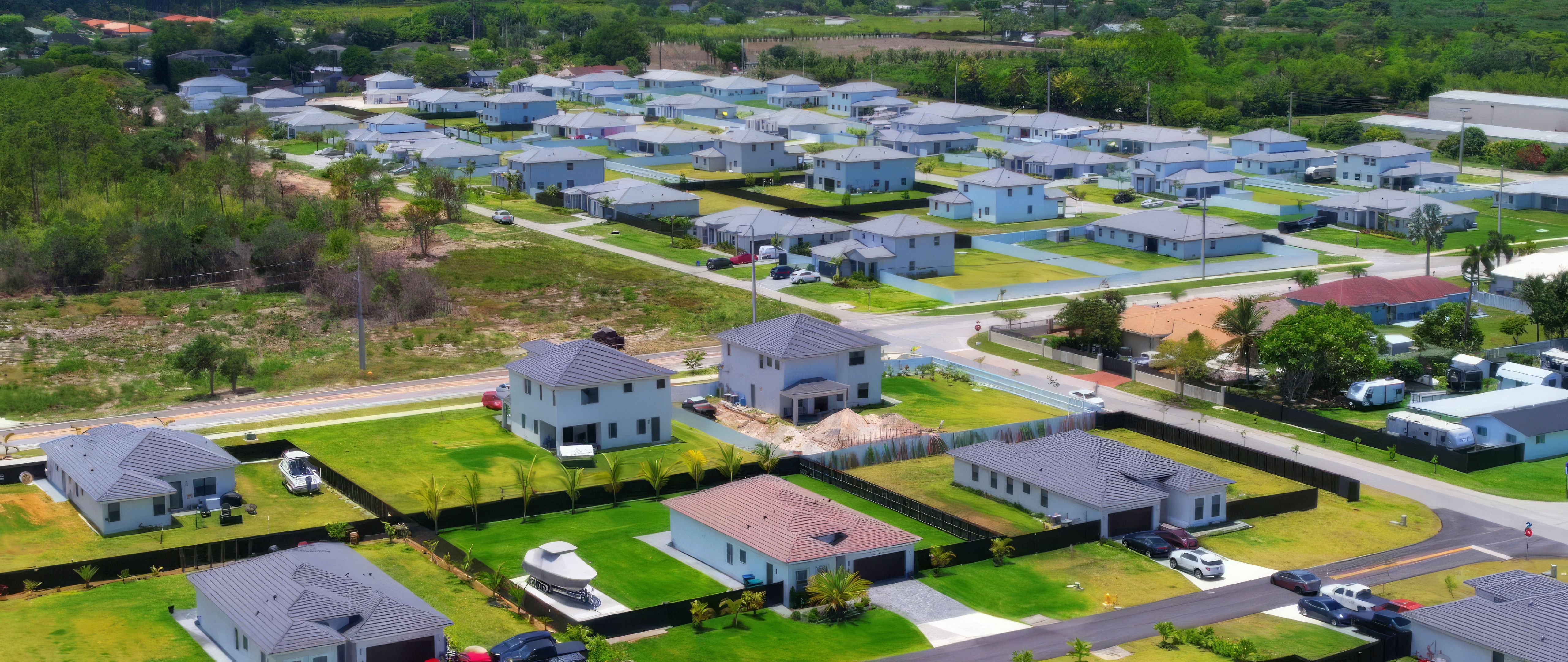-topaz-upscale-4x-3.jpeg)
The Redlands, Miami, Florida - EVERYTHING You Want to Know
Come along as we uncover the heart of The Redlands and all the unexpected gems tucked betw...
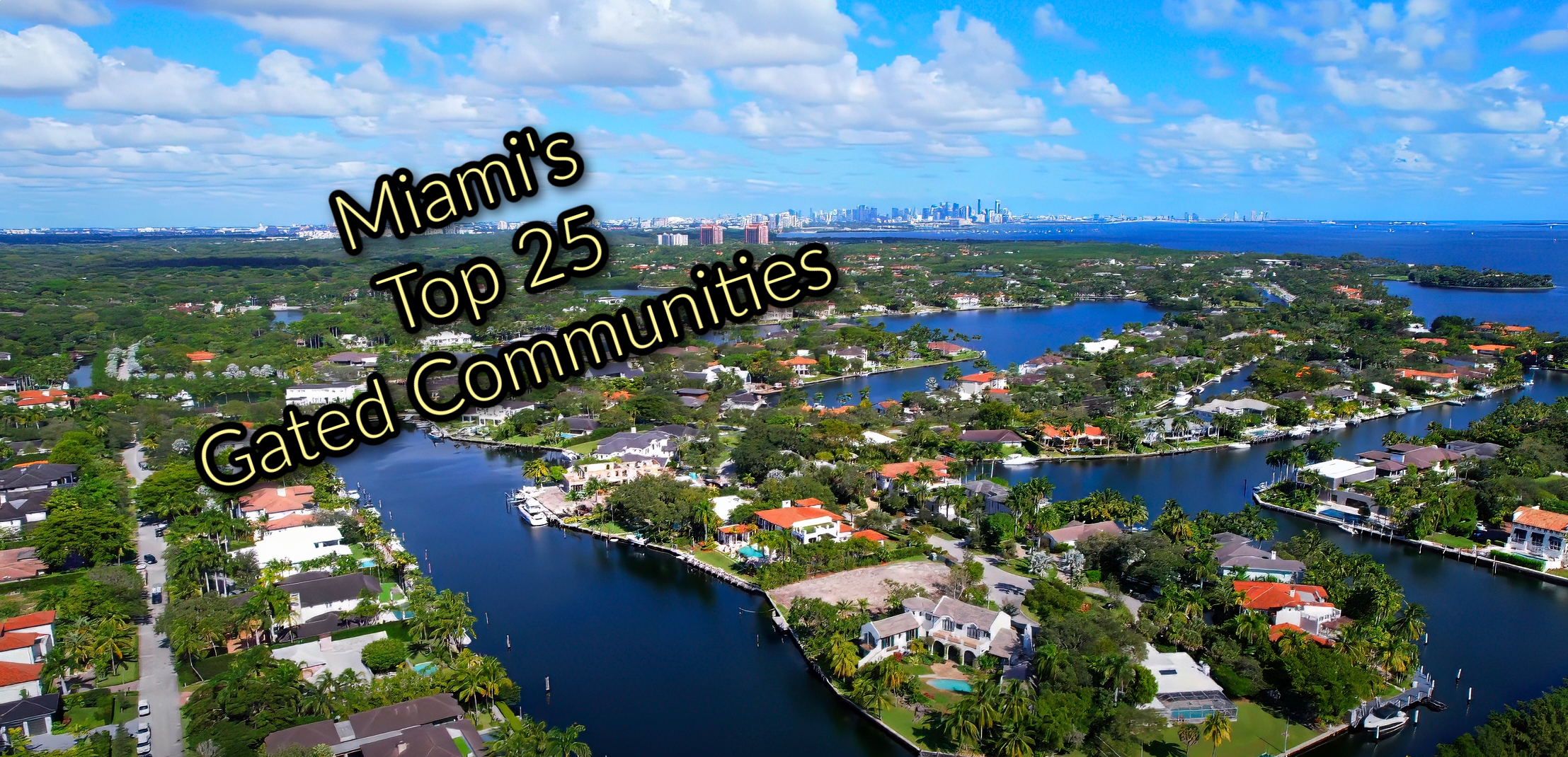.png)
The Ultimate Guide to Miami-Dade's Top 25 Gated Communities for Single-Family Homes
Discover Miami's top gated communities in this essential guide for luxury home buyers...


Miami's BEST Restaurants in EVERY Neighborhood
Check out the absolute BEST restaurants in every neighborhood of Miami, including the best...
Selling Your Home?
Who are we?
We are the ALL IN Miami Group out of Miami.
We are Colombian, Filipino, Cuban, German, Japanese, French, Indian, Syrian, and American.
We are Christian, Hindu, and Jewish.
We are many, but we are one.
We sell luxury homes in Miami, Florida.
Although some of our clients are celebrities, athletes, and people you read about online, we also help young adults find their first place to rent when they are ready to live on their own.
First-time buyers?
All the time!
No matter what your situation or price range is, we feel truly blessed and honored to play such a big part in your life.