



What Nobody Tells You About Living in Royal Oaks

Amit Bhuta
I use non-traditional marketing to inspire the most motivated buyers to pay the max for Miami luxury homes...
I use non-traditional marketing to inspire the most motivated buyers to pay the max for Miami luxury homes...
Mention you're thinking of moving to Royal Oaks and brace yourself for the unofficial welcome speech, the one that always starts with gates, oaks, HOA, and oversized lots.
It's real estate scripture at this point, mostly true, and it explains why people who've never even seen Royal Oaks still act impressed the second you say the name.
Honestly, they should, because just hearing it is enough to make you picture quiet mornings by the lake and a lawn you'll swear you'll maintain better than the last.
Yes, the dream is dream-ing, but it's also leaving a few things out.
The welcome speech never mentions that the Winn-Dixie plaza across the expressway is your closest anything, or that "closest" in Royal Oaks still very much involves a car and not your comfiest sneakers.
Lo and behold, there's more that never made it into the official script, and you only find out once you're already living it.
Here are six things nobody tells you about living in Royal Oaks.
 (18).png?w=1140)
1) The Gate Has Terms and Conditions
Royal Oaks introduces itself with a guardhouse, but the full relationship begins with applications, decals, access devices, and learning which entrance belongs to which section.
Royal Oaks Section One on the west side and Royal Oaks East operate as separate special taxing districts with guard services and individual access.
New and additional vehicles require new applications, so changing cars involves more ceremony in Royal Oaks than tossing the old parking tag into the glove compartment.
The Town currently lists click cards at $36.51 per device and vehicle decals at $5.64, including processing fees.
Those charges are hardly the most expensive part of Royal Oaks, but they confirm that the gate is an operating system rather than a decorative arch with excellent landscaping.
Every vehicle must stop at the guardhouse, where the guard records the tag number and vehicle description before allowing entry.
Visitors do not need to hand over personal information, which means the gate controls the lane without turning every dinner guest into a customs interview.
Deliveries, contractors, relatives, and friends still need clear directions because arriving at the wrong Royal Oaks entrance can turn a simple visit into a guided tour of NW 82nd Avenue.
The paperwork can also differ beyond the gate because some Royal Oaks homes belong to an HOA with architectural review, while hundreds of others do not carry the same deed restrictions.
That makes the exact property more important than the neighborhood name printed across the listing.
Royal Oaks offers controlled access and an extra layer of order, but the gate is not a magical moat that handles every rule, visitor, or vehicle without homeowner participation.
 (19).png?w=1140)
2) Every House Has Its Own Skeletons, Literally in the Walls
Custom construction sounds dreamy and exclusive until the inspection report begins using phrases nobody remembers from the showing.
Royal Oaks dates to 1983 and developed around custom homes on oversized lots rather than a builder repeating the same model down every street.
That variety gives the neighborhood personality, but it also means two similar-looking houses may have completely different structures, systems, renovations, and maintenance histories.
One may have received a permitted addition, updated plumbing, impact windows, and a newer roof, and the next may have a converted room supported mainly by optimism and matching floor tiles.
Large rooflines, custom windows, multiple air-conditioning systems, pools, elaborate paving, and unusual layouts can make repairs less predictable than they would be in a standardized subdivision.
A dramatic foyer can confirm that someone once loved columns, but it won't tell you what happened behind the walls during the following forty years.
Plans, permits, insurance records, invoices, and a thorough inspection matter because each owner may have added another chapter to the house without leaving a useful table of contents.
Cracks also deserve careful investigation rather than an instant explanation, since age, soil movement, previous repairs, construction details, and outside vibration can all become significant later on.
That said, Royal Oaks is not a neighborhood of defective homes hiding behind expensive gates.
It is a neighborhood of individual homes that must be evaluated individually, which is far less convenient than assuming the marble staircase has already passed every test.
The custom design is part of the reward, but it also ensures that the house’s surprises will arrive with a personal touch.
 (20).png?w=1140)
3) The Lake Is Cute Until It Rains for Three Days Straight
Royal Oaks knows how to make a lake look harmless, especially when the sun is out and the water is reflecting someone else’s palm trees.
The neighborhood includes several lakes, and its HOA charges participating properties annual fees that help maintain waterways and pocket parks.
The mood changes after several days of South Florida rain, when the prettier question of “Is that lakefront?” gives way to “Where does all this water go?”
Miami Lakes has completed and pursued several drainage projects across Royal Oaks, including work involving catch basins, French drains, manholes, gutters, resurfacing, and stormwater improvements.
The Royal Oaks Sixth Addition project alone carried a construction cost of roughly $1.66 million.
That investment does not mean every Royal Oaks street floods or every lakefront yard develops an unwanted indoor-water feature.
However, drainage is still a part of the neighborhood’s infrastructure rather than a gloomy topic invented by nervous inspectors.
Lot elevation, grading, driveway slope, street inlets, shoreline condition, and previous drainage work can make nearby properties behave differently during the same storm.
A peaceful lake may also bring algae, insects, shoreline care, and a firm reminder that waterfront scenery is maintained by more than positive thinking.
Photos taken after heavy rain can reveal more than a sunny showing scheduled three days after the puddles disappeared.
The lake remains one of Royal Oaks’ strongest visual perks, but it should be admired with one eye on the view and the other on the nearest drain.
 (21).png?w=1140)
4) The Mansion Tax You Didn't See Coming
The mortgage is only the reservation fee for the long dinner Royal Oaks has planned for your bank account.
Over the three months ending in May 2026, the neighborhood recorded a median sale price of about $1.1 million, although only two sales were included, making the figure sensitive to the small sample.
Current listings have a median asking price around $1.3 million, with limited inventory and wide differences among properties.
The “mansion tax” in this title is not a solo official charge waiting on the closing statement.
It is the combined effect of insuring, cooling, cleaning, landscaping, repairing, and protecting a large custom home on a substantial lot.
More square footage means more air-conditioning demand, more exterior surface, more roof, more windows, and more opportunities for something expensive to choose a holiday weekend for its resignation.
Pools need service even when nobody swims in them, because water also requires a maintenance schedule and professional supervision.
Mature trees provide shade and character until trimming, roots, storm cleanup, or removal produce an estimate with several commas.
Custom finishes can make routine replacement harder because the closest match may no longer exist outside a photograph from 1997.
Royal Oaks works best with a serious maintenance reserve.
The premium buys privacy, space, landscaping, water views, and an established address, but it also enlarges nearly every ordinary ownership expense.
Nothing needs to be broken for a Royal Oaks house to cost money impressively.
 (22).png?w=1140)
5) So Close to the Highway, Yet So Far
The Palmetto Expressway may be near Royal Oaks, but it's actually several brake lights, school queues, and left-turn cycles away in practice.
Much of Royal Oaks connects with the wider town through NW 82nd Avenue, also known as Montrose Road, which Miami Lakes identifies as an important signature corridor.
Town transportation planning has also identified NW 82nd Avenue as one of the roads experiencing the poorest level of service and called for attention at the NW 154th Street intersection.
That means the neighborhood can provide quiet interior streets without guaranteeing an equally peaceful departure.
Morning school traffic, park activity, work commutes, delivery vehicles, and everyone else hoping to reach the Palmetto can arrive at the same corridor with identical confidence.
The guardhouse controls entry, but it cannot negotiate with the traffic signal once the vehicle has cleared the gate.
Miami Lakes has pursued transportation near NW 154th Street and the Palmetto, including turn-lane improvements, reflecting the importance of movement through this area.
Those projects can improve access, but construction periods also have a talent for making the route temporarily worse before anyone enjoys the finished version.
Royal Oaks remains well placed for highways, shopping, schools, parks, and the rest of Miami Lakes.
Its inconvenience comes from the difference between being geographically near those destinations and reaching them during the hours when everybody else has remembered they exist.
The neighborhood is close to the highway in miles, but traffic occasionally insists on measuring the trip in character development.
 (23).png?w=1140)
6) When the House Shakes and It Wasn't an Earthquake
Most homeowners learn the ordinary noises of a house, including pipes, air conditioners, garage doors, and the mysterious midnight sound that disappears as soon as someone investigates.
Ground vibration from nearby rock-mine blasting is a much stranger addition to that list.
Miami Lakes created a Blasting Advisory Board to recommend ways to reduce the effects of mining blasts, and the board has described the issue as one of the town’s most serious long-running concerns.
Its 2024 advisory opinion discussed seismic effects and “step cracks” reported across Miami Lakes and other parts of northwest Miami-Dade and southwest Broward.
In 2025, the Town Council adopted a resolution supporting state legislation intended to improve relief for property owners affected by rock-mine blasting.
While that does not establish that every crack, loose tile, pool leak, or wall line in Royal Oaks was caused by a blast, it does mean vibration complaints should not be dismissed as someone confusing the washing machine’s spin cycle with regional geology.
A useful property record can include dated photographs, repair invoices, engineering findings, inspection reports, and notes about when shaking was observed.
That documentation helps separate an older structural condition from a new change and gives any future complaint more substance than, “The living room did something weird around lunchtime.”
Claims and disputes can involve technical evidence and state procedures, so the issue is harder to resolve than pointing toward the quarry and raising one extremely justified eyebrow.
The neighborhood gate can filter vehicles, but it cannot stop a vibration traveling through the ground.
Among all the hidden costs and rules in Royal Oaks, this may be the one most capable of interrupting a peaceful afternoon without bothering to ring the bell.
WHO GETS THE MOST OUT OF LIVING IN ROYAL OAKS?
Those who want the house to carry the social calendar
Royal Oaks shines when the house itself is expected to carry much of the social calendar.
Its broad lots, pools, patios, lake views, and oversized interiors give birthdays, reunions, holidays, and casual weekends somewhere to unfold without everyone competing for one couch.
A Saturday can move from coffee beside the water to lunch under the patio and end with children still refusing to leave the pool after sunset.
The guarded entrances add a buffer between the residential streets and the busier world outside them.
Custom architecture also keeps Royal Oaks from looking as though one builder discovered a floor plan and refused to let go.
That individuality matters when the goal is a home with its own character rather than a perfect match for the house three doors away.
Royal Oaks also suits a routine built around staying home more often instead of constantly searching for somewhere else to spend the afternoon.
The larger floor plans can absorb relatives, guests, home offices, hobby rooms, and the impressive number of belongings that somehow appear after several years of family life.
This is a place where the property can become a long-term project, with gardens, outdoor areas, renovations, and changing rooms as the household changes.
The reward is a home base that can host, shelter, entertain, and provide a genuine break from the rest of Miami.
In Royal Oaks, the house is not background scenery because it is the main event.
WHO MAY WANT TO KEEP LOOKING?
Anyone who expects prestige to handle the chores
Royal Oaks loses some of its shine when the expectation is that a high purchase price should erase inconvenience.
A custom house can be beautiful and still have an aging roof, strange plumbing choices, oversized equipment, and a previous owner who considered permits optional reading.
The gate can be reassuring and still turn a delivery into a phone call asking which entrance the driver has found.
The lake can look beautiful and still raise questions about drainage, shoreline conditions, insects, and what happens after three days of rain.
The highway can appear nearby and still require patience, timing, and several red lights before the entrance ramp becomes more than a distant promise.
The quarry can remain out of sight and still make itself known through a vibration that sends everyone checking whether the washing machine has escaped.
None of these concerns define every Royal Oaks address, but none should be dismissed because the driveway curves nicely around a fountain.
The area demands careful research before closing and enough financial breathing room afterward to handle a large property without turning every repair into a family emergency meeting.
It is a difficult match for anyone who views homeownership as a purchase completed on closing day rather than an operation that keeps sending updates.
The fancy streets hide plenty of moving parts, and those parts do not become cheaper because the foyer has marble.
For anyone hoping the Royal Oaks name will personally supervise the pool pump, the neighborhood has unfortunate news.
AN HONEST TAKEAWAY
What living in Royal Oaks really comes down to
Royal Oaks sells calm very well.
The guardhouse, lakes, mature trees, custom houses, and broad residential streets create the impression that the difficult parts of Miami have been stopped at the entrance.
In truth, Royal Oaks is less about effortless luxury than carefully managed comfort.
Its appeal is built from details that require attention: controlled access, individual house histories, stormwater systems, large-property expenses, and roads that become less cooperative during busy hours.
Each attractive feature has another side that does not appear in the first photograph.
The lake has drainage questions, the gate has procedures, the mansion has invoices, and the nearby highway has its own definition of “nearby.”
That duality is what makes Royal Oaks more interesting than a generic upscale subdivision.
It has personality, age, variation, and enough quirks to prevent the gorgeous setting from becoming bland.
It is also not a sealed bubble, because rain, traffic, construction history, and quarry vibrations remain unimpressed by the guardhouse.
Royal Oaks remains desirable because it gives home life scale, character, and a strong sense of retreat while keeping the rest of Miami Lakes within reach.
Living in this pocket means choosing the polished setting while accepting the machinery that keeps the polish intact.
%20(1)-topaz-enhance-4x-2.jpeg)
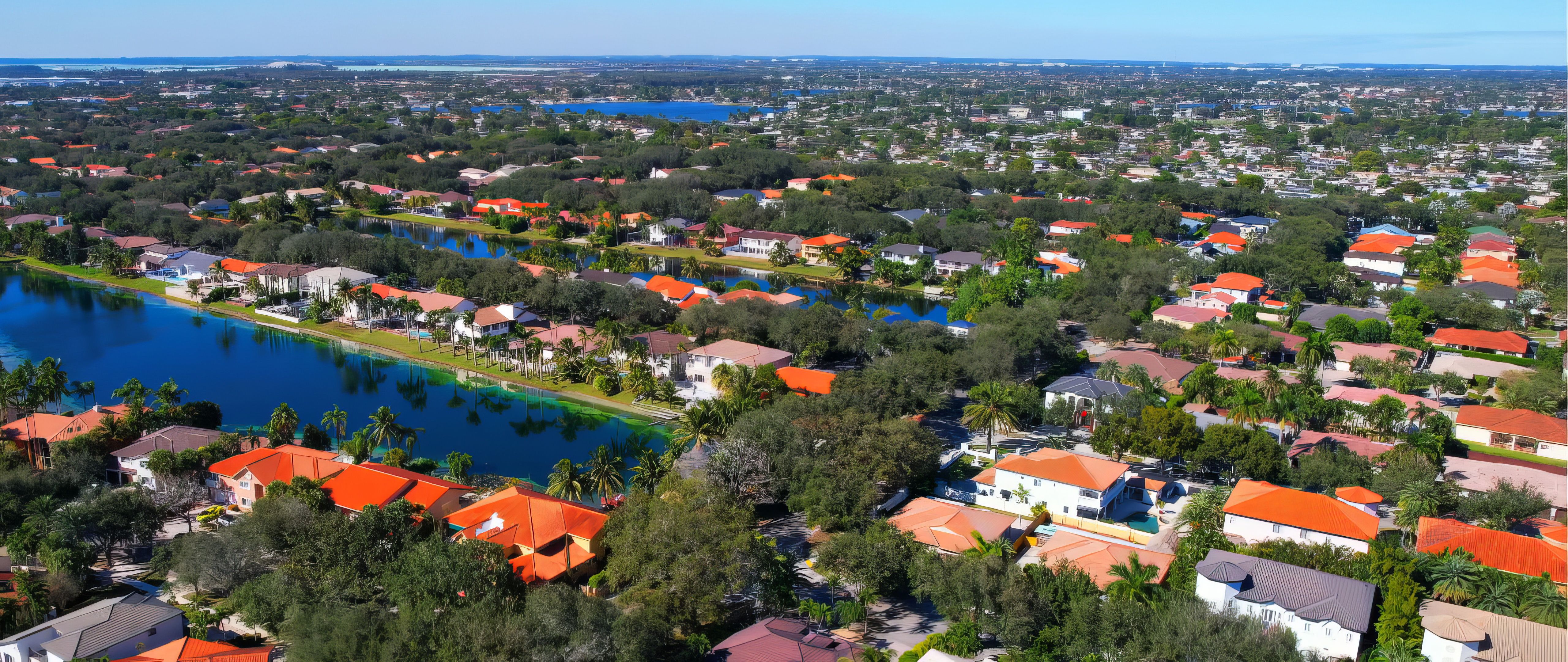
Royal Oaks, Miami, Florida - EVERYTHING You Want to Know
Grab your favorite snack, turn up the tunes that set the perfect mood, and let's unlo...
.png)
The Ultimate Guide to Miami-Dade's Top 25 Gated Communities for Single-Family Homes
Discover Miami's top gated communities in this essential guide for luxury home buyers...


Miami's BEST Restaurants in EVERY Neighborhood
Check out the absolute BEST restaurants in every neighborhood of Miami, including the best...
Selling Your Home?
Who are we?
We are the ALL IN Miami Group out of Miami.
We are Colombian, Filipino, Cuban, German, Japanese, French, Indian, Syrian, and American.
We are Christian, Hindu, and Jewish.
We are many, but we are one.
We sell luxury homes in Miami, Florida.
Although some of our clients are celebrities, athletes, and people you read about online, we also help young adults find their first place to rent when they are ready to live on their own.
First-time buyers?
All the time!
No matter what your situation or price range is, we feel truly blessed and honored to play such a big part in your life.