



What Nobody Tells You About Living in Richmond Heights

Amit Bhuta
I use non-traditional marketing to inspire the most motivated buyers to pay the max for Miami luxury homes...
I use non-traditional marketing to inspire the most motivated buyers to pay the max for Miami luxury homes...
Richmond Heights sits on land that used to hold 17-story wooden blimp hangars, and honestly, that's not even the wildest thing about this neighborhood.
Most people move in for the curb appeal — the curving streets, the big shady trees, the fact that it doesn't feel like every other cookie-cutter subdivision in Miami.
They hear "historic" and "tight-knit" and immediately picture Sunday cookouts and neighbors who've had each other's numbers since the Clinton administration.
And yeah, that's exactly the charm that gets people to sign the paperwork.
But living somewhere this soaked in history means the past isn't just a plaque on a corner, but your daily commute, as new residents are slowly figuring out.
Turns out moving into a piece of history comes with a whole personality of its own, and no realtor is rushing to give you the full tour of that.
Some of it's charming, some of it'll have you cracking up, and some of it you just have to live through to believe.
Here are five things nobody tells you about living in Richmond Heights.
 (6).png?w=1140)
1) One Name, Five Different Neighborhoods
Richmond Heights does not unfold like a subdivision where one floor plan was copied until the printer begged for mercy.
The name covers an original postwar community, later single-family streets, townhouse pockets, apartment buildings, churches, and commercial edges that create noticeably different surroundings from one block to the next.
Miami-Dade’s planning history shows that the area began with detached homes in 1949, while roughly one-third of the study area was replatted for townhouses during the 1970s, giving Richmond Heights several personalities without giving any of them separate names.
One street may offer older ranch homes, broad lawns, carports, and the settled rhythm people picture when they hear “historic Richmond Heights.”
A few turns away, attached homes, tighter parking, apartment buildings, or a busier commercial edge can change the view, density, and amount of personal space.
Those differences affect more than appearance because they shape yard size, street parking, traffic, noise, and how closely everyday life brushes against the next property.
Online listings tend to flatten all of that into the same neighborhood label, as though every Richmond Heights address has identical streets and matching shrubs.
It does not.
The address tells you the general area, but the block shows you which version of it you are considering.
Richmond Heights rewards a slow drive before the showing, preferably one that includes the surrounding streets rather than a heroic sprint from the car to the renovated kitchen.
The surprise is not that the neighborhood has variety but how quickly that variety can appear between one stop sign and the next.
 (7).png?w=1140)
2) 1949 Called. It Wants Its Pipes Back.
Fresh white paint has solved many listing-photo problems and exactly zero plumbing problems.
Richmond Heights began in 1949 and expanded over the following decades, which means the age, construction, and renovation history of its houses can vary widely.
Some homes have been carefully updated over time, while others have collected repairs, additions, and conversions the way a kitchen drawer collects mystery keys.
A remodeled interior may be excellent, but new flooring cannot confirm the condition of the electrical panel, drain lines, roof, windows, air-conditioning system, or work hidden behind the walls.
Carports may have become bedrooms, patios may have become family rooms, and walls may have moved during an era when documentation was treated more like a suggestion than a lifestyle.
That does not make an older Richmond Heights home a bad purchase, but permits, inspections, insurance records, and repair invoices will be much more useful than a seller saying everything is “recently updated.”
Miami-Dade’s 2010 infrastructure review also found that sewer service was uneven within the study area and that some residential properties relied on individual septic systems at once.
That report does not establish the current setup of any particular house, but gives buyers an excellent reason to verify the service connection rather than assuming every toilet reports directly to County Hall.
The larger issue is not one original pipe waiting beneath every sink with evil intentions.
It is that several generations of maintenance decisions are sharing the same address.
Richmond Heights has houses with history, and history occasionally leaves receipts.
The safest renovation is the one supported by records, not the one supported by three throw pillows and a bowl of decorative lemons.
 (8).png?w=1140)
3) Still Cheaper Than Pinecrest Isn't a Deal; It's a Technicality
Pinecrest is a terrible shopping companion because it can make almost any nearby price look reasonable.
During the three months ending in May 2026, Richmond Heights recorded a median sale price of about $496,000, compared with roughly $2 million in Pinecrest.
While that is a dramatic difference, it is also possible for a house to cost far less than two million dollars and remain thoroughly capable of frightening a checking account.
Richmond Heights was founded to provide attainable single-family housing for Black World War II veterans, so affordability is woven into the neighborhood’s original story.
Modern pricing tells a different chapter.
A half-million-dollar purchase still requires a substantial down payment, a workable mortgage, insurance, property taxes, and enough savings left over for the older-house surprise three weeks after closing.
The math can become especially uncomfortable when the house is priced as an established Miami property but needs the repair budget of a very enthusiastic fixer-upper.
Richmond Heights may offer more accessible entry into detached homeownership than some wealthier South Dade communities, but that is relative value rather than automatic.
The comparison should be between the asking price and the property itself, not between the asking price and the nearest neighborhood listed with a five-million-dollar median.
A smaller payment than Pinecrest’s payment is still a payment.
The neighborhood’s affordability remains understandable, but it now requires a modern definition of “affordable” and perhaps a small moment of silence.
 (9).png?w=1140)
4) Great Location, Terrible Sidewalks, Hope You Like Driving
Richmond Heights can place you near major South Dade routes without putting everything you need near your front door.
This will become clear the first time three simple errands require four arterial roads and a passionate relationship with the left-turn signal.
Miami-Dade’s 2010 study reported that most blocks in Richmond Heights had sidewalks and street lighting, but also noted streets without sidewalks, limited pedestrian shade, and requests for wider walkways, marked crossings, traffic calming, bus shelters, and a more pedestrian-friendly Lincoln Boulevard.
A strip of concrete is helpful, but it can't create walkability on its own.
Walkability also needs shade, safe crossings, connected routes, and useful destinations close enough that arriving on foot does not require an impossible hydration strategy.
The neighborhood planning process recorded demand for a grocery store, medical services, cafés, shops, and other community-serving businesses, showing that local convenience was already a concern well before delivery apps began charging six separate fees.
Public transportation is available, but the trip may involve transfers rather than a clean ride to the destination.
Since the October 2025 South Dade transit changes, Route 52 ends at the TransitWay instead of continuing directly to Dadeland South, requiring passengers to transfer to Metro Express or the TransitWay Local for the rest of that journey.
While it's a connection, nobody has ever described an extra transfer as the highlight of an afternoon.
Richmond Heights is positioned to reach Kendall, the Turnpike, US-1, and the wider South Dade area.
Inside the neighborhood, however, daily convenience remains shaped around the assumption that a car is waiting outside and has enough gas for a drive.
 (10).png?w=1140)
5) When New Townhouses Move In, Old Richmond Heights Side-Eyes Them
Richmond Heights has been negotiating with change longer than the newest townhouse finished rendering.
Townhouses are not foreign to the neighborhood because a large portion of the study area was replatted for attached housing during the 1970s.
Miami-Dade’s 2010 vision for the area also included additional townhouses, mixed-use buildings, commercial redevelopment, and design rules intended to keep new construction compatible with the surrounding community.
The latest round of change is therefore not a sudden invasion of shared walls.
In May 2024, the County approved a ten-parcel plat called Townhouses at Richmond Heights near Louis and Jefferson streets, with requirements for public water, sewer, sidewalks, drainage, and other site improvements.
Projects like that can add housing, use underdeveloped land, and bring more households to support neighborhood businesses.
They can also change parking patterns, street activity, privacy, density, and the visual rhythm of blocks built around older detached homes.
That tension carries extra weight in Richmond Heights because its identity comes from more than architecture.
The neighborhood began as a path to homeownership for Black veterans and became an important center of Black professional and family life in postwar Miami-Dade.
This poses a reasonable question of whether new development understands the community it is entering or merely found available land and opened a spreadsheet.
The conflict is not old houses versus new houses.
It is whether Richmond Heights can accept needed investment without being remodeled into a place that carries the name but misplaces the story.
WHO GETS THE MOST OUT OF LIVING IN RICHMOND HEIGHTS?
Those who know the value of roots
Richmond Heights gives its best to people who notice the difference between a neighborhood with history and one that merely has an opening date.
Its streets carry decades of family life, church gatherings, school mornings, block conversations, and homes that have witnessed more than one generation learning where the fuse box is.
The neighborhood does not rely on luxury gates, matching mailboxes, or a clubhouse with suspiciously strict pool rules to create a sense of place.
Instead, its appeal comes from continuity, modest single-family homes, familiar streets, and a story that existed before the current housing market became a “hidden gem.”
Richmond Heights also works well when a detached house and a usable yard matter more than designer architecture or a perfectly coordinated streetscape.
The housing mix gives the area variety, so the right block can offer quiet, space, and a settled residential rhythm without pretending every address is identical.
Its location keeps much of South Dade within reach, even when getting there requires a car, a few busy roads, and the patience required by a long red light.
The neighborhood’s older homes can reward people who appreciate character and are willing to investigate what has been repaired, replaced, converted, or ignored.
Richmond Heights also suits households that prefer a place shaped by real community institutions rather than a lifestyle package assembled around restaurants and retail.
At its best, Richmond Heights offers history without a museum rope, space without a luxury slogan, and community without everyone having to wear the same shade of beige.
WHO MAY WANT TO KEEP LOOKING?
Anyone who needs newer homes and easier errands
Richmond Heights may test anyone who expects an older neighborhood to function like a newly built community with every inconvenience edited out.
Its houses can come with decades of additions, repairs, aging systems, and renovation choices.
The neighborhood also changes from block to block, so the first attractive listing does not automatically include the surrounding streets.
Some sections feel spacious and quiet, while others offer attached housing, apartment buildings, tighter parking, or more activity in the picture.
Richmond Heights is well placed within South Dade, but daily life still depends heavily on driving.
A grocery run, medical appointment, school pickup, or trip toward Dadeland can require more road time than the map suggests.
Walking is possible in parts of the neighborhood, but sidewalks, shade, crossings, and nearby destinations do not always play on the same team.
The area may also frustrate anyone who wants cafés, shops, dining, and entertainment to begin just beyond the front porch.
New construction and townhouse development add another layer of change, which may not suit someone searching for a neighborhood frozen exactly as it looked twenty years ago.
Richmond Heights has never been a perfectly uniform suburban package, and it becomes less convincing when judged as though it should be one.
The neighborhood asks for patience with older homes, uneven convenience, and ongoing change, so anyone allergic to all three may spend a great deal of time blaming the ZIP code.
AN HONEST TAKEAWAY
What living in Richmond Heights really comes down to
Richmond Heights is easy to underestimate because its strongest qualities are not marble entrances or dramatic skyline views.
Its value is in the story beneath the streets, the homes that helped build Black middle-class stability, and the families that gave the neighborhood a memory longer than the latest sales cycle.
That history does not excuse every cracked pipe, awkward addition, missing sidewalk, or errand that consumes half the afternoon.
It does, however, explain why Richmond Heights deserves to be understood as more than a less expensive alternative to Pinecrest.
The neighborhood carries real pride, but also the practical weight of houses, roads, and public spaces designed for another era.
New investment can improve what has been neglected, yet every townhouse project and redevelopment plan raises the question of whether progress will add to Richmond Heights or slowly replace it.
That tension is not unique to this neighborhood, but Richmond Heights has more at stake because its identity was earned rather than branded.
Residents have to accept that the neighborhood is still changing and recognize that not everything old needs to be cleared away and renamed.
It can offer space, connection, history, and a grounded sense of home without delivering perfect convenience or showroom-ready uniformity.
Richmond Heights makes the most sense when its rough edges are weighed against its roots, not judged separately.
In the end, the neighborhood’s greatest strength is that it still knows where it came from, even while Miami keeps asking how much of it can be changed.
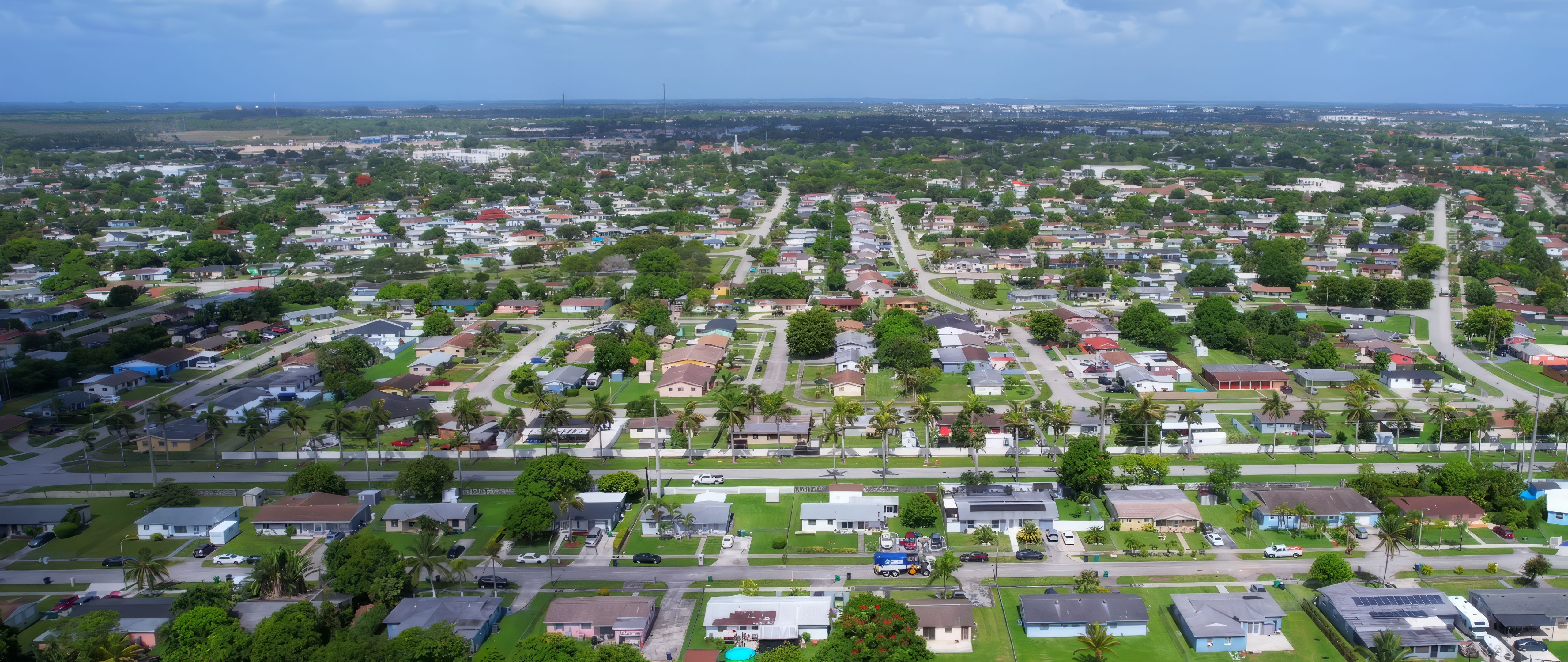
Richmond Heights, Miami, Florida - EVERYTHING You Want to Know
Come along for a virtual stroll through everything you'll WANT and NEED to know about...
.png)
The Ultimate Guide to Miami-Dade's Top 25 Gated Communities for Single-Family Homes
Discover Miami's top gated communities in this essential guide for luxury home buyers...


Miami's BEST Restaurants in EVERY Neighborhood
Check out the absolute BEST restaurants in every neighborhood of Miami, including the best...
Selling Your Home?
Who are we?
We are the ALL IN Miami Group out of Miami.
We are Colombian, Filipino, Cuban, German, Japanese, French, Indian, Syrian, and American.
We are Christian, Hindu, and Jewish.
We are many, but we are one.
We sell luxury homes in Miami, Florida.
Although some of our clients are celebrities, athletes, and people you read about online, we also help young adults find their first place to rent when they are ready to live on their own.
First-time buyers?
All the time!
No matter what your situation or price range is, we feel truly blessed and honored to play such a big part in your life.