



Who Lives in Opa-Locka? (It's Not Who You Think!)

Amit Bhuta
I use non-traditional marketing to inspire the most motivated buyers to pay the max for Miami luxury homes...
I use non-traditional marketing to inspire the most motivated buyers to pay the max for Miami luxury homes...
There are Miami neighborhoods people proudly place in Instagram bios — Opa-locka is usually not one of them.
You are not going to see influencers posting dramatic skyline photos from there pretending they “discovered” it before everyone else.
Nobody casually drops the neighborhood name into conversations, hoping somebody responds with impressed curiosity.
In fact, Opa-locka has spent decades being treated more like a cautionary tale than an actual residential community, with much of the public reducing the entire city to crime headlines, tired stereotypes, and whatever alarming story their cousin’s coworker swears happened sometime around 2009.
Sure, it may have one of the most visually striking architectural identities in South Florida, but most people only notice the warehouses, freight trucks, and rough public reputation surrounding it.
Not the residents, though.
To them, Opa-locka represents leverage, land, ownership, proximity, and the type of long-term potential most people completely overlook.
Here are the five types of buyers you’ll meet in Opa-Locka.
 (27).png?w=1140)
1) The “At Least I’m Building Equity” Crowd
For most buyers in Opa-locka, especially those in their mid-20s through early 40s, the dream life is no longer some glamorous Miami fantasy involving rooftop pools and floor-to-ceiling windows.
At this point, they would simply like their monthly payment to stop disappearing into somebody else’s mortgage.
These are often first-time buyers who spent years renting in increasingly expensive parts of Miami-Dade before finally concluding that prestige does not feel nearly as rewarding when your rent increases every twelve months like a subscription service from hell.
Opa-locka becomes attractive because it still offers entry points into ownership that feel remotely possible for working households.
This group usually targets smaller single-family homes, older concrete block houses, modest ranch-style properties, townhomes, or anything with enough land and privacy to feel meaningfully their own.
The homes are not always neatly packaged.
Sometimes, the kitchen still looks emotionally attached to 1987.
Sometimes the fence leans with alarming confidence.
But for these buyers, ownership itself is already an emotional milestone.
They are thinking about permanence for the first time, about building equity instead of collecting rent receipts, and about finally being allowed to paint walls without asking permission from a leasing office employee named Madison, who graduated from college six months ago.
And despite Opa-locka’s reputation, many of these buyers are far more practical than people give them credit for.
They are not buying blindly.
They just understand that in Miami, waiting for the “perfect neighborhood” can easily turn into renting forever.
 (28).png?w=1140)
2) The Tile-Saw-and-TikTok Renovators
Some people walk into older Opa-Locka properties and immediately see problems.
This buyer walks in and starts mentally pricing tile, paint, and YouTube tutorials while trying to remember how many cousins own power tools.
Usually between their late 20s and late 40s, this group actively prefers imperfect homes because they trust sweat equity more than inflated turnkey pricing.
They are comfortable buying houses with outdated interiors, uneven landscaping, old cabinetry, terrazzo floors hidden beneath questionable laminate choices, or bathrooms that still contain color palettes modern society abandoned decades ago.
Opa-locka is one of the few remaining parts of Miami where this type of buyer can still realistically exist.
These residents are often tradespeople themselves or closely connected to people in construction, roofing, electrical work, plumbing, flooring, or automotive industries.
The renovation process does not intimidate them because fixing things already fits their daily lives.
Some buyers slowly renovate room by room over several years.
Others transform entire homes in three weekends, surviving primarily on cafecito, Bluetooth speakers, and pure stubbornness.
This group also loves homes with decent lot sizes because they see potential everywhere.
Future terraces.
Additional parking.
Outdoor kitchens.
Rental efficiencies.
Storage sheds.
Half the neighborhood’s unofficial renovations probably began with somebody casually saying, “Honestly, we can do that ourselves.”
 (29).png?w=1140)
3) The Box Truck Empire Builders
You can recognize this buyer type by the work vehicles parked outside the house and the fact that their phone never stops ringing for more than four consecutive minutes.
These residents, often in their 30s through late 50s, have businesses tied to logistics, freight, trucking, auto work, warehouse distribution, landscaping, construction, or independent contracting.
For them, Opa-locka’s location is not theoretical but operational.
The city’s proximity to industrial corridors, warehouses, major roadways, and working-class business networks makes daily life significantly easier for people whose schedules revolve around movement, equipment, deliveries, employees, and long physical workdays.
Aesthetic trendiness means almost nothing to this buyer group.
They care about access, parking, storage, flexibility, and whether their property can realistically support the rhythm of their business.
These buyers specifically search for larger lots, corner homes, fenced properties, houses with oversized driveways, or homes with enough outdoor space to comfortably accommodate trailers, vans, tools, inventory, or work vehicles without instantly starting neighborhood drama.
This is also one of the few buyer groups in Miami that genuinely respects functionality over appearances.
If the house helps them become more efficient, they are happy.
Meanwhile, somebody else online is still trying to decide whether their apartment lobby looks “luxury enough” for social media.
 (30).png?w=1140)
4) The “Everybody’s Cousin Lives Nearby” Households
Opa-locka has long attracted residents whose connection to the neighborhood comes from familiarity.
Many buyers in this category are between their late 30s and 60s, often part of longstanding Black, Caribbean, Haitian, Bahamian, or Hispanic family networks with roots stretching across generations in North Miami-Dade.
And unlike newer Miami residents constantly searching for the “next area,” these households value continuity far more than novelty.
A lot of them intentionally buy near relatives, family friends, churches, longtime neighbors, or cultural communities that are already emotionally established.
The neighborhood becomes less about image and more about infrastructure that people cannot easily replicate elsewhere.
Somebody nearby can watch the kids.
Somebody nearby knows the family history.
Somebody nearby will absolutely show up to help during hurricane prep, whether you asked them to or not.
These buyers often gravitate toward larger, older homes with multiple bedrooms, converted garages, fenced yards, or enough flexibility to support multigenerational living comfortably.
And while many Miami neighborhoods now feel increasingly temporary, Opa-locka still contains pockets where neighborhood relations last longer than entire condo developments elsewhere.
They're not just buying a property.
They bought proximity to an existing support system that already understands their life.
 (31).png?w=1140)
5) The “Y’all Said the Same Thing About Wynwood” Buyers
This buyer category might be the most psychologically entertaining because they are completely aware of Opa-locka’s reputation and genuinely do not care.
In fact, the skepticism almost motivates them more.
Usually between their late 20s and late 40s, these buyers intentionally search in neighborhoods most people dismiss because they believe perception gaps create opportunity.
Some are investors.
Some are first-time buyers with strong risk tolerance.
Others are longtime Miami residents who watched neighborhoods like Wynwood, Little River, Allapattah, and parts of Little Haiti transform dramatically over time after years of public doubt.
Now, that does not mean they believe Opa-locka is magically becoming the next luxury hotspot next Tuesday.
Most of them are far too realistic for that.
What they do believe is that location, land, and proximity still matter in Miami’s long-term growth patterns.
These buyers often target fixer-uppers, corner lots, duplexes, multifamily properties, older homes with redevelopment potential, or anything sitting on land they believe may become more valuable over time.
They are comfortable tolerating rough edges because they are thinking several moves ahead.
And perhaps most importantly, they are emotionally comfortable buying where public opinion still feels uncomfortable, separating them from a huge percentage of Miami buyers.
SO… WHO IS OPA-LOCKA REALLY FOR?
People who would rather be early than socially approved
Opa-locka makes far more sense to buyers who already understand that Miami real estate conversations are driven by perception, and that perception is not always financially intelligent.
The neighborhood is designed for people who can tolerate rough edges without automatically assuming there is no value underneath them.
Here, residents think in terms of ownership first and image second, which already separates them from a large percentage of Miami buyers.
Some move because they are exhausted by paying rising rent for tiny apartments in neighborhoods where they cannot realistically build a future.
Others move because they operate businesses tied to trucking, warehouses, construction, or logistics, and want to live closer to the actual rhythm of their work, rather than commuting through traffic for two hours every day to maintain a “better” ZIP code.
Some buyers intentionally search for neighborhoods that the public still underestimates because they believe hesitation creates opportunity.
Those residents are usually very aware of Opa-locka’s reputation, but they also understand that entire Miami neighborhoods have historically changed long before public opinion caught up.
And then there are the families who never needed outside validation in the first place because their connection to the area is already personal, cultural, or generational, long before the internet started ranking neighborhoods like restaurant lists.
They are people who can emotionally separate “unpolished” from “worthless.”
Once buyers stop expecting the neighborhood to perform luxury theatrics for them, many begin noticing things they completely missed the first time: larger lots, business proximity, deeply rooted communities, unique architecture, long-term ownership potential, and the rare ability to still buy property in Miami without needing seven roommates and a spiritual support group.
WHO MIGHT NOT LOVE IT?
Those who need their surroundings to feel immediately reassuring.
Opa-locka can be a difficult fit for people who rely on visual consistency and curated environments to feel comfortable.
This is not one of those Miami neighborhoods where every block looks carefully packaged to maintain the same lifestyle aesthetic from street to street.
The city can feel visually unpredictable in ways that challenge buyers used to cleaner, more controlled, and more heavily marketed environments.
One street may contain historic Moorish Revival buildings with incredible architectural character, and another may sit beside industrial activity, older infrastructure, auto shops, freight routes, or properties in visibly different stages of upkeep.
For some residents, it creates constant mental friction.
Buyers who prioritize nightlife, trendiness, walkability, luxury amenities, or their social lives may also struggle to connect with Opa-locka emotionally.
The neighborhood does not revolve around entertainment culture, curated dining scenes, or urban energy, which many newer Miami developments aggressively market.
And while some people romanticize “up-and-coming” neighborhoods from a distance, actually living in one requires a much higher tolerance for unpredictability than social media usually admits.
There are still visible economic struggles in parts of the city.
There are still blocks that may feel uncomfortable to certain buyers.
There are still residents who would prefer areas where public confidence already exists, so they don't have to develop it themselves.
Opa-locka asks buyers to think independently, rather than emotionally following consensus.
Not everybody enjoys that responsibility.
THE PART THAT MATTERS
Why Opa-Locka works for the people who choose it
What makes Opa-locka interesting is that many of the same reasons that push some buyers away are exactly what attract others.
The neighborhood’s reputation filters people very aggressively.
By the time somebody seriously considers buying in Opa-locka, they are usually already thinking differently from the average Miami shopper.
They are often less concerned with social approval and more focused on practical leverage.
They pay attention to lot sizes, ownership costs, business access, redevelopment patterns, commute logic, and long-term positioning rather than whether a neighborhood currently feels fashionable enough to impress online.
And because Opa-locka has been publicly underestimated for too long, many residents develop a very grounded relationship with the city itself.
There is less illusion.
Less fantasy.
Less pretending that Miami life is always glamorous.
Instead, it attracts people who understand that stability, flexibility, and ownership can matter more than aesthetics designed for public consumption.
For longtime residents, especially, Opa-locka often feels emotionally tied to resilience.
Families continue building lives despite the stigma surrounding the city.
Business owners continue operating because the location works exceptionally well for the realities of their industries.
Homeowners continue to invest in properties because they believe in the long-term usefulness of land, proximity, and permanence, even when broader public perception refuses to catch up.
And perhaps the most defining thing about Opa-locka buyers is that many are unusually comfortable trusting their own judgment over collective opinion.
In Miami, that alone can completely change how somebody approaches real estate.
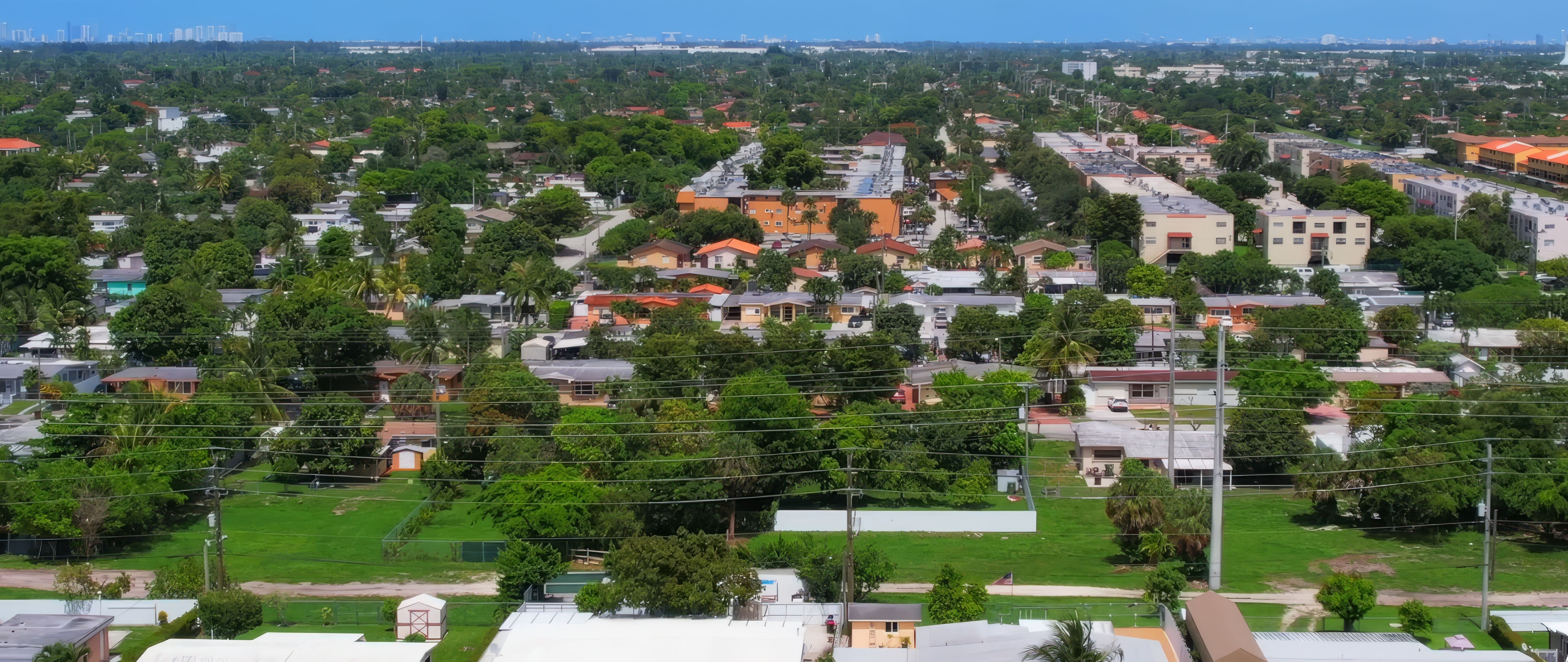
Opa-Locka, Miami, Florida - EVERYTHING You Want to Know
Get cozy with popcorn, pastries, or a big mug of coffee, and buckle up for a virtual magic...
.png)
The Ultimate Guide to Miami-Dade's Top 25 Gated Communities for Single-Family Homes
Discover Miami's top gated communities in this essential guide for luxury home buyers...


Miami's BEST Restaurants in EVERY Neighborhood
Check out the absolute BEST restaurants in every neighborhood of Miami, including the best...
Selling Your Home?
Who are we?
We are the ALL IN Miami Group out of Miami.
We are Colombian, Filipino, Cuban, German, Japanese, French, Indian, Syrian, and American.
We are Christian, Hindu, and Jewish.
We are many, but we are one.
We sell luxury homes in Miami, Florida.
Although some of our clients are celebrities, athletes, and people you read about online, we also help young adults find their first place to rent when they are ready to live on their own.
First-time buyers?
All the time!
No matter what your situation or price range is, we feel truly blessed and honored to play such a big part in your life.