



Who Lives in Wynwood? (It's Not Who You Think!)

Amit Bhuta
I use non-traditional marketing to inspire the most motivated buyers to pay the max for Miami luxury homes...
I use non-traditional marketing to inspire the most motivated buyers to pay the max for Miami luxury homes...
Wynwood is a district with an identity crisis.
Some people see the murals and think of it as a weekend playground for tourists, influencers, bar-hoppers, and anyone willing to stand in the sun for the correct photo angle.
Others look at the cranes, the closed local institutions, rising rents, and new development and declare that the old Wynwood has been replaced by a shinier version wearing designer sneakers.
No one really knows if it's still an art district, a nightlife district, a tourist trap, a development lab, or an actual neighborhood where people seriously check floor plans.
But the residents? They already made peace with the chaos and signed anyway.
To them, this confusion is not a warning label.
It is the whole sales pitch, wrapped in murals, noise, walkability, creative energy, and the very real possibility that your future coffee run passes three construction sites, two galleries, and one person filming a shoe campaign — but you'll love it anyway.
These are the personalities who do.
Here are the five types of buyers you’ll meet in Wynwood.
 (56).png?w=1140)
1) The Elevator-to-Everything Urbanist
The Elevator-to-Everything Urbanist is usually ages 25 to 40, and their dream home search begins with one deeply Miami-defiant idea: What if the car did not have to be involved in every decision?
They are often young professionals, singles, couples, hybrid workers, hospitality-adjacent residents, tech workers, or downtown-connected employees who want the city to begin downstairs, rather than 20 minutes and one parking spiral away.
In Wynwood, they usually look for new apartments, modern condos, compact one-bedroom residences, efficient two-bedroom layouts, loft-inspired units, or amenity-rich buildings with gyms, coworking spaces, package rooms, bike storage, and rooftop areas that make “I just stayed home tonight” sound suspiciously exciting.
They are not trying to buy silence.
They are trying to buy access.
Coffee, dinner, gyms, galleries, offices, bars, events, Midtown, Edgewater, the Design District, and downtown routes all matter because this resident wants daily life to happen within a tighter radius.
They are the person who sees a grocery run, a dinner reservation, a workout, and a meeting nearby and thinks the neighborhood has done half the adulting for them.
Wynwood appeals to them because it offers the rare Miami experience of stepping outside and immediately having options yelling for attention.
That can be messy, loud, and occasionally ridiculous, especially when the sidewalk is filled with tourists, scooters, delivery drivers, and someone photographing sneakers against a mural.
This resident accepts that trade because the convenience is worth it.
For the Elevator-to-Everything Urbanist, Wynwood works because it turns the neighborhood into an extension of the home, which is perfect for anyone who thinks a lobby should be a launchpad, not a waiting room.
 (57).png?w=1140)
2) The Brand-Deck Bohemian
Nobody moves to Wynwood for creative quiet, and the Brand-Deck Bohemian would probably be offended by the suggestion.
This resident is between the 28 and 45 age range, and they are often a designer, founder, photographer, marketer, hospitality operator, art-world regular, stylist, event producer, content strategist, architect, musician, chef, or person whose calendar contains the words launch, opening, concept, and collaboration way too often.
They usually gravitate toward loft-style condos, design-forward new residences, live-work-friendly apartments, boutique buildings, or homes with visual personality for hosting a meeting, shooting a campaign, or making a laptop-on-the-counter photo look mildly intentional.
Their home does not need to be huge.
It needs to make sense for the way they work, network, host, create, and accidentally turn Tuesday coffee into a business opportunity.
This profile differs from the general urban resident because proximity is not only about convenience.
It is about relevance.
Wynwood puts them near galleries, restaurants, studios, pop-ups, nightlife, brand activations, hospitality teams, creative offices, and the people who understand why a wall color can become a strategy discussion.
They want to live near the conversations, not read about them later.
They also know the neighborhood’s creative identity has changed, and they are not pretending every crane is a betrayal of art.
They may mourn the old edge, but they also understand that a district can evolve and still be useful to people who are building, selling, designing, filming, pitching, and making things.
For the Brand-Deck Bohemian, Wynwood works because the neighborhood keeps work life, social life, and creative instincts in the same noisy orbit, which is chaotic but highly efficient.
 (58).png?w=1140)
3) The Renderings-and-Rooftop Convert
The Renderings-and-Rooftop Convert sees a new Wynwood development rendering and immediately starts evaluating the pool deck as if they have already been personally invited.
This resident is usually in the age range of 30 to 55, and they are often a buyer who wants the neighborhood’s energy without living inside the rougher warehouse version that people romanticize after two cocktails.
They may be a professional couple, a design-conscious buyer, a relocation buyer, a second-home user, a luxury renter ready to purchase, or a Miami buyer who wants new construction, fresh amenities, and a building that understands storage, security, fitness, work-from-home space, and the sacred modern need for flattering lobby lighting.
In Wynwood, they usually look for new condos, branded residences, amenity-rich apartments, preconstruction opportunities, or design-forward buildings with rooftop pools, coworking lounges, concierge service, fitness centers, retail downstairs, and finishes that do not require an apology tour.
They are not buying nostalgia but the next version.
This buyer likes the idea of murals and creative energy, but also wants impact windows, modern elevators, smart layouts, clean garages, managed amenities, and a building that does not make every maintenance question sound like a warehouse ghost story.
They understand that Wynwood is changing, and they are comfortable arriving during the chapter with cranes, polished concrete, leasing offices, and rooftop renderings.
The humor is that they may say they love the authenticity of Wynwood while very clearly choosing the building with the cold plunge and the package lockers.
Mind you, that does not make them fake.
They're just honest about wanting the district’s culture with enough comfort to sleep through it.
For the Renderings-and-Rooftop Convert, Wynwood works because it offers the energy of an evolving neighborhood with the structure of a modern residential product.
 (59).png?w=1140)
4) The Rent-Roll Mural Miner
The Rent-Roll Mural Miner does not look at a crowded sidewalk and panic.
They look at it and wonder what the vacancy rate is.
This profile is usually in their 35s to 60s, and it includes investors, developer-minded buyers, second-property owners, high-income professionals, portfolio builders, and people who can discuss rental demand without making dinner weird.
They usually look for condos, preconstruction units, smaller, efficient floor plans, flexible layouts, buildings with strong amenities, rental-friendly policies, and locations near offices, restaurants, entertainment, gyms, hotels, and transit routes.
They care about the lifestyle, but only after the spreadsheet has stopped sweating.
Wynwood attracts this buyer because the district has demand baked into the chaos.
Young professionals want to live near the action.
Creative workers want the network.
Tourists keep coming.
Companies keep moving in.
Restaurants, galleries, bars, hotels, and offices keep adding reasons for people to want a bed nearby.
This buyer is not necessarily planning to live there full-time.
They may be buying for long-term rental income, future appreciation, tenant demand, or exposure to one of Miami’s most visible redevelopment stories.
They are also careful because Wynwood is not a sleepy cash-flow fairy tale.
Prices, assessments, building rules, rental restrictions, competition, insurance, financing, and construction timelines must align before the numbers deserve applause.
For the Rent-Roll Mural Miner, Wynwood works when the neighborhood’s noise becomes measurable demand, which is probably the least romantic sentence anyone has ever written about murals.
 (60).png?w=1140)
5) The Noise-Cancelling Culture Junkie
The Noise-Cancelling Culture Junkie has already heard the warning about crowds, construction, music, traffic, tourists, nightlife, and weekend weirdness, and their reaction is still, “Okay, but what floor?”
This resident is usually in the age range of 25 to 50, and they may be a social professional, a nightlife-friendly couple, a restaurant obsessive, an art-event regular, a hospitality worker, a music lover, a gallery crawler, or a longtime Miami person who knows peace was never part of the Wynwood sales packet.
They usually look for condos, apartments, loft-inspired spaces, compact residences, or modern units close to restaurants, bars, galleries, venues, coffee shops, fitness studios, and the streets where things are still happening after dinner.
They are not confused about the trade-off.
They know the neighborhood can be loud, crowded, inconvenient, exciting, overpriced, energetic, and oddly addictive within the same twenty-minute walk, keeping them on their toes.
This profile differs from the urban convenience resident because they are not only in Wynwood to run errands more easily.
They are here because they want to be near the charge in the air.
They want openings, pop-ups, food, music, people-watching, art, events, and the ability to decide at 8:13 p.m. that leaving home still counts as having a plan.
They may own noise-cancelling headphones, but that does not mean they want to live somewhere silent.
It means they understand tools.
For the Noise-Cancelling Culture Junkie, Wynwood works because the neighborhood does not pretend to be calm, tidy, or predictable.
It gives them the cultural mess they came for, and they would rather manage the volume than live somewhere that turns every night into a screensaver.
SO… WHO IS WYNWOOD REALLY FOR?
Those who are not looking for peace because they have already chosen proximity and poor parking decisions
Wynwood makes the most sense to people who hear a little street noise and do not immediately start drafting a complaint email.
They understand that the neighborhood does not behave like a private retreat, a polished suburb, or a sleepy residential pocket where the loudest event of the week is a leaf blower with confidence.
This is a place where the sidewalk has a social life.
A resident might pass a mural tour, a construction fence, a brunch crowd, a gallery opening, a delivery truck, a startup employee on a call, and someone posing like the crosswalk is a fashion campaign before they even get coffee.
To the right person, that is not a defect but the operating environment.
Wynwood resonates with residents who want their home to sit near the action, not far from it.
The urban live-work resident likes that coffee, gyms, restaurants, offices, bars, and errands can exist within a small radius, because Miami is a lot easier when the car does not have to be a part of every minor decision.
The creative-industry resident likes being near the people and places that make the district useful, including galleries, design studios, agencies, hospitality teams, pop-ups, events, and the casual networking that happens when everybody is pretending they only came for coffee.
The new-construction resident likes the newer version of Wynwood, where amenity decks, modern layouts, coworking lounges, rooftop pools, and curated retail sit beside the neighborhood’s older warehouse personality.
The investor likes the demand story because tourists, renters, professionals, offices, nightlife, restaurants, and development momentum all create a district that people want to use, visit, rent, and talk about.
The culture-driven resident likes the mess because the mess has a pulse.
These are not people who need a neighborhood to tuck them in at night.
They want a district that keeps moving, keeps changing, and occasionally makes them wonder whether the noise outside is an event, a party, a truck, or Miami inventing a new category of inconvenience.
For them, Wynwood is not the chaos that they tolerate.
It is energy they can live with because it gives them access, relevance, convenience, and the feeling that the city is happening close enough to interrupt their group chat.
WHO MIGHT NOT LOVE IT?
People who are hoping the art district comes with a bedtime
Wynwood is dangerous for buyers who fall for the visuals before they study the lifestyle.
The murals look fun.
The restaurants look convenient.
The new buildings look polished.
The idea of living near everything sounds fantastic until “everything” includes tourists, traffic, scooters, construction, weekend crowds, delivery zones, nightlife spillover, and someone taking engagement photos in front of a wall while you are just trying to carry groceries.
That is where the fantasy starts to be a reality that they are not ready for.
A buyer who wants calm, privacy, large yards, quiet streets, traditional family routines, easy parking, or a predictable residential rhythm may find Wynwood too exposed to its own popularity.
The neighborhood does not hide its activity behind gates.
It puts the activity on the sidewalk and lets everyone negotiate from there.
Someone who wants a single-family home with a driveway and enough storage for holiday bins, bikes, tools, and inherited furniture will probably find the housing mix too vertical, too compact, or too amenity-driven.
Someone who wants every block to look finished may struggle with the constant mix of cranes, old warehouses, new towers, restaurants, murals, fenced lots, and buildings that seem to arrive with a branding agency before they have residents.
Someone who likes culture only when it is neatly scheduled may not enjoy living in a district that changes the mood of a night without asking.
Wynwood also may not work for buyers who expect coolness to be effortless.
The cool parts come with costs.
The walkability comes with crowds.
The newness comes with construction.
The nightlife comes with noise.
The investment upside comes with competition, pricing pressure, and building rules that deserve more attention than a rooftop rendering.
A wrong-fit buyer may arrive wanting the postcard version of Wynwood and leave irritated that the postcard has bass, permits, and traffic cones.
A right-fit resident understands that the district is not trying to soften itself for everyone.
Wynwood asks buyers to decide whether they want a calm address or an active one, because getting both here may require very good windows and a very realistic personality.
THE PART THAT MATTERS
Why Wynwood works for the people who choose it
Wynwood rewards people who do not confuse unfinished with uninteresting.
It looks like it is mid-transformation (because it is), and the right residents understand that the in-between stage is not a flaw in the product.
It is the product.
A polished neighborhood can give buyers certainty, but Wynwood gives them proximity to change while the paint is still drying and the crane is still blocking someone’s view.
That matters to the people who choose it.
The live-work resident gets a daily radius that makes Miami feel less scattered.
The creative resident gets access to a network that is harder to recreate in quieter places.
The new-building resident gets modern comfort inside a district that still has street-level personality.
The investor gets a demand engine powered by renters, visitors, companies, restaurants, and the constant belief that the next version of Wynwood will still need beds, leases, and square footage.
The culture resident gets the rare pleasure of living near the thing everyone else plans or schedules.
Wynwood compresses too many Miami impulses into one district and somehow makes that compression useful.
Art and commerce share walls.
Restaurants and offices share blocks.
Tourists and residents share sidewalks.
Old warehouses and new towers share the same argument.
It can be exhausting, but it also gives the right buyer a home base with built-in motion.
They do not have to drive across the county to feel connected to something current.
They do not have to wait for the weekend to find an atmosphere.
They do not have to choose between a residential address and a place with cultural vitality.
For the people who choose it well, Wynwood is not a neighborhood that promises serenity.
It promises proximity to the mess, the money, the murals, the meals, the meetings, and the momentum.
And for the residents who can handle the volume, Wynwood turns daily life into a front-row seat to Miami reinventing itself in real time.
%20(76).png)
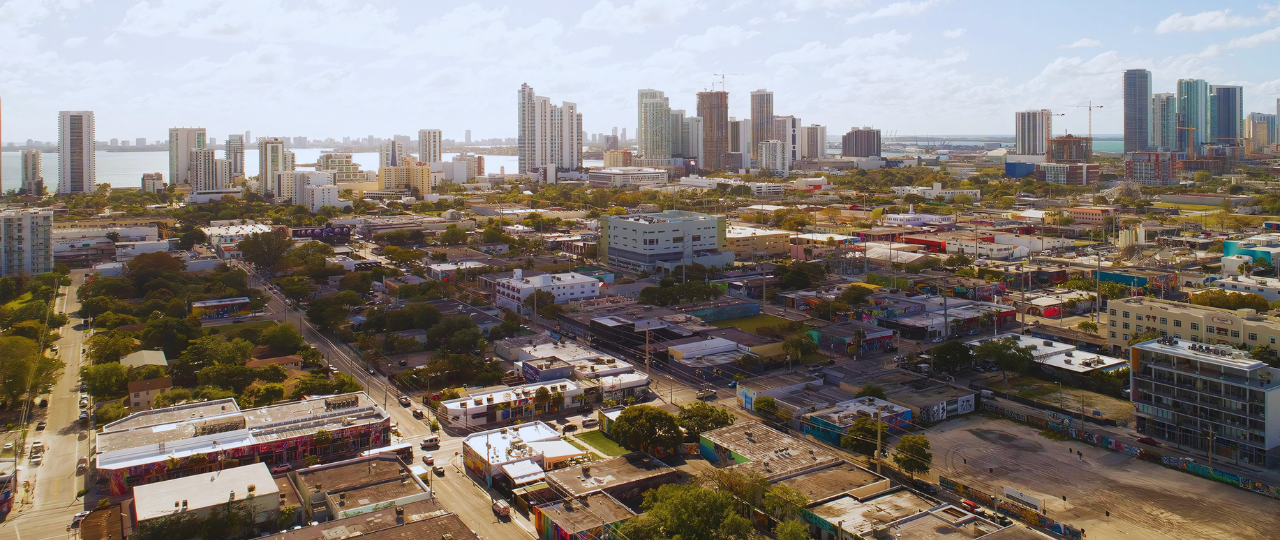
Wynwood, Miami, Florida - EVERYTHING You Want to Know
Join us as we enter the Wynwood Wonderland! We'll peel off Wynwood's layers and ...
.png)
The Ultimate Guide to Miami-Dade's Top 25 Gated Communities for Single-Family Homes
Discover Miami's top gated communities in this essential guide for luxury home buyers...


Miami's BEST Restaurants in EVERY Neighborhood
Check out the absolute BEST restaurants in every neighborhood of Miami, including the best...
Selling Your Home?
Who are we?
We are the ALL IN Miami Group out of Miami.
We are Colombian, Filipino, Cuban, German, Japanese, French, Indian, Syrian, and American.
We are Christian, Hindu, and Jewish.
We are many, but we are one.
We sell luxury homes in Miami, Florida.
Although some of our clients are celebrities, athletes, and people you read about online, we also help young adults find their first place to rent when they are ready to live on their own.
First-time buyers?
All the time!
No matter what your situation or price range is, we feel truly blessed and honored to play such a big part in your life.