



Who Lives in Little River? (It's Not Who You Think!)

Amit Bhuta
I use non-traditional marketing to inspire the most motivated buyers to pay the max for Miami luxury homes...
I use non-traditional marketing to inspire the most motivated buyers to pay the max for Miami luxury homes...
Ah yes, Little River — the neighborhood everyone says is “about to blow up.”
It has the warehouses, creative spaces, the crowd that shows up on weekends, and just enough buzz to make you wonder if it’s going to be the next Wynwood… or just trying a little too hard to be.
Sure, Little River is intriguing, but many don't see it as a place to call home.
Or is it?
While it may not be "ready" for those who treat it as a quick drive-through or a place for a Saturday visit, that same "in-between" feeling calls the attention of those who see the homes behind the warehouses.
To them, they see the pop-ups as businesses that stayed, and they focus more on the people who are here living their regular lives on a random Tuesday behind the weekend crowd.
For some buyers, Little River's potential is already a reality, and they're ready to get in early and embrace a neighborhood just beginning to define itself.
Here are the four types of buyers you’ll meet in Little River.
.png?w=1140)
1) The Warehouse Whisperer
They do not walk into a property and ask, “Is this move-in ready?”
They walk in and immediately start thinking, “What can this legally turn into?”
Usually in their early 30s to mid-40s, this buyer is tuned into zoning, usage, and future flexibility in a way that feels borderline obsessive — but very intentional.
They are drawn to older structures, mixed-use buildings, and properties sitting on land that has more potential than it currently shows.
What matters to them is not the current layout, but what the property is allowed to become in a neighborhood that is still figuring itself out.
They are not in Little River for instant gratification.
They are here because they understand timing, and they know this evolving pocket still has room for people who move early and move smart.
 (1).png?w=1140)
2) The “This Might Actually Work” Buyer
They did not come to Little River excited.
They came to this community tired, even though they're only in their late 20s to late 30s.
Why? Well, this buyer has already done the rounds — clicked through listings, visited neighborhoods, and realized how far their budget can take them in Miami.
Little River was not Plan A, and that is exactly why it caught them off guard.
So, instead of immediately disqualifying it, they start noticing that ownership in Little River is not just possible — it is practical.
The homes are not perfect, and they are not expecting them to be.
But for the first time, they are not stretching themselves thin just to say they bought in Miami.
And that change from forcing it to making it work is what keeps them looking a little longer than they planned.
 (2).png?w=1140)
3) The Biscayne Shortcut Strategist
If you ask them how long it takes to get to key spots, they will answer before you even finish the question.
This buyer is typically in their late 20s to early 40s, and they treat location like a strategy, not a preference.
But make no mistake, the Biscayne Shortcut Strategists are not emotionally tied to Little River’s identity.
They are here because it places them near the Upper East Side, MiMo, and major corridors without the cost of being directly within those zones.
They look for condos or small homes that make daily movement efficient, because their routine matters more than their zip code’s reputation.
To them, this is not about “living in Little River.”
It is about putting themselves near everything that matters without paying for the label.
 (3).png?w=1140)
4) The “I Saw It Before It Was Cool” Regular
They are not chasing trends.
They are allergic to arriving late to the game.
Usually in their late 20s to late 30s, this buyer gravitates toward neighborhoods that are still forming, because that is where they feel most at home.
They are drawn to spaces with character, like older homes, converted units, or anything a little unfinished in a way that invites interpretation.
They notice the minute signals others overlook: a business that stayed open, a space that keeps getting busier, a street that seems more active than it did six months ago.
They are not waiting for validation.
They are comfortable being early, even if it means explaining their decision more than once.
And in Little River, that mindset fits a little too well.
SO… WHO IS LITTLE RIVER REALLY FOR?
Those who can spot a shift happening before it gets officially announced
Some buyers do not need a grand reveal to take something seriously.
They are the ones who notice when a block starts getting busier, when a business sticks around instead of disappearing, and when a neighborhood feels like it is quietly gaining traction without making a big deal about it.
Little River works for them because it still has that “not fully packaged yet” energy that leaves room for interpretation and, more importantly, entry.
They are not trying to wait until everything looks finished and approved.
They are more interested in catching a place while it is still figuring itself out, because that is where the advantage usually sits.
To them, this is not uncertainty.
It is timing, and they are very comfortable betting on it.
WHO MIGHT NOT LOVE IT?
Those who want a neighborhood that can explain itself in one sentence and look the part immediately
Those buyers who walk into a place and want to understand it within minutes are better off leaving Little River to the rest.
They are the ones who want clear boundaries, a consistent look, and a version of Miami that feels fully formed the second they arrive.
Little River does not function like that day-to-day, and it does not try to.
The mix of industrial spaces, creative spots, and residential pockets can feel disjointed if you are expecting everything to follow the same script.
Instead of feeling layered, it can come across as unfinished or confusing to someone who prefers structure over evolution.
And when a neighborhood does not give quick answers, it tends to lose people who rely on it to make a decision.
For those buyers, it is not about potential.
It is about certainty, and that is not what Little River is built on right now.
THE PART THAT MATTERS
Why Little River works for the people who choose it
Most people leave Little River the first time still a little unsure of what they just saw — and then, for some reason, it keeps popping back into their head.
It does not hand you a clean, finished version of itself, and that is exactly why the right buyer starts to lean in instead of pulling away.
Here, you have to connect a few dots on your own, and when that clicks, it feels less like guessing and more like seeing something other people missed.
Not everyone is into that slower “wait, hold on…” moment.
Some people want the decision to feel obvious, neatly packaged, and instantly validated the second they step out of the car.
Little River does not operate like that, and the people who choose it are the ones who are okay saying, “I do not have the full picture yet, but I can see where this is going, and I like where I’m standing in it.”
And once they get there, the hesitation does not get solved — it just stops mattering.
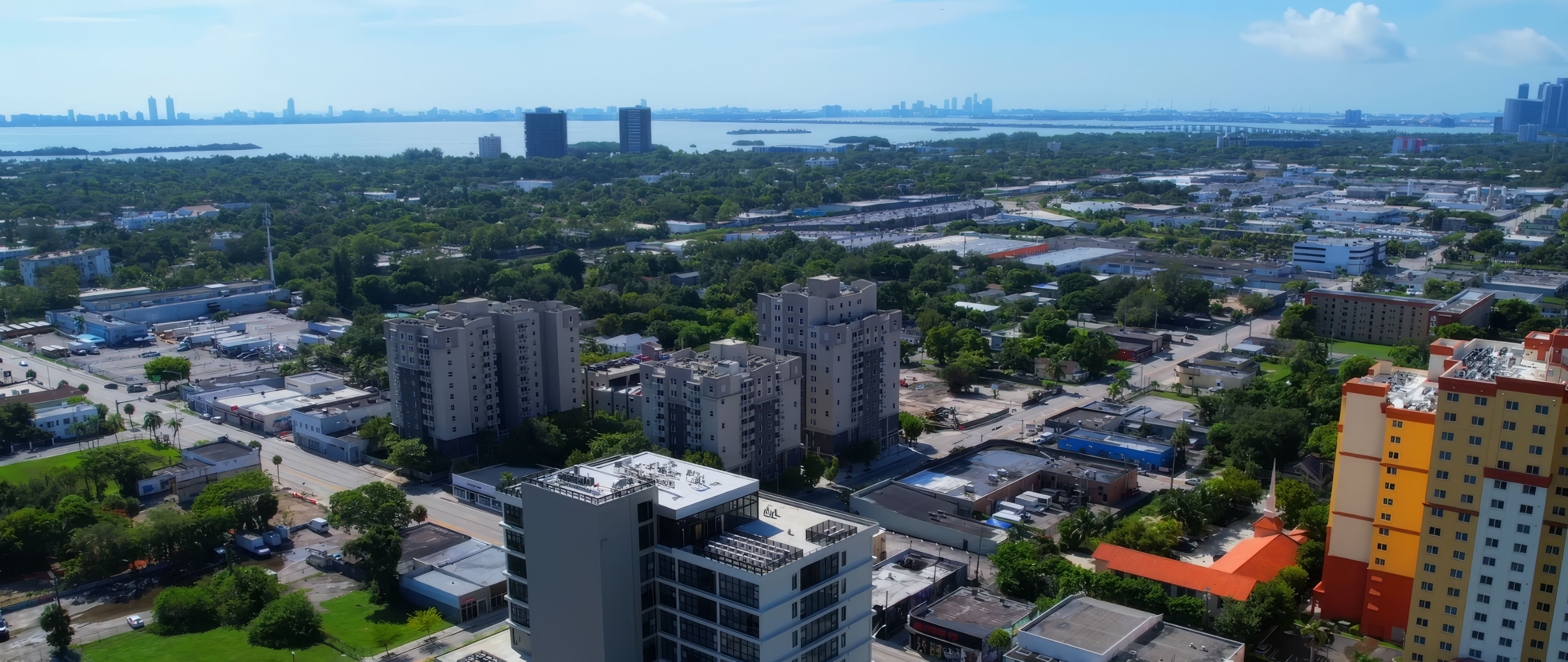
Little River, Miami, Florida - EVERYTHING You Want to Know
As Little River transforms before our eyes, we'll give you a grand tour of its nooks ...
.png)
The Ultimate Guide to Miami-Dade's Top 25 Gated Communities for Single-Family Homes
Discover Miami's top gated communities in this essential guide for luxury home buyers...


Miami's BEST Restaurants in EVERY Neighborhood
Check out the absolute BEST restaurants in every neighborhood of Miami, including the best...
Selling Your Home?
Who are we?
We are the ALL IN Miami Group out of Miami.
We are Colombian, Filipino, Cuban, German, Japanese, French, Indian, Syrian, and American.
We are Christian, Hindu, and Jewish.
We are many, but we are one.
We sell luxury homes in Miami, Florida.
Although some of our clients are celebrities, athletes, and people you read about online, we also help young adults find their first place to rent when they are ready to live on their own.
First-time buyers?
All the time!
No matter what your situation or price range is, we feel truly blessed and honored to play such a big part in your life.