



Who Lives in Little Havana? (It's Not Who You Think!)

Amit Bhuta
I use non-traditional marketing to inspire the most motivated buyers to pay the max for Miami luxury homes...
I use non-traditional marketing to inspire the most motivated buyers to pay the max for Miami luxury homes...
Little Havana has been flattened into a postcard.
Its bright murals, rolled cigars, salsa music spilling into the street — they’ve been repeated so often that they start to feel like the neighborhood’s entire identity.
And over time, that touristy snapshot becomes the version people accept as truth.
“Yeah, it’s fun to visit… but I don’t see myself actually living there.”
At least, that’s how some people see Little Havana.
Others know that behind the music and murals is a neighborhood where locals heading to work, kids walking home from school, families who’ve been here for decades, are mixed in with newer residents realizing just how close they are to Downtown.
And it’s that gap between perception and reality that’s been pulling buyers in.
Not as a novelty, not as a weekend stop, but as a home with real access, real character, and a price point that still leaves room to get in.
Are you one of them? Let’s find out.
Here are the five types of buyers you’ll meet in Little Havana.
 (44).png?w=1140)
1) The Cafecito Capitalist
Give this buyer a property with uneven floors, outdated units, and tenants already in place, and watch how fast they light up.
They are usually in their early 30s to mid-40s, and they are not in Little Havana to be charmed — they are here to be convinced by numbers.
Duplexes, triplexes, and older multifamily homes are their main targets, especially the ones other buyers hesitate on because they “need work.”
What looks like a headache to someone else looks like control, leverage, and long-term income to them.
They move quickly once the math takes, and they rarely get distracted by cosmetic upgrades.
If anything, they prefer properties that still have room to perform, because that is where they know they can win.
 (45).png?w=1140)
2) “Wait… I Can Afford This in Miami?!” Club
They pause during a showing, feeling surprised and giddy at the same time.
They just can't help it — in their late 20s to late 30s, they came into the process expecting to compromise a lot more than they actually had to in Little Havana.
After seeing prices elsewhere, they begin to realize that Little Havana still offers condos, older single-family homes, and compact townhome-style properties that feel within reach, literally and financially.
They are practical, open-minded, and willing to take on a few quirks if it means finally owning instead of renting.
There is a mix of relief and excitement with this group because, for the first time, buying in Miami feels more than hypothetical.
 (46).png?w=1140)
3) The Domino Table Diplomat
Ask them why a street matters, and they will have an answer that goes back years.
This buyer tends to be in their mid-40s to 60s or older, and their decisions are guided by familiarity, relationships, and a deep understanding of the neighborhood.
They often look for single-family homes or small multifamily properties where families can stay close, sometimes even within the same building.
Their search is not rushed, but it is intentional, because they know exactly what feels right and what does not.
They are not trying to reinvent their lifestyle but protecting it.
And in Little Havana, that still means something.
 (47).png?w=1140)
4) The 5-Minute-to-Brickell Bragger
“Wait, you live there and still make it to Brickell that fast?”
They hear that question a lot, and they never get tired of answering it.
Usually in their late 20s to early 40s, the "5-Minute-to-Brickell" bragger works in or around Downtown, and they have zero interest in paying Brickell prices just to say they live there.
They focus on condos and compact homes that keep their commute tight and their lifestyle flexible, because proximity is the whole strategy.
They like knowing they can be at work, dinner, or a last-minute plan in minutes, then head back to a neighborhood that's rugged but more authentic.
For them, it is not about prestige.
It is about positioning, and they know exactly how to use it.
 (48).png?w=1140)
5) The Vintage Tile Romantic
Some buyers walk into a home and ask when it was last renovated.
This one walks in and hopes the answer is “a long time ago.”
Usually in their late 20s to late 30s, they are drawn to older single-family homes and character-filled units that still have original details intact.
They notice the floors, the layouts, the small imperfections that give a space personality instead of stripping it down to something generic.
They are not afraid of updates, but they are careful about what they change, because they want to keep the soul of the place intact.
For them, Little Havana is not just practical or affordable.
It is expressive, layered, and full of details worth holding onto.
SO… WHO IS LITTLE HAVANA REALLY FOR?
Those who see potential where other people only saw a quick photo stop
Living in Little Havana suits buyers who do not need everything to be neatly packaged to take it seriously.
They are comfortable reading between the lines, looking past the tourist layer, and recognizing that a neighborhood can be both culturally loud on the surface and practical underneath.
This is where people buy a home when they care about access to Downtown, realistic price points, and a sense of place that still feels far from manufactured.
They are not chasing perfection.
They are choosing something with personality, location advantage, and enough flexibility to grow into over time.
And more often than not, they end up liking it more than they expected to.
WHO MIGHT NOT LOVE IT?
Those who mentally compare every block to Brickell before even getting out of the car
If you're among those who show up already measuring Little Havana against high-rise skylines and lobby aesthetics, then this life is not for you.
If the expectation is glass towers, quiet elevators, assigned parking that always behaves, and streets that feel consistently curated, the experience can feel like a mismatch within minutes.
This is a neighborhood where things unfold block by block, not building by building.
There is noise, movement, and moments that feel unfiltered in a way that does not try to impress you.
That unpredictability is part of the identity, but it also means it will not translate for someone who wants everything to feel seamless and contained.
And when you never learn to turn off that habit of comparing, Little Havana won't get a fair shot.
THE PART THAT MATTERS
Why Little Havana works for the people who choose it
Most buyers choose Little Havana not because of a love-at-first-sight situation, but because something else in Miami didn’t work out the way they expected, and Little Havana ended up being the “let’s at least check it out” option.
Yet somewhere between driving through a few blocks, looking at actual listings, and realizing how close everything really is, the conversation changes.
No, not dramatically, but enough to make them pause a little longer than they planned.
Suddenly, they are looking at homes they can realistically buy instead of just scrolling past.
They are mapping out commutes that do not eat up their entire day, and realizing that Downtown and Brickell are not just “nearby” but genuinely within reach.
They are seeing options, not just in price, but in how they want to live — whether that means a small condo, a character-filled house, or something with income potential on the side.
And then there is the part people do not always expect to matter.
Little Havana is active in a way that does not rely on branding or luxury.
There are people outside, routines happening, conversations spilling into sidewalks, and a sense that life in this city is being lived in real time.
For the right buyer, that combination is what pulls them in.
It is not perfect, and they are not expecting it to be.
It just works in the ways that matter to them, and in a city where so many places feel out of reach or overly curated, that starts to feel like the better deal.
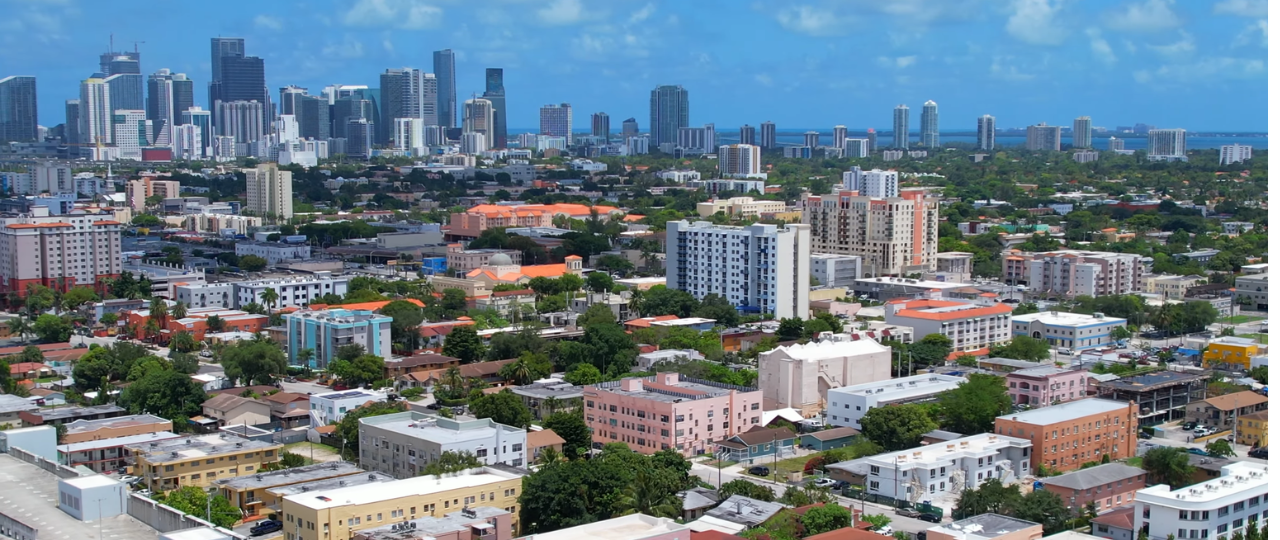%20(23).png)
Little Havana, Miami, Florida - EVERYTHING You Want to Know
Drop everything you're doing and hop on this virtual escapade across Little Havana�...
.png)
The Ultimate Guide to Miami-Dade's Top 25 Gated Communities for Single-Family Homes
Discover Miami's top gated communities in this essential guide for luxury home buyers...


Miami's BEST Restaurants in EVERY Neighborhood
Check out the absolute BEST restaurants in every neighborhood of Miami, including the best...
Selling Your Home?
Who are we?
We are the ALL IN Miami Group out of Miami.
We are Colombian, Filipino, Cuban, German, Japanese, French, Indian, Syrian, and American.
We are Christian, Hindu, and Jewish.
We are many, but we are one.
We sell luxury homes in Miami, Florida.
Although some of our clients are celebrities, athletes, and people you read about online, we also help young adults find their first place to rent when they are ready to live on their own.
First-time buyers?
All the time!
No matter what your situation or price range is, we feel truly blessed and honored to play such a big part in your life.