



Who Lives in Naranja? (It's Not Who You Think!)

Amit Bhuta
I use non-traditional marketing to inspire the most motivated buyers to pay the max for Miami luxury homes...
I use non-traditional marketing to inspire the most motivated buyers to pay the max for Miami luxury homes...
In Miami real estate, there are neighborhoods people romanticize… and then there are neighborhoods people discuss as if they're concerned relatives staging an intervention, like Naranja.
Sitting for decades in that second category, thanks to older crime perceptions, economic struggles, and the assumption that anything south of certain zip codes automatically comes with a warning label, Naranja has developed the reputation of being a place people passed through, judged from a distance, or referenced with that dramatic “just be careful over there” tone usually delivered by someone whose information is secondhand and more or less fifteen years old.
In fact, many still picture Naranja as a community frozen in time, which is almost the complete opposite of what it has become over the years.
Today, Naranja is a neighborhood appreciated by practical first-time buyers, deeply rooted Miami families, long-game investors, and working households who understand that in a county where affordability is evaporating by the hour, buying smart matters a lot more than chasing trends, aesthetics, or whatever zip code is currently being treated like the main character on Miami real estate TikTok.
And if you are looking for space, breathing room, long-term potential, or simply a realistic path to ownership in Miami-Dade without entering a financial situationship with your mortgage, you might find yourself agreeing with these groups, too.
Here are the six types of buyers you’ll meet in Naranja.
 (24).png?w=1140)
1) The Zillow Survivors
The breaking point usually happens somewhere between the fourth rejected offer and the fifth Zillow tab open at midnight.
One minute, these buyers are confidently touring homes in Kendall or Westchester.
Next, they are staring at HOA fees, insurance estimates, and monthly payments that look suspiciously similar to luxury car leases.
Most of the people in this group are first-time buyers in their late 20s to late 30s who spent years renting apartments that charged premium prices even with tiny kitchens, limited parking, and neighbors who have never-ending relationship arguments through walls apparently made of graham crackers.
Naranja becomes an attractive option once they realize the neighborhood still offers something increasingly rare in Miami-Dade: attainable space.
Not fantasy space — actual, physical space where you can park multiple cars, host relatives without rearranging furniture like a puzzle competition, and maybe even own a backyard large enough for a grill and a dog with emotional issues.
They usually gravitate toward modest single-family homes, older starter properties with renovation potential, or practical townhomes where the goal is long-term ownership rather than social media aesthetics.
This group understands that being financially stable inside a “less trendy” neighborhood is infinitely more appealing than barely surviving in a trendy one — something many outsiders do not.
 (23).png?w=1140)
2) The Family Group Chat Board Members
In these households, buying a home is never a two-person conversation.
At minimum, there will be an aunt forwarding listings before sunrise, a cousin recommending neighborhoods they have never personally lived in, and somebody insisting they “know a guy” who can help with inspections, roofing, taxes, or mysterious paperwork nobody else understands.
These are deeply rooted Miami families, usually between their late 30s and late 50s, whose entire lives are tied to community proximity.
Parents live nearby.
Cousins live nearby.
Churches, schools, barbershops, mechanics, and favorite cafeterias all exist within a familiar orbit; they have no interest in abandoning just because another neighborhood suddenly became fashionable online.
Naranja appeals to them because the area still supports practical family living rather than forcing everyone into tiny, overpriced boxes that pretend to be “luxury residences.”
They often look for detached homes with extra bedrooms, larger lots, converted spaces, wide driveways, or layouts that support frequent visitors and multiple generations without daily chaos turning into a full-contact sport.
And unlike buyers obsessed with trend cycles, this group values comfort, familiarity, and long-term roots over whether a neighborhood currently appears in somebody’s drone footage on Instagram.
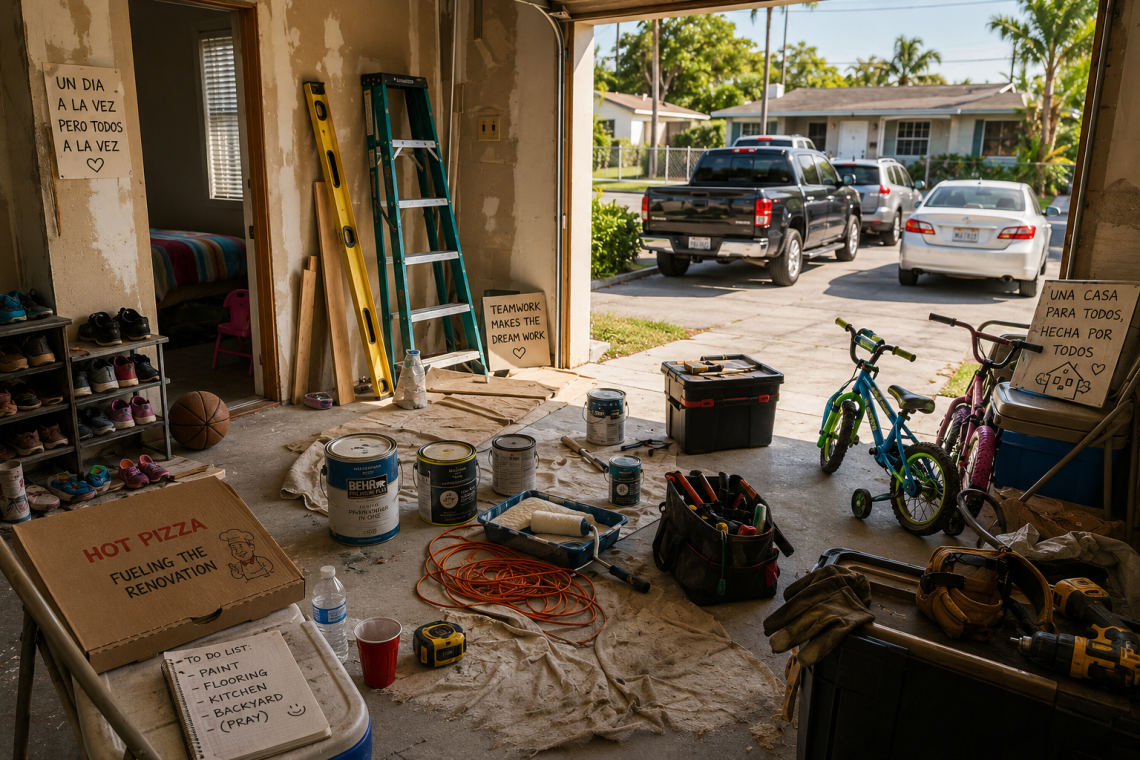
3) The “Everybody Pitch In” Crew
South Florida housing has turned many families into financial team projects, and Naranja is one of the places where that strategy still works.
These households are commonly made up of several working adults ranging from their late 30s to early 60s who combine income, childcare, responsibilities, and living expenses because trying to survive Miami independently now feels like participating in a reality show where everyone loses.
But contrary to what outsiders assume, this setup is not always driven by desperation.
For many families, it is intentional, practical, and culturally normal.
Pooling resources allows them to purchase larger homes, create stability for aging parents or younger relatives, and avoid getting trapped in endless rent cycles that somehow rise every year while apartment quality remains spiritually committed to mediocrity.
They usually target older single-family homes with flexible floor plans, efficiency potential, corner lots, expanded living areas, or enough yard space to support future additions because adaptability matters more than polished interiors.
This is also the buyer group most likely to confidently begin a sentence with, “We can probably renovate that ourselves,” before immediately texting three relatives and borrowing equipment from somebody’s uncle.
Naranja works for them because the neighborhood still rewards functionality over performance.
Here, people care far more about whether a home can support real life than whether the kitchen looks expensive under LED lighting.
 (25).png?w=1140)
4) The Commute-Time Extremists
Nothing changes a person faster than spending three unpaid hours trapped in Miami traffic every single day.
Eventually, even the most image-conscious buyers reach a point where they would rather preserve their sanity than maintain a zip code that impresses strangers at brunch.
That reality brings a very specific kind of buyer into Naranja — the Commute-Time Extremists.
Usually between their late 20s and mid-50s, these residents often work in logistics, warehouse operations, construction, airport cargo, transportation, healthcare, delivery services, trades, or other physically demanding industries where commuting efficiency directly affects quality of life.
For them, practicality is not boring but a matter of survival.
They are not interested in paying dramatically higher housing costs just to spend more time braking on the Palmetto while listening to podcasts about stress management.
Most search for durable, low-maintenance homes with functional parking, easy access to major roadways, and enough interior space to decompress after long shifts without feeling trapped inside a glorified storage unit.
Townhomes and modest detached homes tend to attract this group the most because the goal is straightforward: secure housing, manageable expenses, and less time losing arguments with traffic.
Ironically, many of these buyers end up developing stronger loyalty to Naranja than expected because the neighborhood fits their daily reality better than areas designed more for image than functionality.
 (26).png?w=1140)
5) The Spreadsheet Warriors
While other buyers obsess over quartz countertops and whether a café has aesthetic outdoor seating, this group opens spreadsheets, which is the first sign that they're serious.
Most of these buyers fall somewhere between their mid-30s and late 50s and tend to approach Naranja through a long-term investment lens rather than emotional hype.
They pay attention to redevelopment conversations, infrastructure growth, rental demand, South Dade expansion, and the widening affordability crisis pushing more households farther south in search of ownership opportunities.
To them, Naranja does not look “undesirable” but in its early stages.
They often target duplexes, older homes with value-add potential, properties requiring cosmetic improvements, or modest single-family homes that may generate future rental income because they understand that Miami’s growth patterns rarely stay frozen.
This group also tends to be emotionally detached in a way other buyers are not.
While everyone else debates vibes and aesthetics, they are calculating appreciation potential and wondering why people still underestimate neighborhoods with actual land, realistic entry points, and increasing housing demand.
Some are local investors.
Others are Miami natives who learned the hard way that waiting for the “perfect moment” to buy in this county usually ends with another forty-thousand-dollar price increase and a stress headache.
 (27).png?w=1140)
6) The Financial Redemption Arc
Not every buyer enters the market from a position of comfort.
Some arrive exhausted, and they're often in their 30s through 50s, rebuilding after divorce, brutal rent increases, overcrowded living situations, unstable housing arrangements, financial setbacks, or years spent feeling locked out of ownership in Miami.
And because of that, their relationship with homeownership tends to be emotional, unlike trend-focused buyers.
For them, purchasing in Naranja is not about impressing anyone but about finally breathing again.
Many are searching for modest single-family homes, practical townhomes, or manageable properties where monthly costs feel stable enough to rebuild routines, savings, and peace of mind after years of unpredictability.
This group also appreciates the neighborhood in a more personal way.
They are less concerned whether outsiders “approve” of Naranja because they already know what financial instability feels like.
Once a person spends enough years watching rents rise faster than their salary, the idea of owning something real feels much more meaningful than chasing neighborhoods designed mainly for appearances.
SO… WHO IS NARANJA REALLY FOR?
Those who are more interested in building a realistic life in Miami-Dade than performing one online
Naranja resonates with buyers who have reached the point where practicality starts outweighing performance.
These are people who would rather own a home with usable space, functional parking, and long-term potential than spend the next fifteen years spiraling financially inside a trendy neighborhood primarily designed for rooftop photos and valet stands.
The area works especially well for households that understand that Miami living is not always glamorous behind the scenes.
Sometimes it looks like coordinating work schedules, helping relatives financially, surviving insurance increases, raising children near extended family, commuting efficiently, or trying to exist in a county where housing prices have started acting like they consumed three espresso shots and lost emotional stability.
Naranja also makes sense for buyers who appreciate neighborhoods that still feel lived in rather than hyper-curated.
The community is not neatly packaged in a manufactured, master-planned way, but many residents prefer that because it feels grounded, familiar, and honest.
Here, people generally choose function, flexibility, affordability, proximity, and long-term sustainability over status signaling.
And in modern Miami, this mentality has become far more common than people admit publicly.
WHO MIGHT NOT LOVE IT?
Buyers who are expecting a heavily put-together lifestyle district with curated aesthetics, instant prestige, and the emotional experience of living inside a luxury apartment advertisement
Naranja is probably not the right fit for people who need every part of their neighborhood to feel visually pristine, hyper-trendy, or socially validating at all times.
The area still carries visible signs of its working-class identity, ongoing redevelopment phases, traffic realities, and uneven visual character depending on the block.
Some streets feel quieter and more residential.
Others still reflect the growing pains of a community evolving in real time rather than one that already completed its transformation years ago.
That distinction matters because buyers who move to Naranja strictly chasing aesthetics may struggle with the fact that the neighborhood prioritizes practicality far more than presentation.
You are not moving for walkable luxury retail, aggressively modern architecture, or the ability to casually mention your zip code like it's a personality trait.
And honestly, many residents would probably find that mentality exhausting anyway.
People who thrive in Naranja usually value resilience, adaptability, realism, and long-term thinking.
Buyers who need constant trend validation, highly controlled visual environments, or neighborhoods built primarily around image may end up feeling disconnected from what the area genuinely offers.
THE PART THAT MATTERS
Why Naranja works for the people who choose it
There is something very different about why people choose Naranja compared to neighborhoods driven mostly by hype.
Most residents are not moving to this community because a developer convinced them to “experience elevated living” beside a decorative fire pit and a suspiciously tiny rooftop pool.
They are moving because Naranja solves real problems.
For some, it is finally being able to buy rather than rent indefinitely, while landlords raise prices as if they're in a reality show challenge.
For others, it is staying close to family without sacrificing every ounce of financial breathing room.
And for many working households, it is the simple but life-changing realization that shaving even forty-five minutes off a daily commute can dramatically improve mood, relationships, sleep, patience, and overall sanity.
Naranja also attracts people who see potential differently.
They are not expecting perfection the second they arrive.
They understand that neighborhoods evolve in layers, especially in Miami-Dade, where growth tends to spread outward in waves rather than appear overnight with matching palm trees and coordinated branding.
That mindset creates a resident base that is often more practical, adaptable, and emotionally grounded than people expect.
There is less pressure to constantly “perform success” in Naranja because many households are focused on building something sustainable behind closed doors instead.
Mortgage payments.
Family support systems.
Home improvements, little by little.
Children growing up near relatives.
Parents aging near adult kids.
Savings accounts that are finally recovering after years of Miami rent trauma.
This version of stability feels a lot more authentic to many residents than chasing neighborhoods where people appear financially stressed yet aesthetically coordinated.
The people who thrive in Naranja usually understand one thing very clearly: a neighborhood does not need to be trendy to be valuable.
Sometimes it just needs to make life work better.
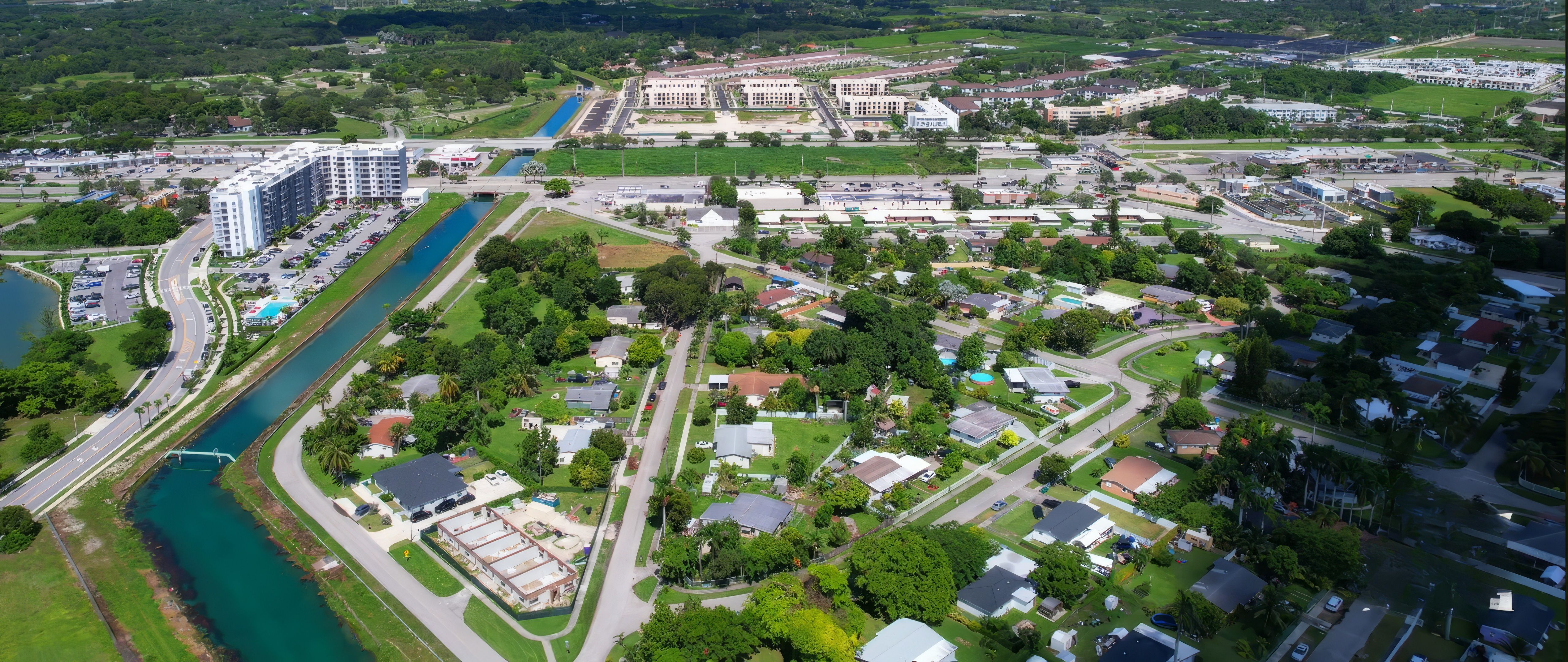
Naranja, Miami, Florida - EVERYTHING You Want to Know
stash the snacks, silence the notifications, and buckle up — we're about to...
.png)
The Ultimate Guide to Miami-Dade's Top 25 Gated Communities for Single-Family Homes
Discover Miami's top gated communities in this essential guide for luxury home buyers...


Miami's BEST Restaurants in EVERY Neighborhood
Check out the absolute BEST restaurants in every neighborhood of Miami, including the best...
Selling Your Home?
Who are we?
We are the ALL IN Miami Group out of Miami.
We are Colombian, Filipino, Cuban, German, Japanese, French, Indian, Syrian, and American.
We are Christian, Hindu, and Jewish.
We are many, but we are one.
We sell luxury homes in Miami, Florida.
Although some of our clients are celebrities, athletes, and people you read about online, we also help young adults find their first place to rent when they are ready to live on their own.
First-time buyers?
All the time!
No matter what your situation or price range is, we feel truly blessed and honored to play such a big part in your life.