



Who Lives in Bay Point? (It's Not Who You Think!)

Amit Bhuta
I use non-traditional marketing to inspire the most motivated buyers to pay the max for Miami luxury homes...
I use non-traditional marketing to inspire the most motivated buyers to pay the max for Miami luxury homes...
We bet most of you think Bay Point is just another gated luxury neighborhood surrounded by everything Miami throws at you.
From the outside, it might seem that way.
A guarded entrance along Biscayne.
Waterfront homes tucked behind it.
Just minutes from the Design District, Midtown, and the constant movement this side of the city is known for.
Bay Point is pretty easy to group in with the rest — another high-end address defined by price, proximity, and prestige.
But that assumption will start to fall apart the moment you move past the gate.
Inside, the city doesn’t slow down — it disappears.
The traffic, noise, movement, and the constant pull of nearby districts — all of it stays exactly where it is as the streets go quiet, the pace resets, and the energy that defines the surrounding areas feels almost non-existent.
Bay Point isn't just a quieter version of Miami — it’s one that’s been deliberately filtered.
Sure, the people who choose Bay Point may appreciate being in the middle of everything — but what they’re really buying isn’t just location, it’s distance on demand.
That decision attracts a very specific kind of buyer — not just in terms of budget, but also in how they approach privacy, access, and everyday life.
Here are the five types of buyers you’ll meet in Bay Point.
.png?w=1140)
1) The “Off-the-Grid Operator”
This buyer is usually someone whose professional life is anything but quiet — typically in their late 30s to early 50s, at a stage where success has already been established, and exposure comes with it.
Think founders, executives, high-level operators — people used to constant communication, visibility, and decision-making at scale.
Their day is structured and fast-moving, and often involves more people than they’d prefer.
What they want at home is the exact opposite.
Not just privacy, but a complete shift in environment.
A place where access is limited, interruptions are rare, and their presence doesn’t automatically invite attention.
They’re not looking for a social neighborhood or a place that keeps them plugged into the city — they’re looking for a space that allows them to step out of it entirely.
Bay Point fits that need with precision.
The gated entry isn’t a feature to them — it’s a requirement.
The absence of through traffic, the controlled access, the quiet residential streets — all of it creates a setting where they can move freely without being watched, approached, or recognized.
They tend to gravitate toward interior estate homes with deep setbacks, mature landscaping, or newer builds designed for discretion — properties that feel tucked away, even within an already private neighborhood.
And just as important, when they do need to re-engage, everything is right there.
Meetings in the Design District, dinners nearby, quick access to major corridors — it’s all within minutes.
But none of it follows them home unless they allow it.
For this buyer, Bay Point isn’t about luxury.
It’s about having a place where nothing is expected from them the moment they walk in.
 (1).png?w=1140)
2) Quiet Wealth, No Audience
This buyer is often in their 50s to 70s, typically backed by long-established wealth rather than newly earned visibility.
They may come from finance, family holdings, private investments, or businesses that have been operating quietly for decades.
Recognition isn’t something they seek — and in many cases, it’s something they’ve intentionally avoided, so they want a home that reflects the same mindset.
Not a statement property, not a revolving door of attention, and definitely not a location that puts them in the middle of constant social energy.
They’re drawn to places that feel settled, private, and removed from anything performative.
Bay Point aligns with that instinct naturally.
There’s no need to prove anything in this exclusive pocket.
No pressure to be seen, no expectation to participate, and no environment that pushes visibility.
It’s simply a neighborhood that exists quietly — and that’s exactly the point.
They tend to favor larger estate homes, often waterfront or on oversized interior lots, with classic architecture or well-executed renovations — properties that feel substantial without needing to stand out.
These homes are less about trend and more about permanence, comfort, and long-term hold value.
For them, Bay Point isn’t about stepping into a new lifestyle.
It’s about maintaining one they’ve already built — without interruption.
 (2).png?w=1140)
3) The “In Town, Not Involved” Buyer
Typically in their 40s to early 60s, the “In Town, Not Involved” buyer is often deeply active in business, social, or cultural circles across Miami, but selective about when and how they engage.
They know the city well.
They attend the events, move through the right rooms, and understand where everything is.
But they don’t want their home to be an extension of that world.
They want separation.
A place where proximity doesn’t automatically mean participation.
Bay Point that exact dynamic, placing them minutes from everything they need without forcing them to live inside it.
They can step into the energy when it serves them, and step out just as easily.
There’s no spillover, constant visibility, and expectation to remain plugged in once they’re home.
They often lean toward waterfront properties or modern new construction homes that offer clean design, strong security features, and easy in-and-out access — homes that support a lifestyle that moves quickly but resets just as fast.
For this buyer, Bay Point isn’t about retreating from the city.
It’s about deciding when the city gets its attention — and when it doesn’t.
 (3).png?w=1140)
4) Built for the Family, Not the Feed
It’s a weekday morning, but no one's rushing to get out of the house because of traffic outside the gate.
No unfamiliar cars are passing through, or unexplainable noise that doesn't belong in Bay Point — just a routine that feels contained, predictable, and uninterrupted.
That’s the priority for this buyer who's usually in their late 30s to early 50s, raising children and building a life that doesn’t revolve around visibility.
They’re not thinking about how a home presents.
They’re thinking about how it functions when everything is in motion — school runs, quiet evenings, and weekends that don’t require planning around the city.
Bay Point gives them a version of Miami where that lifestyle is actually possible.
They tend to choose larger interior homes with expansive yards, multiple living areas, and practical layouts — spaces that can handle real life without compromise.
For them, living in Bay Point is about having a place where their family can exist without constant outside interference.
 (4).png?w=1140)
5) The “Second Home, First Priority” Owner
They land, head straight home, and find that everything is exactly as it should be — no adjustments, no surprises, or any need to ease into anything.
This is the dream life of a “Second Home, First Priority” owner who's in their 40s to 60s, splitting time between cities, with Miami as a deliberate choice.
When they’re in town, they don’t want to figure things out.
They want everything to work already, without any effort.
Bay Point offers that kind of consistency as it doesn’t shift with seasons, crowds, or trends.
It stays the same — which is exactly why it works for them.
They’re usually drawn to newer construction or fully renovated homes, often waterfront, with modern systems and minimal upkeep — properties that allow them to arrive and immediately settle in.
For them, this isn’t a secondary place.
It’s the only one that runs exactly the way they need it to, every time they return.
SO… WHO IS BAY POINT REALLY FOR?
Those who want instant access to Miami’s core — but prefer to live completely removed from its noise, visibility, and unpredictability.
Bay Point works for people who don’t need the city to acknowledge them, but still want it within reach.
The ones who value proximity, but only on their terms.
They like knowing everything is minutes away, without feeling pulled into it the moment they step outside.
It’s for buyers who have already experienced the noise, the visibility, and the constant movement — and have decided they don’t want that energy following them home.
They are people who understand that privacy isn’t just about gates or security, but about how much of the outside world is allowed into their daily life.
It also attracts those who think long-term.
Buyers who aren’t chasing trends or reacting to what’s popular, but choosing a neighborhood that stays consistent regardless of what’s happening around it.
For them, Bay Point isn’t a compromise between access and separation but one of the few places where they don’t have to choose at all.
WHO MIGHT NOT LOVE IT?
Those who want energy, visibility, and a neighborhood that actively participates in the city’s lifestyle.
Bay Point doesn’t offer movement — and for some buyers, that will be a problem.
If you’re looking for a place where something is always happening, where you can step outside and immediately feel connected to the city, you won’t find that experience here.
There are no restaurants to walk to, no retail, no built-in social scene, and no sense of spontaneous activity within the neighborhood itself.
Bay Point is entirely residential — and intentionally quiet.
Buyers who enjoy being seen, hosting frequently, or living in spaces where energy flows in and out constantly may find it too contained.
It also doesn’t suit those who prefer walkability as part of their daily routine.
Even though everything is close, nothing is integrated — you’ll always need to step out of Bay Point to engage with the city, not the other way around.
And for those who equate luxury with visibility — places that signal status through activity, recognition, or access — Bay Point can feel almost too understated.
It doesn’t perform or announce itself, nor does it try to compete with other luxury communities.
For the wrong buyer, that can feel limiting.
THE PART THAT MATTERS
Why Bay Point works for the people who choose it
People choose Bay Point because it removes what they no longer want — without taking away what they still need.
At its core, it offers something increasingly rare in Miami: consistency.
The surroundings don’t shift with trends, crowds, or constant development pressure.
It stays quiet, predictable, and steady, even as everything around it continues to evolve.
That reliability is exactly what draws its residents in.
They’re not looking to be impressed every day.
They’re looking for a place that works — one that runs exactly as expected, without interruption or adjustment.
Where privacy isn’t something they have to think about, and access is always there when they need it.
Over time, that balance stops feeling like a feature and feels like the standard.
And once that becomes your standard, it’s hard to imagine living any other way.
%20(25)-topaz-enhance-4x-4.jpeg)
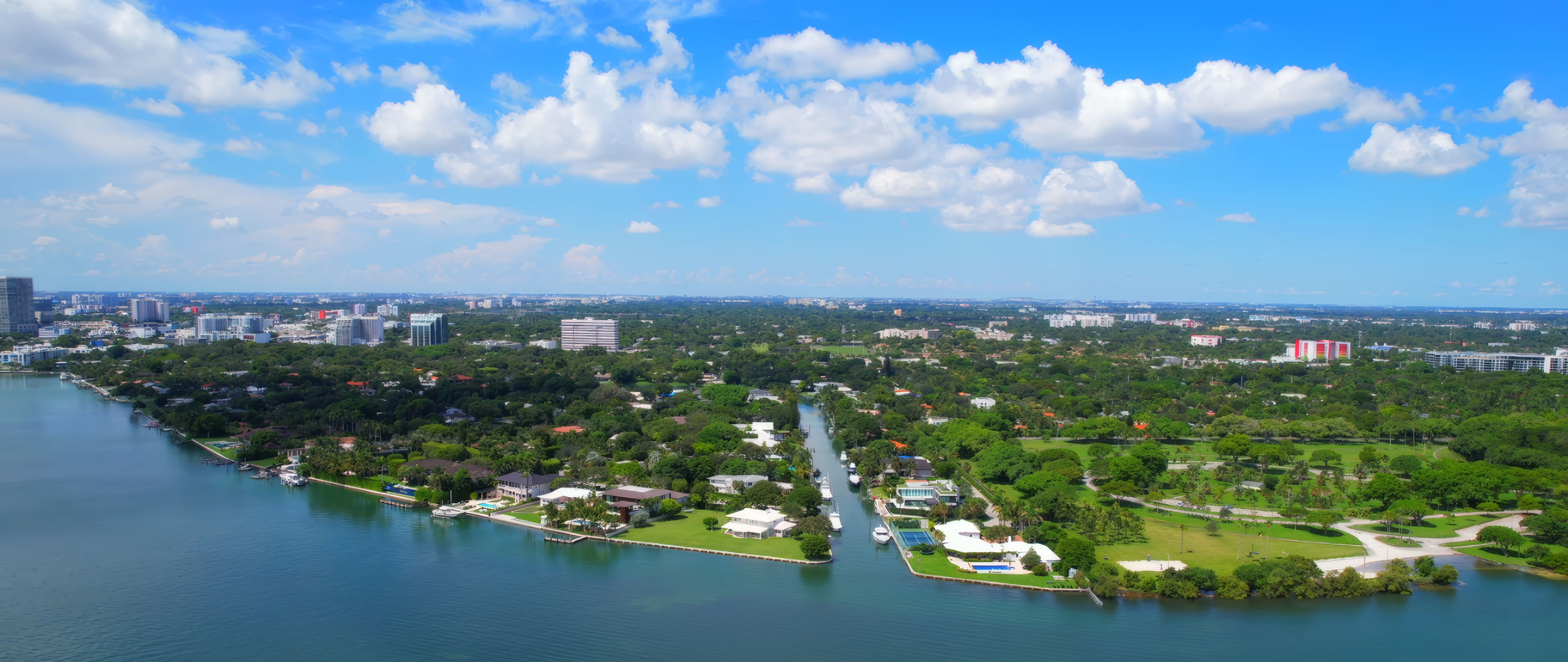
Bay Point, Miami, Florida - EVERYTHING You Want to Know
Gather your tastiest treats and your go-to pour as we commence this virtual tour into Bay ...
.png)
The Ultimate Guide to Miami-Dade's Top 25 Gated Communities for Single-Family Homes
Discover Miami's top gated communities in this essential guide for luxury home buyers...


Miami's BEST Restaurants in EVERY Neighborhood
Check out the absolute BEST restaurants in every neighborhood of Miami, including the best...
Selling Your Home?
Who are we?
We are the ALL IN Miami Group out of Miami.
We are Colombian, Filipino, Cuban, German, Japanese, French, Indian, Syrian, and American.
We are Christian, Hindu, and Jewish.
We are many, but we are one.
We sell luxury homes in Miami, Florida.
Although some of our clients are celebrities, athletes, and people you read about online, we also help young adults find their first place to rent when they are ready to live on their own.
First-time buyers?
All the time!
No matter what your situation or price range is, we feel truly blessed and honored to play such a big part in your life.