



What $500K, $1M, and $2M+ Gets You in the Design District Right Now

Amit Bhuta
I use non-traditional marketing to inspire the most motivated buyers to pay the max for Miami luxury homes...
I use non-traditional marketing to inspire the most motivated buyers to pay the max for Miami luxury homes...
The Miami Design District has never been shy about knowing exactly what it is.
It's a neighborhood where your quick coffee run takes you past a $10,000 handbag, a gallery opening, and architecture inside what seems to be an ordinary parking garage.
Yet, despite all that retail sparkle, buying a home in this district comes with a little more attitude than acreage, as the residential market is much smaller and more selective.
Here, there aren’t endless streets of homes to choose from, so what hits the home search tends to come from a relatively tight collection of buildings and developments.
It also means the usual Miami scenario of comparing twenty nearly identical listings is replaced with watching a handful of good options and deciding whether one is worth jumping on.
Price matters, too, of course, and as your budget grows, you'll have more access, privacy, a newer development, and the Design District personality that made you want to call this place home.
So if you want to live close enough to the action that “just browsing” at Dior can become an expensive weekend habit, it helps to know what each level of spending realistically opens up.
Here’s what your budget can get you right now in the Design District.
AROUND $500K
.png?w=1140)
1) Established Boutique and Mid-Rise Condos
With a $500K budget, buying in the Design District is possible even without a bank account that dresses like the stores outside.
Current inventory in buildings such as Baltus House and Quadro puts many smaller and mid-sized condos in roughly the $450K to $600K range.
Meanwhile, studios at Baltus House can dip considerably lower.
At Quadro, buyers with this budget are commonly looking at one-bedroom residences of roughly 600 to 800 square feet, with current asking prices at about $490K, $519K, $550K, and $599K.
Baltus House can stretch the money further on space, with several current two-bedroom listings around $540K to $595K and sizes hovering near 950 to 1,060 square feet.
These are modern urban homes rather than sprawling Miami pads, so expect balconies, shared pools and fitness areas, garage parking, and the convenience of having the Design District turn an innocent afternoon walk into an expensive shopping decision.
The choice between buildings matters because the same $500K-ish purchase price can buy different amounts of interior space, amenities, and monthly expenses.
It is also worth remembering that $500K is a useful middle point for this category, not a hard admission price, since the neighborhood has smaller units below it and larger residences that push comfortably past $600K.
If your goal is to own in the Design District without making luxury branding part of the bill, this is the budget where the neighborhood offers its most practical selection.
AROUND $1M
 (2).png?w=1140)
1) Gated Multi-Level Townhomes
The search changes from choosing a unit in a larger building to hunting for something much harder to find in the Design District at $1M: a home with multiple levels and more separation between daily life and the neighbors upstairs.
One Bay Residences is the key player on this level, a gated community of just 38 townhomes completed in 2018 with residences ranging from one to three bedrooms.
The community includes layouts with private garages and, in some homes, rooftop terraces, giving buyers a more house-like setup without moving away from the district’s urban core.
Current asking prices show just how broad this category can become, with an entry-level residence recently listed at $799K, two-bedroom options around $1.27M to $1.30M, and a larger three-bedroom asking about $1.88M.
So while we call this the $1M tier, buyers should think of that number as the doorway rather than a neatly fenced-in price bracket.
The main advantages are privacy and vertical space, which can be appealing if elevator-to-living-room condo life is not on your vision board.
The catch is availability.
One Bay is small, and current market searches show only a handful of residences for sale at a time, so buyers cannot count on ten comparable townhomes patiently waiting for a spreadsheet showdown.
If this is the lifestyle you want, having some flexibility above $1M and being ready when the right layout appears will give you a much stronger position than shopping by price alone.
AROUND $2M+
 (1).png?w=1140)
1) Branded New-Development Residences
At $2M+, the Design District poses a new question: what if your home came with a luxury brand attached?
Miami Design Residences by Fouquet’s is bringing that market directly into the neighborhood, with sales launched in 2026 and pricing beginning at about $1.8M.
The planned development at 39 NE 39th Street will include 143 luxury residences ranging from one to four bedrooms, and a Fouquet’s hotel.
That means the premium is not simply paying for another bedroom or a newer kitchen.
Buyers are entering a service-heavy, design-driven residential experience tied to an internationally recognized hospitality name and architecture by David Chipperfield Architects.
Prices start close enough to $2M for one-bedroom buyers to enter this market, but larger residences move quickly into several-million-dollar territory, so expect the plus sign beside $2M to be the expected common value.
There is also an important timing difference because this is pre-construction, meaning buyers purchase before the building is finished, with completion currently targeted for 2030.
For someone who wants a home today, four years is more than a minor scheduling conflict.
On the other hand, buyers planning further ahead get access to a residential product the established Design District market has not previously offered at this scale.
If $2M is your starting point rather than your ceiling, this tier is less about finding more square footage for the money and more about deciding whether the brand, services, design, and future address are worth paying for before the keys even exist.
THE REAL COST OF BUYING IN THE DESIGN DISTRICT
So, which budget works best in the Design District?
The interesting thing about buying in the Design District is that you do not necessarily need a seven-figure budget to secure the address, yet you should pay attention to what happens after the purchase price.
For an established condo, having roughly $500K to $600K to shop with gives you a much healthier selection than treating $500K as an absolute ceiling, especially when current inventory at Quadro and Baltus House frequently crosses into the mid-$500Ks.
Then come association fees, the monthly charges owners pay toward shared expenses such as building maintenance, amenities, management, and common areas.
Those costs can vary dramatically even within the neighborhood: one current Quadro listing shows a $664 monthly fee, while a Baltus House listing reports $1,719 per month.
One Bay can bring a different equation, with current listings showing association fees from about $434 to $833 per month depending on the residence.
In other words, comparing two purchase prices without comparing their monthly carrying costs is like comparing restaurant entrées while ignoring the entire second page of the bill.
Condo buyers should also review the association’s financial records and, where applicable, its structural integrity reserve study, which estimates how much money needs to be set aside for major building repairs and replacements.
Florida law requires these studies for qualifying residential condo buildings with three habitable stories or more, making reserves and future assessments an important part of due diligence rather than paperwork to speed-read before closing.
Insurance deserves its own line in the budget too, and buyers should check the flood designation of the specific property rather than assuming every Design District address carries the same risks; Miami-Dade provides address-level flood-zone lookup for exactly that reason.
At the $1M level, keeping room above the headline budget makes sense because the townhome inventory is so small that the right residence may appear at $1.2M or $1.3M.
And at $2M+, buyers entering the branded-residence market should think beyond the contract price and understand the deposit schedule, future ownership expenses, and the financial commitment involved in buying years before completion.
The Design District rewards buyers who arrive with a range rather than a magic number, because limited inventory doesn't allow the market to work with a perfectly tidy budget.
Bring enough money for the home you want, enough breathing room for the building that comes with it, and perhaps a separate emergency fund for the dangerous proximity to Gucci.
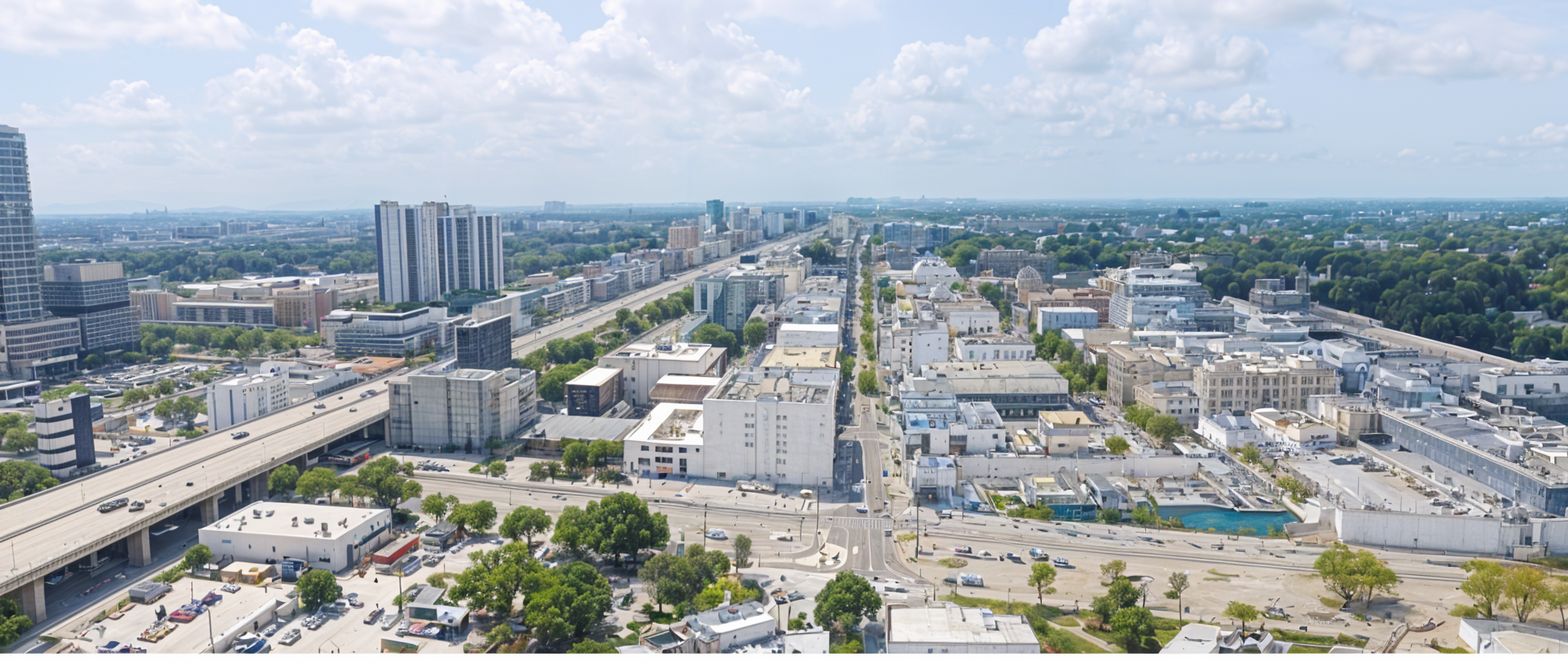
Design District, Miami, Florida - EVERYTHING You Want to Know
Buckle up and join our unmatched virtual journey through the BEST of the Miami Design Dis...
.png)
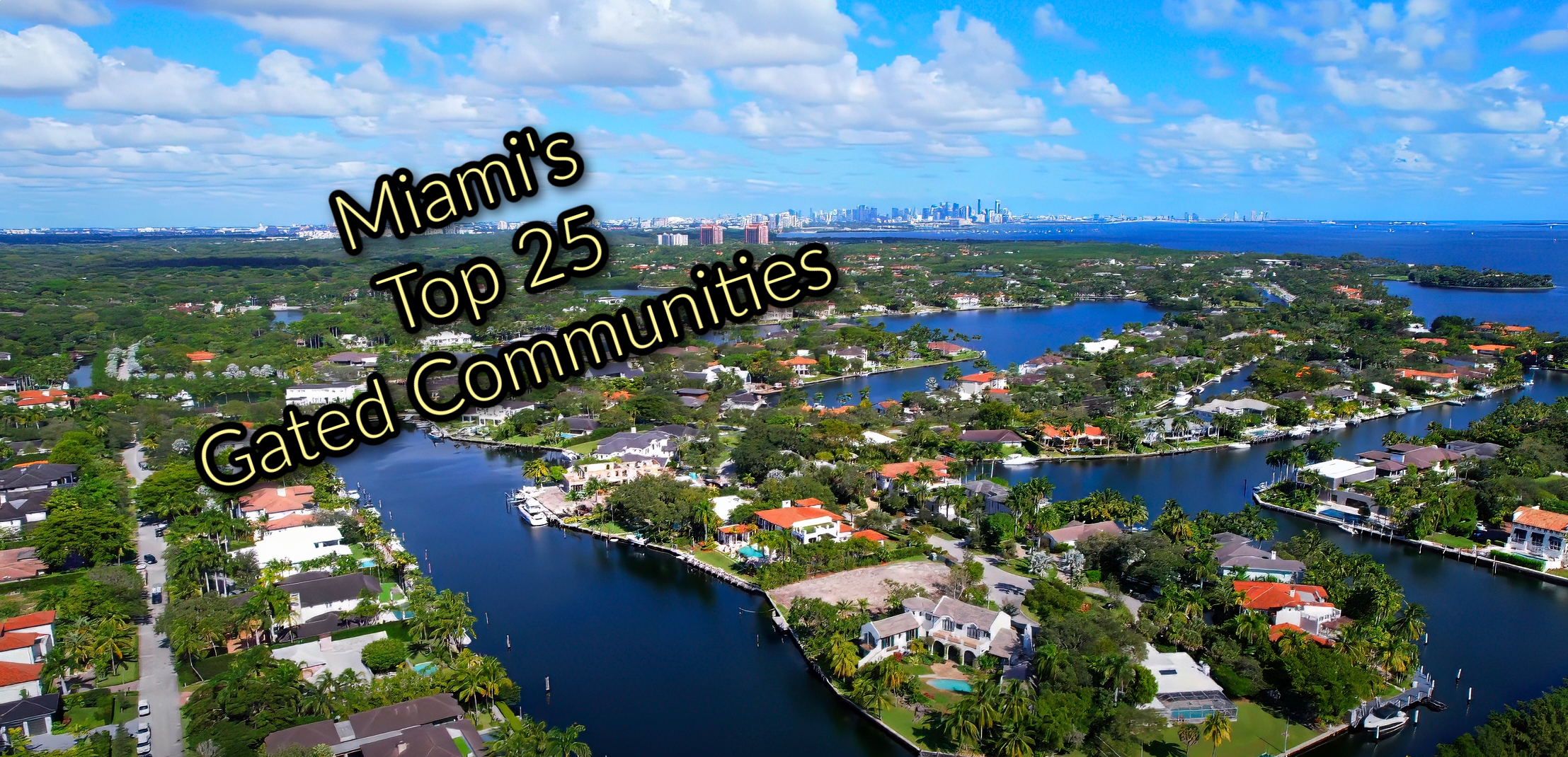
The Ultimate Guide to Miami-Dade's Top 25 Gated Communities for Single-Family Homes
Discover Miami's top gated communities in this essential guide for luxury home buyers...


Miami's BEST Restaurants in EVERY Neighborhood
Check out the absolute BEST restaurants in every neighborhood of Miami, including the best...
Selling Your Home?
Who are we?
We are the ALL IN Miami Group out of Miami.
We are Colombian, Filipino, Cuban, German, Japanese, French, Indian, Syrian, and American.
We are Christian, Hindu, and Jewish.
We are many, but we are one.
We sell luxury homes in Miami, Florida.
Although some of our clients are celebrities, athletes, and people you read about online, we also help young adults find their first place to rent when they are ready to live on their own.
First-time buyers?
All the time!
No matter what your situation or price range is, we feel truly blessed and honored to play such a big part in your life.