



What $300K, $500K, and $1M+ Gets You in Overtown Right Now

Amit Bhuta
I use non-traditional marketing to inspire the most motivated buyers to pay the max for Miami luxury homes...
I use non-traditional marketing to inspire the most motivated buyers to pay the max for Miami luxury homes...
In Overtown, the past and the future can live on the same block — and they don’t always agree on the rent.
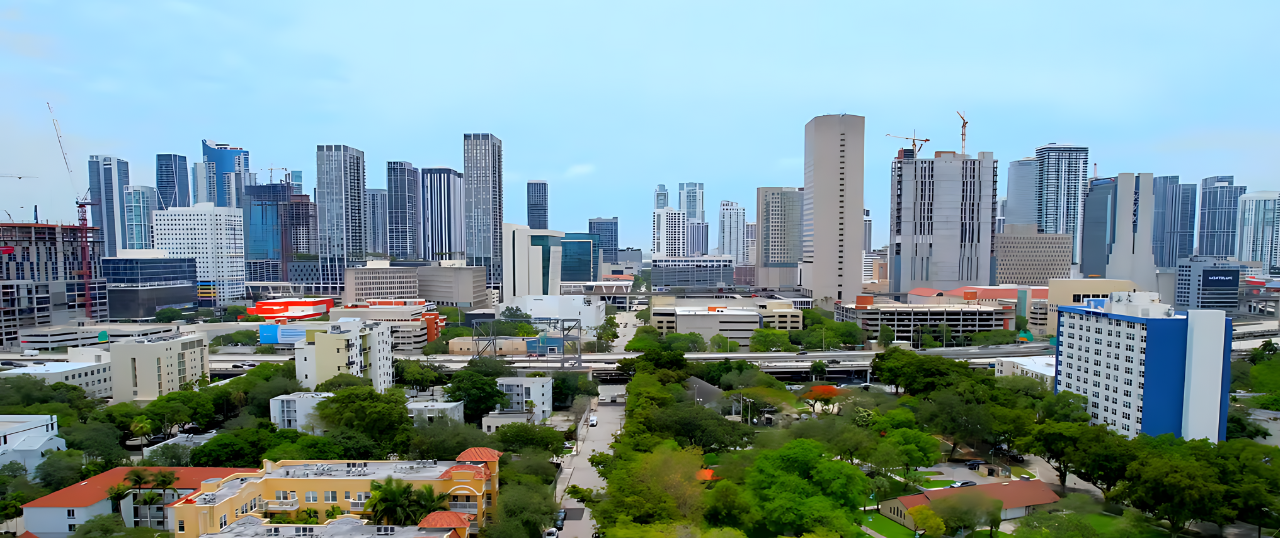
Known as one of Miami’s oldest historically Black communities, Overtown proudly offers generations of culture behind streets that now sit minutes from Downtown, Wynwood, and some of the city’s biggest redevelopment projects.
This central location has put Overtown back in a very bright real estate spotlight.
Here, buyers are looking at a neighborhood where longtime communities, new construction, public investment, and private development are all moving at once.
It creates a market where understanding what is happening around a property may matter as much, or even more than the property itself.
Overtown is changing quickly, but its history keeps the neighborhood from becoming just another blank canvas for Miami’s next building boom.
And with history on one corner and a crane on the next, buying a home in Overtown comes with more plot twists than the neighborhood tours let on.
Here’s what your budget can get you right now in Overtown.
AROUND $300K
 (29).png?w=1140)
1) Older Condos and Townhouse-Style Condos
If you expected $300K in central Miami to buy a studio with enough room to admire your refrigerator from bed, Overtown proves your budget can buy you more.
Older condo communities such as Town Park Plaza can put two or three bedrooms within reach, often with roughly 800 to just over 1,000 square feet.
Some units spread across two floors, giving them more of a townhouse setup even though the deed still says condo.
A current three-bedroom example at 1990 NW 4th Court has 1,026 square feet over two stories, while other Overtown condos are asking around the high-$200Ks to mid-$300Ks.
The buildings are older, so typically, practical space and location are the highlights.
Monthly association fees will also need more research, especially because older communities can differ in reserves, maintenance responsibilities, insurance, and planned improvements.
The interiors vary too.
One unit may have already been updated, while the next may still be waiting patiently for someone to explain that 1990s brown cabinetry has had a respectable run.
The upside is that buyers can get multiple bedrooms surprisingly close to Downtown, Wynwood, the Health District, and major transit without paying new-construction prices.
For someone prioritizing usable space over shiny amenities, Overtown’s older condo stock is one of the more convincing ways to make $300K work near Miami’s urban core.
AROUND $500K
 (30).png?w=1140)
1) Larger Townhouse-Style Condos
Four bedrooms near Downtown Miami for $500K will make you do a double-take, but they exist in Overtown.
Here, larger condo-style homes are more spacious than you think, especially in developments where the units function more like compact townhouses than traditional apartments.
In fact, a current home at 1975 NW 3rd Court is asking $489,900 for four bedrooms, 2.5 bathrooms, and 1,347 square feet, and this extra space can make a big difference for families, multigenerational households, or anyone whose definition of a home office doesn't include the dining table.
These properties are generally newer or larger than the neighborhood’s $300K condo stock, although they still come with association rules and monthly fees.
Parking, outdoor space, layout, and how much of the exterior the association maintains can vary between communities.
And since the legal ownership may still be condominium even when the property looks like a townhouse, buyers should understand what they personally own and what belongs to the association, which will help when repairs eventually move beyond paint and countertops.
At $500K, these larger units work best for buyers who want bedrooms and central access more than a luxury-building lifestyle.
You are paying for usable space in the middle of Miami—not for someone downstairs to hand you a chilled towel.
 (32).png?w=1140)
2) New-Construction Studio Condos
Take the same half-million dollars and shrink the floor plan dramatically.
While it sounds like a terrible sales pitch, the trade is brand-new construction in a very different version of Overtown.
HUB Miami at 525 NW 2nd Avenue is bringing a new high-rise product into Southeast Overtown, with studios starting at just 394 square feet and larger layouts extending into one- and two-bedroom residences.
Here, buyers are exchanging bedroom count for newer construction, modern amenities, and a location within walking distance of MiamiCentral and close to Downtown.
The building plans include resident lounges, fitness and wellness spaces, co-working areas, and other amenities aimed at a more urban, lock-the-door-and-go lifestyle.
This purchase is almost the opposite of the larger townhouse-style condo available for similar money.
One gives you room to spread out, and the other gives you a much newer building and puts more of the value into location, amenities, and convenience.
Smaller square footage also makes it especially important to study the actual floor plan rather than assuming every 400-ish-square-foot studio uses space equally efficiently.
For buyers who want new construction and an urban Miami lifestyle more than spare bedrooms, $500K can buy a very different Overtown than the one found just a few blocks away.
 (31).png?w=1140)
3) Residential Infill Lots
Residential infill lots around this price point give buyers and small developers the chance to start with the land and decide what comes next.
A current 3,000-square-foot parcel at 1646 NW 1st Court is asking $500K, while another nearby Overtown lot at 193 NW 16th Street has been marketed below $400K.
Think that's too expensive for dirt? You probably haven't realized where that 'dirt' is.
Overtown sits beside Downtown, the Health District, Wynwood, transit, and some of Miami’s largest ongoing development areas, so the value is tied to location and what zoning allows.
An infill lot is vacant land within an already developed neighborhood, usually intended to fill a gap between existing buildings rather than create an entirely new subdivision.
The important question is not merely whether a house fits on the site, but what Miami zoning permits there and what the setbacks, parking rules, height limits, and other requirements do to the plan.
Construction costs, design, permits, site work, and the time spent carrying the land all come after the purchase, so $500K is certainly not the final project budget.
Overtown’s continuing push for new homeownership and infill development makes these lots part of the neighborhood’s housing story rather than a random vacant-parcel footnote.
Buy the lot if you have a clear plan for what can legally and financially rise from it, not because the rendering in your head looked fantastic.
AROUND $1M+
 (33).png?w=1140)
1) Single-Family Homes with Redevelopment Value
A $1 million house in Overtown may look surprisingly modest from the curb.
That is because the house and the land underneath it can have two very different interpretations for value.
A current property at 1541 NW 1st Court has been listed at $1 million for roughly 1,480 square feet, with four bedrooms in the public record and T3-O zoning.
In a suburban neighborhood, buyers might compare that price mainly through square footage, finishes, and lot size.
Here, proximity to Downtown, scarce urban land, zoning, and the possibility of future redevelopment can make that comparison far less useful, so a perfectly livable house may appeal to two completely different buyers.
One sees a centrally located home.
Another starts asking what the parcel could support ten years from now.
But don't get us wrong — every detached house isn't automatically a development jackpot, and buyers should never pay for theoretical potential without checking the actual zoning and site constraints.
For someone who simply wants the home, redevelopment value can still matter because it may influence both the purchase price today and what the property is worth to a future buyer.
Above $1M, understanding the dirt beneath an Overtown house can be every bit as important as inspecting what is built on top of it.
 (34).png?w=1140)
2) Small Multifamily and Development Properties
Overtown’s upper market includes existing apartment buildings that can produce rental income today while carrying much larger redevelopment potential for tomorrow.
A current 12-unit property at 220 NW 11th Terrace is asking $2.35 million, with eleven two-bedroom units and one one-bedroom unit spread across roughly 6,234 rentable square feet.
The bigger detail may be its T6-8-O zoning, which allows development up to eight stories on the site.
That creates a very Overtown investment equation: the existing building has value because people already live there and pay rent, while the parcel can persuade buyers for what might eventually replace or expand it.
Buyers therefore need to look at current rents, occupancy, building condition, and operating expenses alongside zoning and future development rights.
A higher permitted building does not automatically mean redevelopment makes financial sense tomorrow morning.
Demolition, financing, design, approvals, construction costs, tenant considerations, and market timing can turn an exciting zoning map into a very patient investment.
Larger vacant development sites also pop up in Overtown at several million dollars, fitting into the same broader story even though they are aimed more at professional developers than ordinary homebuyers.
This proves that Overtown isn't always a place to buy more space for more money.
At the upper end, you are often paying for income today, density tomorrow, or some combination of both, so the best property is the one whose current use is still valuable while you wait for the future plan.
THE REAL COST OF BUYING IN OVERTOWN
So, which budget works best in Overtown?
Buying a house in Overtown means paying attention to two addresses at once — the one on the property and the neighborhood that may exist around it five years from now.
That is unique even for Miami, because construction, public investment, transit access, historic preservation, and private redevelopment are all working on the same relatively small patch of city.
For a buyer who wants ownership near the urban core, $300K can still be credible, but you should judge an older condo alongside its association and long-term building plans.
At $500K, the decision becomes more interesting because the same amount can point toward substantially more interior space, brand-new high-rise living, or even an empty parcel waiting for a plan.
You can't compare those choices by square footage alone.
Instead, buyers have to decide whether they are paying for space now, convenience now, or control over what gets built later.
Once the search reaches seven figures, zoning becomes a part of the property itself, which is especially accurate for older houses and apartment buildings whose current use may be worth less than what a future developer sees in the land.
The trick is not to pay tomorrow’s redevelopment price for a project you have no intention—or ability—to pursue.
You should also remember that Overtown’s growth is happening inside a historic community, so new investment lives alongside longtime residents, cultural institutions, and an active effort to expand local homeownership.
So, you shouldn't always aim for the newest building or the parcel with the tallest theoretical future.
For an ordinary buyer, $300K to $500K is still the most practical range, and $1M+ belongs to people who understand development, rental income, or land value well enough to know why they are paying the premium.
Overtown is one of the rare Miami neighborhoods where the property in front of you can be only half the investment research.
So before buying the future, make sure you would still be happy owning what is there today.
%20(40).png)
Overtown, Miami, Florida - EVERYTHING You Want to Know
Jump at this rare chance to solve the charming puzzle that is Historic Overtown. By, the e...
.png)
The Ultimate Guide to Miami-Dade's Top 25 Gated Communities for Single-Family Homes
Discover Miami's top gated communities in this essential guide for luxury home buyers...


Miami's BEST Restaurants in EVERY Neighborhood
Check out the absolute BEST restaurants in every neighborhood of Miami, including the best...
Selling Your Home?
Who are we?
We are the ALL IN Miami Group out of Miami.
We are Colombian, Filipino, Cuban, German, Japanese, French, Indian, Syrian, and American.
We are Christian, Hindu, and Jewish.
We are many, but we are one.
We sell luxury homes in Miami, Florida.
Although some of our clients are celebrities, athletes, and people you read about online, we also help young adults find their first place to rent when they are ready to live on their own.
First-time buyers?
All the time!
No matter what your situation or price range is, we feel truly blessed and honored to play such a big part in your life.