



What Nobody Tells You About Living on Star Island

Amit Bhuta
I use non-traditional marketing to inspire the most motivated buyers to pay the max for Miami luxury homes...
I use non-traditional marketing to inspire the most motivated buyers to pay the max for Miami luxury homes...
Star Island has one job — to make everyone driving over the MacArthur Causeway crane their neck and wonder which celebrity or important person is rich enough to live there.
And it's pretty good at what it does.
You see, this island has a rotating cast of musicians, athletes, and people whose Wikipedia pages have a "net worth" section.
In fact, Start Island is probably the closest thing Miami has to its own private Beverly Hills, minus the traffic, plus a lot more water views.
But is it all rooftop parties, jet skis, and never having to explain where you live twice, as everyone assumes?
While there are probably lots of dinner parties and social gatherings on this island, most people forget that there are also responsibilities that come with owning a piece of paradise built from dredged sand and pure ambition.
Here are six things nobody tells you about living on Star Island.
 (70).png?w=1140)
1) Your House Now Requires a Payroll
At a certain square footage, a house stops acting like a house and starts sending calendar invitations.
Star Island’s estates may appear perfectly self-contained from the water, but keeping them that way can require a steady rotation of people who know where the circuit breakers, irrigation valves, spare keys, and emergency towels are hiding.
Landscapers manage grounds that can include mature palms, formal gardens, hedges, lawns, fountains, and enough leaf removal to make autumn seem possible in Miami.
Pool technicians, housekeepers, security personnel, pest-control crews, mechanics, and maintenance workers handle the many systems operating behind the glamorous parts.
A property manager may coordinate the entire production, especially when the home is not occupied every day, or the owner does not wish to spend breakfast discussing why one air-conditioning zone has declared independence.
None of these jobs is decorative.
Large homes contain more rooms to cool, more surfaces to clean, more equipment to service, more access points to secure, and more opportunities for one tiny malfunction to develop confidence.
Even routine deliveries require organization when food, flowers, furniture, packages, and household supplies arrive at an address where leaving everything beside the front door is not considered an option.
The monthly operating cost can therefore behave less like a household budget and more like a company expense report.
Owners who value privacy must also decide who enters the property, when they arrive, where they park, and how much access each person receives.
The mansion may have a private gym, cinema, guest wing, and chef’s kitchen, but every amenity adds another item to somebody’s checklist.
On Star Island, homeownership can resemble running a boutique hotel where the guests are relatives, the owner occupies the best suite, and nobody is permitted to leave a bad review.
 (71).png?w=1140)
2) The Gate Guards the Driveway, Not the Backyard
The guardhouse can turn away an unfamiliar sedan, but it has no authority over Biscayne Bay.
Star Island provides controlled land access, yet many estates open toward a wide stretch of water where boats pass within clear viewing distance.
Sightseeing operators openly market cruises past Star Island’s waterfront homes, turning private backyards into part of a narrated Miami attraction.
The estates are also visible from nearby public viewpoints, including portions of the MacArthur Causeway, where city records describe Star Island’s waterfront homes as part of the surrounding Biscayne Bay scenery.
Yes, tall hedges can screen the street, but they are much less persuasive when the curious audience arrives by boat wearing sunglasses and holding three phones.
That changes the meaning of privacy because security becomes partly about managing sightlines, cameras, marine access, and what can be seen from the pool deck.
A waterfront lawn may be physically inaccessible to strangers but visually available to anyone passing slowly enough to admire the architecture.
Most boats will continue on their way without turning the moment into an investigation.
The possibility of being observed, however, never disappears completely as the gated address might suggest.
The same open water that offers enormous views and a beautiful sense of space also allows the outside world to look back.
Star Island offers impressive seclusion from the road, but the backyard occasionally participates in a tour whose guide was not invited.
 (72).png?w=1140)
3) There's No Corner Store in Paradise
Star Island has mastered the art of making a forgotten carton of milk seem like a transportation issue.
The island is designated for single-family residential use, so the neighborhood does not have a café, pharmacy, grocery store, salon, or cheerful little market selling one lemon for six dollars.
Every school run, restaurant meal, medical appointment, shopping trip, and emergency toothpaste purchase requires leaving the island.
Its single main access road concentrates ordinary movement through the same entrance, whether the person crossing it is heading to dinner or returning because someone forgot the charger.
Delivery services remove some of the inconvenience, but they replace spontaneous errands with timing, gate clearance, instructions, and the occasional message announcing that the driver cannot locate the mansion surrounded by other mansions.
A stocked pantry becomes a defensive strategy.
Walking around the island can be peaceful, scenic, and pleasant, but it will not end with coffee unless you brewed it yourself.
The absence of businesses protects the residential atmosphere and prevents the neighborhood from collecting commercial traffic throughout the day.
It also means there is no nearby place to wander into when nobody wants to cook and everybody has rejected the contents of the refrigerator.
Star Island’s central location between Miami and Miami Beach looks convenient from above.
Daily convenience depends on remembering that “near everything” is not the same as “having anything.”
Paradise is blissfully quiet, but it expects someone to make a list before leaving it.
 (73).png?w=1140)
4) Knocking Down a Wall Is Never Just Knocking Down a Wall
On Star Island, a sledgehammer must have an architect, a contractor, a consultant, and a presentation board large enough to qualify as furniture.
A simple interior refresh will not automatically be a public debate, but major additions, demolitions, exterior changes, and complete estate replacements will undergo detailed city review.
Miami Beach’s permit process requires plans to be checked for compliance with building codes, zoning rules, and other state and local requirements before construction can proceed.
The history of 42 Star Island Drive shows how involved the process can become.
Plans to replace its 1925 residence reached the Design Review Board and the Historic Preservation Board as the city considered the existing home’s architectural significance and the proposed replacement.
That means ownership does not always have limitless freedom to tear down the current house and introduce a new one with twice the glass and a staircase that appears to float through the home.
Architectural design, site planning, landscaping, demolition, preservation questions, and permit corrections can all influence the schedule.
The architect may spend nearly as much time explaining the project to reviewing agencies as explaining it to the person paying for it.
Construction then becomes part of island life because crews, machinery, materials, dumpsters, and specialist contractors must operate within a small residential setting.
The neighborhood association has even supported stronger enforcement of traffic and parking violations involving contractors, which suggests that building a dream home can become everyone else’s logistical subplot.
A major estate project may require patience from the owner, the design team, the city, and whichever neighbor has been listening to concrete work since Tuesday.
Knocking down the wall may take one afternoon, but securing permission for that afternoon can consume an impressive portion of the calendar.
 (74).png?w=1140)
5) Technically, Biscayne Bay Is a Roommate
Biscayne Bay looks gorgeous from the terrace, but it creates gigantic work.
The water provides open views, boating access, dramatic sunsets, and a constant reminder that the property has one very large neighbor with no respect for boundaries.
A seawall is not merely part of the landscaping because it helps protect the land supporting the lawn, pool, house, and everything else that would prefer not to enter the bay.
Miami Beach classifies seawalls as special construction requiring county environmental approval in addition to a city building permit.
Substantial seawall repairs may also trigger current elevation requirements, meaning an expensive repair will come with additional engineering decisions.
Docks, pilings, boatlifts, shoreline work, and other marine improvements can involve structural plans and approvals from several environmental agencies before anyone begins attaching luxury watercraft to anything.
Flood planning is also a consideration because Miami Beach’s low coastal elevation creates drainage challenges during heavy rain, high tides, and storm surge.
Star Island has previously been included in city drainage improvement projects, which proves that keeping water where it belongs requires public infrastructure and private seawalls.
Salt also works patiently on metal, equipment, gates, exterior fixtures, and anything advertised as weather-resistant but not prepared for decades beside the bay.
Storm preparation can include checking drainage, securing outdoor furniture, protecting boats, testing generators, and reviewing whether every vulnerable system has received enough attention.
The waterfront is therefore not one amenity attached to the property.
It is an engineering system disguised as the best view in the house, and Biscayne Bay contributes beauty while refusing to split the maintenance bill.
 (75).png?w=1140)
6) 'Having People Over' Will Ask You For a Vendor List
A dinner invitation crosses a very expensive line somewhere between the second bartender and the commercial generator.
Miami Beach now requires permits for qualifying large residential parties during specified high-demand periods when the event may involve more than 100 guests, more than 50 vehicles, fireworks, or commercial-grade sound, lighting, generators, or bar setups.
At that scale, “having people over” no longer means ordering extra ice and moving the fragile lamp.
It may involve caterers, valet operators, security teams, bartenders, rental companies, lighting crews, sound technicians, florists, tent suppliers, and someone whose entire job is preventing the driveway from becoming international waters.
Qualifying applications must be submitted 90 days ahead and may be reviewed by city departments, review committees, and the recognized neighborhood association.
The process can require insurance documents, indemnification, related building permits, operational plans, and permission for city personnel to inspect the property for compliance.
The rules were created because very large residential events can clog limited roads, delay emergency vehicles, create noise, and overwhelm neighborhoods designed for private homes rather than temporary festival grounds.
That concern carries particular weight on Star Island, where every guest vehicle, caterer, performer, flower truck, and emergency response must work around the same narrow access system.
A normal birthday dinner will not require municipal choreography simply because someone opened champagne.
The problem begins when the gathering uses enough equipment and outside services to resemble a commercial event.
The house may have room for hundreds of guests, but the surrounding island still has to absorb whatever arrives with them.
On Star Island, the difference between a private gathering and a regulated production may be one vendor list, fifty vehicles, and a neighbor scrolling through the city website.
WHO GETS THE MOST OUT OF LIVING ON STAR ISLAND?
Those who see privacy as something to manage, not something a gate can guarantee
Star Island expects the home to act like a private world with its own staff, systems, and schedule.
The island offers grand waterfront estates, controlled road access, enormous lots, and a level of quiet that seems almost staged beside busy Miami Beach.
This separation is why it's one of the most sought-after addresses, because the neighborhood removes shops, crowds, and casual foot traffic from the daily backdrop.
Meanwhile, the distance works when privacy, space, boating access, and hosting at home matter more than walking out for coffee.
Star Island also rewards a lifestyle that can absorb the work behind the scenery, from landscaping and security to pool care, dock upkeep, and a house manager who probably knows more passwords than the family.
The bay turns the backyard into both a view and a transportation lane, so the setting feels exclusive without becoming invisible.
Life on this island runs smoothly when the home is treated with responsibility rather than seeing it as a giant property that maintains itself through confidence.
The island’s lack of commercial activity keeps the atmosphere calm, although it also makes planning more useful than pretending toothpaste will materialize.
Its single entrance gives the neighborhood a strong sense of control, while the water opens the scenery in every direction.
Star Island is especially convincing when privacy means fewer people passing the front door, not zero people noticing the house from a boat.
At its best, the island delivers a rare mix of space, quiet, status, and waterfront drama without asking the neighborhood to entertain anyone on command.
WHO MAY WANT TO KEEP LOOKING?
Anyone who wants luxury but runs away from managing responsibilities
Star Island contains homes, not errands, so every missing ingredient, school run, appointment, delivery, repair visit, and dinner reservation must pass through the same narrow route.
A large estate also creates its own payroll, maintenance calendar, vendor list, and collection of small problems with very expensive accents.
Anyone who dislikes staff coordination, security routines, contractor schedules, or city review may find the address more demanding than dreamy.
The guarded entrance reduces random traffic, but it cannot stop sightseeing boats from treating the waterfront as part of Miami’s unofficial celebrity map.
Major renovations can draw in architects, review boards, permits, preservation questions, trucks, noise, and enough paperwork to make a wall removal seem ambitious.
The bay adds seawalls, docks, salt exposure, flood planning, and storm preparation to a house that was already keeping several people busy.
Large gatherings can also transform from private fun into a regulated event once vendors, vehicles, sound systems, and guest counts begin multiplying.
Star Island does not offer the convenience of a walkable neighborhood, the anonymity of a hidden estate, or the simplicity of a lock-and-leave condo.
It asks for patience, planning, money, and a calm response when the phrase “marine contractor” enters the group chat.
Anyone searching for effortless luxury may discover that Star Island offers spectacular luxury, but effort remains fully employed.
AN HONEST TAKEAWAY
What living on Star Island really comes down to
Star Island is not a neighborhood in the usual sense and is more a collection of private compounds sharing one road and a famous name.
Its magic comes from the scale, the water, the silence, and the sense that Miami is close without being allowed to wander through the front yard.
The same setup creates nearly every trade-off.
Privacy is strong from the street but incomplete from the bay.
Daily life on the island is still dependent on leaving it.
The homes look self-contained, yet they rely on staff, vendors, city approvals, and infrastructure that never appears in the aerial photos.
Renovations become public processes, parties can become municipal concerns, and the waterfront behaves like a beautiful roommate who keeps forwarding repair estimates.
None of that weakens Star Island’s appeal, because the island was never designed to be easy, ordinary, or casual.
It was created to provide distance, presence, and enough waterfront to make a sunset look professionally staged.
The address works when the privacy, space, boating, and prestige are worth the planning required to keep everything running.
Living on Star Island comes down to a simple trade: the island gives you a private world, but maintaining that world is a full-time production with a very attractive shoreline.
%20(56).png)
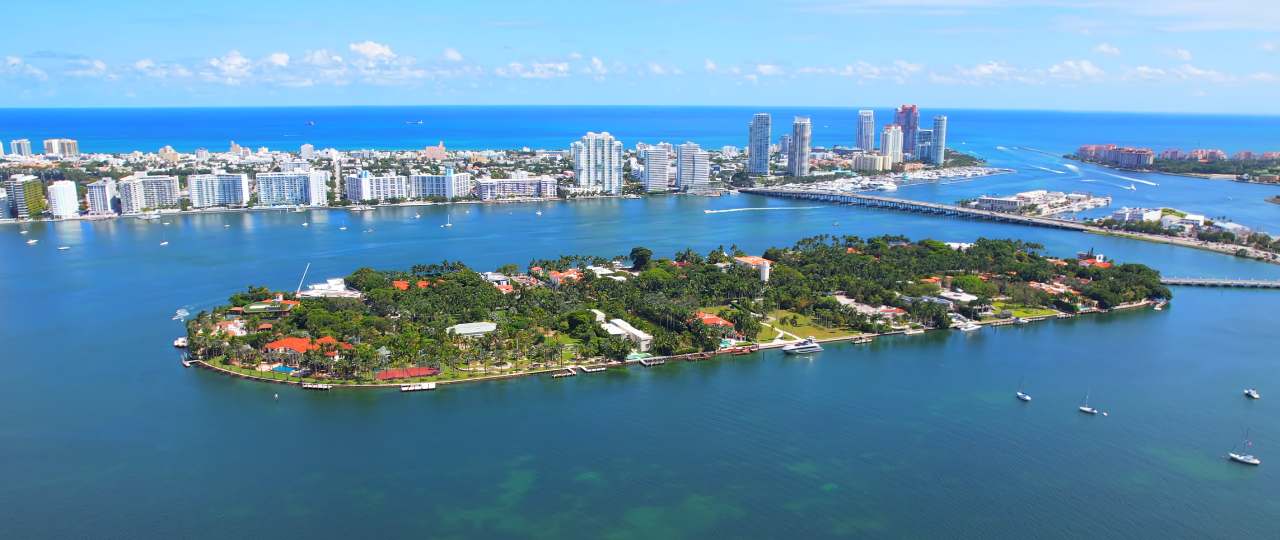
Star Island, Miami, Florida - EVERYTHING You Want to Know
Embark on this virtual cruise across everything you WANT and NEED to know about Star Islan...
.png)
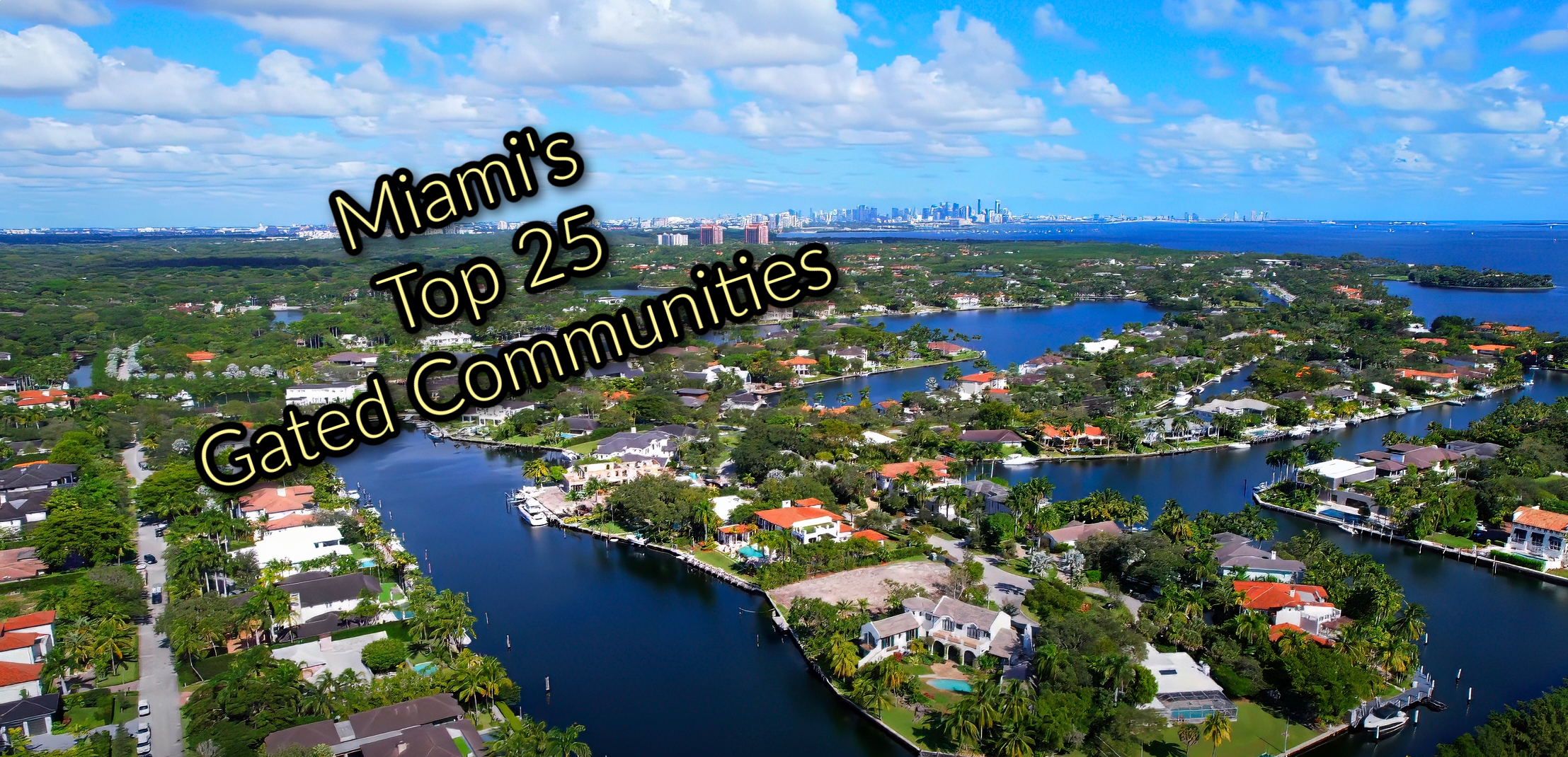
The Ultimate Guide to Miami-Dade's Top 25 Gated Communities for Single-Family Homes
Discover Miami's top gated communities in this essential guide for luxury home buyers...


Miami's BEST Restaurants in EVERY Neighborhood
Check out the absolute BEST restaurants in every neighborhood of Miami, including the best...
Selling Your Home?
Who are we?
We are the ALL IN Miami Group out of Miami.
We are Colombian, Filipino, Cuban, German, Japanese, French, Indian, Syrian, and American.
We are Christian, Hindu, and Jewish.
We are many, but we are one.
We sell luxury homes in Miami, Florida.
Although some of our clients are celebrities, athletes, and people you read about online, we also help young adults find their first place to rent when they are ready to live on their own.
First-time buyers?
All the time!
No matter what your situation or price range is, we feel truly blessed and honored to play such a big part in your life.