



What Nobody Tells You About Living in Sweetwater

Amit Bhuta
I use non-traditional marketing to inspire the most motivated buyers to pay the max for Miami luxury homes...
I use non-traditional marketing to inspire the most motivated buyers to pay the max for Miami luxury homes...
Sweetwater is a small city with an identity crisis — it can't decide if it's a neighborhood or a shortcut.
Everyone passing through swears it's the sleeper hit of Miami-Dade.
The rent's lower.
FIU's your next-door neighbor.
Dolphin Mall exists inside your inner circle, which feels like cheating in the best way.
The trolley's free, the food is loud and delicious, and "Little Managua" sounds like a nickname built with real character.
It's the pitch every renter wants to hear, and most of it checks out.
But that pitch has its highs and lows, and somewhere in that melody, a few notes are singing off-key.
Here are seven things nobody tells you about living in Sweetwater.
 (15).png?w=1140)
1) Same Zip Code, A Whole New Neighborhood You've Never Seen
Sweetwater’s map went through a growth spurt, but many mental maps never received the update.
The original city occupied roughly 0.8 square miles of compact residential blocks beside Florida International University.
A 2010 annexation expanded Sweetwater northward by nearly 1.5 square miles and brought Dolphin Mall, along with hundreds of commercial, industrial, and office properties, inside the city limits.
That expansion means the Sweetwater name now covers environments that do not appear to have exchanged decorating notes.
The older core contains closely spaced houses, duplexes, low-rise apartments, neighborhood businesses, parks, and streets where daily life happens within a relatively tight grid.
The annexed territory opens into shopping centers, warehouses, offices, hotels, major roads, canals, and parking lots with enough asphalt to develop their own weather pattern.
Expressways and waterways further separate these areas, so the city does not unfold as a smooth neighborhood from south to north.
One Sweetwater address may place the front door near FIU and longtime residential streets, while another may put Dolphin Mall, distribution buildings, and highway ramps in the immediate scenery.
A home search in this city should begin with the exact part of Sweetwater rather than assuming the name explains the surroundings.
Sweetwater did not replace its original neighborhood; it attached a much larger commercial area and kept the same title.
 (16).png?w=1140)
2) Move-In Day Happens Twice a Year, and You'll Feel It
August near FIU doesn't come with subtle seasonal cues; it brings rental trucks, mattress boxes, and someone attempting to fit a desk into a compact car.
Florida International University’s Modesto A. Maidique Campus borders Sweetwater on the south, making the university a daily presence even though the campus itself sits outside the city.
The streets closest to campus have developed around student housing, rentals, restaurants, transit stops, and businesses built for people whose schedules include lectures, finals, and highly specific coffee requirements.
At the beginning and end of academic terms, moving activity, lease turnovers, family vehicles, furniture deliveries, and last-minute supply runs become much more visible.
The same cycle returns around the next major semester change because there isn't a graceful way to move a mini refrigerator.
SW 107th Avenue is where much of this university-facing growth is happening, with taller apartment buildings and mixed-use development creating a sharper contrast with Sweetwater’s older low-rise blocks.
Restaurants and convenience businesses near campus can become livelier when classes are in session and noticeably less frantic when the academic calendar loosens its grip.
Not every Sweetwater street turns into a student district, so the effect depends heavily on distance from FIU and the major apartment clusters.
Living close to campus can simplify work, school, transit, and rental demand, but it also means the neighborhood occasionally celebrates move-in weekend whether anyone volunteered or not.
FIU has approved an agreement tied to an approximately 820-bed housing project, while another proposed development near SW 107th Avenue would add about 1,600 beds, proving that the university's influence is still expanding.
Sweetwater keeps a regular calendar and an FIU calendar, and the second one is carrying boxes.
 (17).png?w=1140)
3) You'll Learn More Spanish Than You Planned To
English will get someone through Sweetwater, but Spanish will often get the conversation started faster.
Census estimates show that 95 percent of Sweetwater residents age five or older speak a language other than English at home, while nearly three-quarters of the population is foreign-born.
Spanish is commonly encouraged in exchanges at restaurants, bakeries, neighborhood shops, service counters, community events, and casual conversations.
A person may enter knowing how to order coffee and eventually acquire opinions about the proper size, strength, sweetness, and acceptable serving cup.
Sweetwater’s strong Nicaraguan influence dates back decades, and the area became known as “Little Managua” as Nicaraguan families, businesses, religious institutions, and traditions established deep local roots.
That history remains visible, but modern Sweetwater includes a wider Latin American and immigrant community rather than one single national identity.
City notices and public information frequently appear in both English and Spanish, reflecting how the community communicates rather than serving as decorative translation.
Menus may introduce new dishes, conversations may introduce new expressions, and somebody’s grandmother may introduce both before asking why so little was eaten.
Fluency is not an entrance requirement, but a willingness to listen and participate makes ordinary errands easier and social interactions warmer.
The language is woven into the city’s rhythm, food, humor, customer service, public life, and family networks.
Sweetwater may not provide formal Spanish lessons, but it offers enough daily practice so you can learn and love it.
 (18).png?w=1140)
4) Your Backyard Doubles as Someone Else's Driveway
Sweetwater’s established residential core uses space with the efficiency of a family preparing the house for twelve additional dinner guests.
Its housing includes detached homes, duplexes, multifamily properties, mobile-home communities, and newer apartments rather than one consistent suburban format.
Lots can be compact, homes can sit close together, and parking may involve driveways, curb space, paved yards, and household negotiations conducted with the seriousness of international diplomacy.
The title is an exaggeration, as the city has not formally rezoned every backyard as overflow parking, but the joke understands the assignment.
Only 42.1 percent of occupied housing units are owner-occupied, so renters form a substantial part of Sweetwater’s housing picture alongside longtime owners and extended households.
This can create different expectations about maintenance, outdoor storage, guest parking, noise, and how permanently anyone plans to improve the property.
A charming older home may include additions, converted spaces, or years of updates that require careful permit and code record research.
Sweetwater’s Building and Zoning Department provides access to planning and permit materials, which matter when a bonus room appears to have been taken out of a magician's hat.
A duplex may offer useful rental flexibility, while a smaller detached house may provide more independence but less breathing room around the edges.
Privacy in Sweetwater can depend as much on fencing, landscaping, parking patterns, and neighboring use as it does on the number of bedrooms.
The residential core trades oversized lots and perfect visual order for density, adaptability, and the lively reality that personal space sometimes ends one car door earlier than expected.
 (19).png?w=1140)
5) Grandma's Social Calendar Is Better Than Yours
Retirement in Sweetwater can require a planner, comfortable shoes, and the confidence to defend a bingo card.
The City of Sweetwater Community Center runs senior activities focused on social connection, exercise, learning, entertainment, and general well-being.
Free hot meals are provided Monday through Friday, and qualifying Sweetwater residents can receive transportation to the program at no cost.
The activity list includes bingo, dominoes, music, arts and crafts, tai chi, technology classes, wellness programming, educational sessions, and social events.
We're looking at a weekday retiree itinerary with lunch included.
The domino table may have stronger attendance, sharper strategy, and considerably more commentary than many professional meetings.
Sweetwater also features parks, youth facilities, recreation classes, sports programs, seasonal celebrations, and community events for other age groups.
These services give the small municipality a practical role in everyday life beyond permits, utility charges, and official envelopes nobody enjoys opening.
Their value is seen in households that use them regularly, particularly when transportation or structured daytime activities would otherwise require private arrangements.
Programs still have schedules, enrollment requirements, and availability limits, so the calendar should be checked before Grandma is promised a government-funded social empire.
Sweetwater’s community services may not appear in glamorous property photos, but they can make the city more useful than several prettier places with nothing planned after breakfast.
 (20).png?w=1140)
6) Two Malls, One City, Zero Chill on Weekends
Dolphin Mall and International Mall sit close enough to Sweetwater that shopping can begin as an errand and end as a regional traffic event.
Sweetwater recorded more than $2.8 billion in retail sales in 2022, an enormous amount for a city of its residential size and a clear sign that the commercial districts serve far more than local households.
The number does not mean every resident is personally buying several thousand pairs of shoes, although weekend parking may suggest otherwise.
Dolphin Mall sits within Sweetwater’s expanded boundaries, while International Mall, FIU, IKEA, restaurants, offices, and other major destinations cluster around the city’s edges and transit routes.
Major roads funnel shoppers, commuters, students, workers, tourists, and delivery vehicles through the same general area, especially during weekends and holiday seasons.
A destination can appear nearby on the map while the final mile becomes the heart of the entire plot.
The city’s free trolley connects Dolphin Mall, International Mall, FIU, parks, municipal buildings, and numerous stops across Sweetwater.
It runs roughly every hour and a half, which makes it useful for planned trips but less effective for anyone who has just remembered an urgent return at 7:43 p.m.
Walking can work for errands within the older core or near FIU, but the large commercial areas were built around roads, parking fields, and longer distances.
Sweetwater offers remarkable access to shopping, dining, and services, although access and speed are not always invited to the same outing.
Here, the retail supply has no chill, the weekend crowds have even less, and the parking lot has seen things it refuses to discuss.
 (21).png?w=1140)
7) Sweetwater and Rain Have a Complicated Relationship
Rain in Sweetwater does not just fall; it begins negotiating with the streets, canals, drains, and groundwater.
The city is responsible for its publicly owned stormwater infrastructure, while Miami-Dade County separately provides potable water and sewer services.
Sweetwater’s drainage network includes canals, culverts, catch basins, connecting pipes, French drains, street drains, and discharge points that eventually move runoff toward groundwater or larger water bodies.
The canals are therefore working infrastructure, not decorative blue lines included to make the map more interesting.
High water tables contribute base flow to the canals, and rainfall adds runoff from pavement and other surfaces that do not absorb water easily.
Sweetwater developed a Stormwater Master Plan and continues street sweeping, drain cleaning, canal maintenance, infrastructure improvements, and new construction to reduce flooding.
While those efforts matter, no drainage system can guarantee that every intense downpour will behave politely.
Flooding and ponding can vary from one block or parcel to another, so past drainage history deserves more attention than a sunny showing can provide.
The stormwater charge on a utility bill helps fund the infrastructure, which may be the least exciting recurring payment until the afternoon sky turns charcoal.
Sweetwater proves that a neighborhood does not need an oceanfront address to develop a serious water-management routine.
The city and rain remain in a long-term relationship built on canals, maintenance, occasional frustration, and repeated promises to communicate better.
WHO GETS THE MOST OUT OF LIVING IN SWEETWATER?
Those who want their neighborhood to remember their name
Sweetwater does not make much effort to be anonymous.
It is the sort of place where the cashier switches to Spanish mid-sentence, the neighbor knows which car belongs to which cousin, and lunch can become a family meeting without advance notice.
That closeness suits people who prefer a neighborhood with a pulse, not one that goes silent after the garage doors close.
The older blocks keep daily life compact, with homes, parks, small businesses, relatives, and errands all crowding into the same few streets.
FIU adds younger energy at the southern edge, while the city’s senior programs ensure the social calendar accommodates everyone.
Dolphin Mall and International Mall put major shopping nearby, which is useful until Saturday afternoon turns the roads into a group project.
Sweetwater also rewards households that use public programs, local transportation, youth activities, and community events rather than treating City Hall as a building seen only during tax season.
Spanish helps, but curiosity matters more, because the city is generous to anyone willing to listen, ask questions, and laugh when the answer arrives faster than expected.
The housing may be close, the parking may require choreography, and the streets may look busy, but it is part of a city built around shared routines, practical support, and people who rarely need three weeks to learn a new neighbor’s name.
Sweetwater gives the most to those who want community to be visible, useful, and occasionally loud enough to hear through the fence.
WHO MAY WANT TO KEEP LOOKING?
Anyone who wants their days to run on quiet mode
Sweetwater has never promised spa music.
The city can be noisy in tiny ways and tiring in very ordinary ones, from student move-ins to weekend mall traffic to a driveway that suddenly contains more cars than geometry should allow.
The residential core is close-knit because it is physically close, and it doesn't suit someone who needs silence, privacy, or a place to park after 9 p.m.
FIU brings convenience and energy, but semester changes can send trucks, boxes, parents, and confused furniture into the same streets at once.
The commercial side offers nearly every errand imaginable, though reaching it at the wrong hour can turn convenience into a brake-light documentary.
Older properties may need careful permit and condition checks, especially when a “bonus room” appears to have a more mysterious origin story than the listing states.
Public transit can help, but the trolley schedule rewards planning and punishes the belief that it will come simply because someone is now ready.
Heavy rain adds another layer, since one block may drain normally while the next develops a shallow lake beside the curb.
Sweetwater also asks newcomers to be comfortable with Spanish taking the lead in many conversations, menus, notices, and service counters.
These details make it a poor match for anyone seeking wide-open space, whisper-quiet streets, and errands that obey a stopwatch.
People who need life to remain neat, private, and predictable may spend more time adjusting to Sweetwater than enjoying it.
AN HONEST TAKEAWAY
What living in Sweetwater really comes down to
Sweetwater is a working city, far from a lifestyle display.
It contains an old residential core, a university edge, a giant retail zone, and enough cultural history to keep one simple label from doing the job.
The result is useful, messy, familiar, and full of people who know how to make limited space serve several purposes before breakfast.
A Sweetwater house may offer proximity to family, FIU, shopping, parks, and city services without offering a grand entrance or a peaceful parking story.
The streets can be crowded, the homes can be close, and the weekend traffic can develop its own personality.
In return, Sweetwater provides a strong sense of place, a Spanish-speaking daily rhythm, public programs that people truly use, and access to far more than its original size would suggest.
The city is not trying to impress anyone with perfect symmetry.
It is busy doing practical things, such as moving seniors to activities, getting students to class, feeding families, keeping drains clear, and helping half the county find a parking space near the mall.
Sweetwater offers connection and usefulness in exchange for quiet, space, and a little control over the surroundings.
That bargain will sound generous to some people and deeply exhausting to others.
So, ask yourself — if a neighborhood is crowded, helpful, funny, and complicated all at once, will it still earn a place at your table?
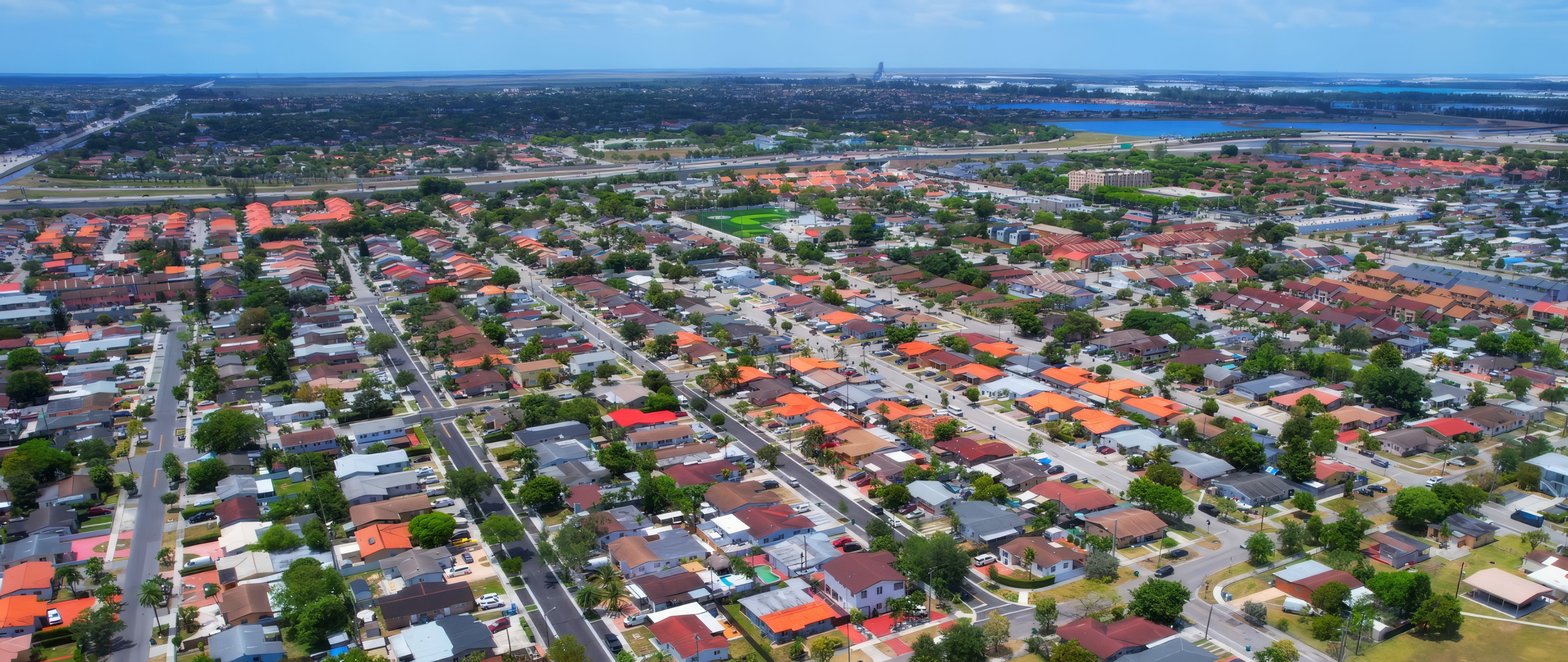
Sweetwater, Miami, Florida - EVERYTHING You Want to Know
Set aside everything you think you know about Sweetwater and join us as we wander through ...
.png)
The Ultimate Guide to Miami-Dade's Top 25 Gated Communities for Single-Family Homes
Discover Miami's top gated communities in this essential guide for luxury home buyers...


Miami's BEST Restaurants in EVERY Neighborhood
Check out the absolute BEST restaurants in every neighborhood of Miami, including the best...
Selling Your Home?
Who are we?
We are the ALL IN Miami Group out of Miami.
We are Colombian, Filipino, Cuban, German, Japanese, French, Indian, Syrian, and American.
We are Christian, Hindu, and Jewish.
We are many, but we are one.
We sell luxury homes in Miami, Florida.
Although some of our clients are celebrities, athletes, and people you read about online, we also help young adults find their first place to rent when they are ready to live on their own.
First-time buyers?
All the time!
No matter what your situation or price range is, we feel truly blessed and honored to play such a big part in your life.