



What Nobody Tells You About Living in Miami Gardens

Amit Bhuta
I use non-traditional marketing to inspire the most motivated buyers to pay the max for Miami luxury homes...
I use non-traditional marketing to inspire the most motivated buyers to pay the max for Miami luxury homes...
Almost nobody talks about Miami Gardens.
Sure, everybody's heard of Hard Rock Stadium — the Super Bowls, the Dolphins, the Grand Prix cars screaming through what used to be a parking lot.
But the actual city wrapped around all that noise and confetti? We bet not many have even thought to ask.
And it's ironic because this is Florida's most populous city with a majority Black population, yet it spends most of the year playing background extra to its own stadium.
Miami Gardens is famous by association, invisible by default, and once the events leave and the cameras shut off, the city keeps going, mostly unnoticed.
What's left once the spotlight moves on is the part nobody bothered to film.
Here are seven things nobody tells you about living in Miami Gardens.
 (52).png?w=1140)
1) Famous for the Venue, Anonymous for Everything Else
Most people meet Miami Gardens through a ticket barcode.
They know the stadium, the parking lots, the halftime show, the Formula 1 spectacle, the Miami Open outfits, the Dolphins jerseys, and the concert traffic that makes everyone remember they should have left 45 minutes earlier.
Hard Rock Stadium is a global entertainment destination tied to the Miami Dolphins, Miami Hurricanes, F1 Miami, the Miami Open, concerts, and major events.
That kind of visibility is huge, but it also creates a weird problem for the city it's in.
Miami Gardens becomes famous as a destination without always being understood as a place where people live full, regular, non-ticketed lives.
The venue gets the headlines, the camera angles, and the celebrity sightings.
The city gets reduced to the place you pass through while asking which gate your parking pass wants you to suffer at.
But Miami Gardens is not a stadium with houses sprinkled around for decoration.
It is a real North Dade city of about 20 square miles, with residential neighborhoods, commercial corridors, transportation access, parks, schools, churches, barber shops, family routines, and people who were not waiting for an event calendar to give the place meaning.
The stadium may be the loudest landmark, but it is not the whole identity.
It is just the thing outsiders can recognize from a drone shot.
Living in Miami Gardens means knowing the city has a much fuller story than the one broadcast from the 50-yard line.
 (53).png?w=1140)
2) Super Bowl Sunday Means Something Different When It's Your Street
Event traffic is one thing when you are part of the crowd.
It is another thing when you are just trying to get home with groceries, and your usual route has turned into a tactical exercise involving orange cones and prayer.
That is the reality of living near a major venue.
The same stadium that brings football, tennis, racing, concerts, and global attention can also bring road closures, parking pressure, police direction, ride-share chaos, and the special spiritual test of being two blocks from your house but fifteen decisions away from your driveway.
Hard Rock Stadium’s parking information changes by event, which says plenty about how much coordination these large crowds require.
Formula 1 weekends have drawn especially public attention because the event can reshape the area around the stadium through traffic plans, parking logistics, and resident concerns about noise, congestion, and disruption.
Visitors may find that exciting, but for residents, it can be Tuesday’s errand energy wearing a Super Bowl helmet.
The inconvenience is not constant, but it is memorable.
You may love the attention, the economic activity, and the bragging rights that come with living near a major sports and entertainment hub.
You may also learn to check the event calendar before promising anyone you can be somewhere “real quick.”
In Miami Gardens, big events do not just happen nearby.
Sometimes, they pull up a chair in your daily routine and ask where you keep the patience.
 (54).png?w=1140)
3) No Game Today? This Is What Miami Gardens Actually Looks Like
When the stadium lights are off, Miami Gardens does not vanish into the parking lot mist.
On the contrary, it looks like residential streets, front yards, local schools, shopping plazas, churches, parks, family barbecues, kids heading to practice, neighbors waving from driveways, and people running errands without a camera crew anywhere in sight.
The City of Miami Gardens describes itself as the third-largest city in Miami-Dade County after Miami and Hialeah, with access to I-95, the Palmetto Expressway, and Florida’s Turnpike.
That means Miami Gardens is not a tiny side note attached to a famous venue but a large city with its own daily rhythm.
A lot of that rhythm is practical, local, and family-centered.
This is not the Miami fantasy where every street looks designed for a tourism campaign and every brunch table has suspiciously perfect lighting.
Miami Gardens is where people come home from work, unload school bags, host cousins, wash cars in the driveway, complain about traffic, and know which nearby takeout spot understands the assignment.
The city’s appeal is not based on being put-together for outsiders.
It is based on being familiar to the people who know how it sounds on a normal afternoon.
No game today is not the absence of excitement.
It is the presence of real life.
 (55).png?w=1140)
4) Affordable, Yes. A Steal? Let's Not Get Carried Away
Miami Gardens often comes to mind as the more realistic housing option.
That is not wrong, but it is not a magic coupon code.
Compared with Miami’s flashier coastal and urban-core neighborhoods, Miami Gardens can look more attainable for buyers who want a house, a yard, or a stronger sense of residential space.
Census QuickFacts lists Miami Gardens’ 2020 to 2024 median owner-occupied housing value at $378,500 and median gross rent at $1,787.
Those numbers may be easier to digest than some Miami-Dade price tags, but they are not exactly loose change found between couch cushions.
The old idea that every inland North Dade community is automatically cheap needs to retire and enjoy its pension.
Miami Gardens has a relatively strong owner-occupied pattern, with the Census listing a 64.4 percent owner-occupied housing rate for 2020 to 2024.
That can be a real draw for people who want a more settled residential environment, but it also means competition for the homes that check the right boxes.
In Miami Gardens, it's not about finding a steal without trying.
It is about finding relative value in a market where even “more affordable” still asks buyers and renters to bring their calculators, their patience, and possibly a snack.
Miami Gardens can make sense financially.
It just does not hand out bargains with a marching band.
 (56).png?w=1140)
5) Walkable City This Is Not — Bring the Car and the Sunscreen
Miami Gardens is not where you move to romanticize errands on foot.
This is a car city.
In fact, Walk Score rates Miami Gardens as car-dependent, with most errands requiring a car.
The city is shaped by major roads, commercial corridors, single-family neighborhoods, large sites, parking lots, and distances that do not always cooperate with cute little walking fantasies.
Could you walk in some pockets? Sure.
Could you build your whole lifestyle around casual strolls to everything you need?
That would be as ambitious as bringing one tote bag to Costco is.
Miami Gardens is more practical behind the wheel.
You drive to groceries, school drop-offs, appointments, parks, restaurants, work, and the places that make daily life function.
That means the convenience is spread out rather than clustered neatly around a charming main street with flower baskets and overpriced candles.
If walkability is your dream, Miami Gardens may test your commitment to hydration.
If space, residential streets, road access, and practical driving routines matter more, the layout may make perfect sense.
Just bring the car.
And yes, bring the sunscreen, because this is still South Florida and the asphalt is not here to comfort anyone.
 (57).png?w=1140)
6) Betty T. Ferguson Doesn't Need a Naming-Rights Deal to Impress
Some cities flex with luxury gyms and rooftop pools.
Miami Gardens can point to Betty T. Ferguson Recreational Complex and make a pretty solid argument without a corporate logo slapped across the entrance.
The complex includes an amphitheater, an auditorium, a dance studio, an indoor basketball gym, meeting rooms, an indoor swimming pool, an outdoor fitness court, a stadium, and a track.
That is a serious resident resource.
The broader parks system also includes facilities such as AJ King Park, Andover Park, Brentwood Park, Buccaneer Park, Bunche Park, Walt Frazier Park at Carol City, Rolling Oaks Park, and more.
For families, seniors, athletes, students, and residents who want community life beyond shopping plazas, that matters, as it gives the city places where regular life can gather.
Not every neighborhood needs a boutique fitness studio where the towels seem judgmental.
Sometimes, what matters is a track, a pool, a basketball court, a field, a program, a meeting room, and a place where kids and neighbors can be seen without a $9 smoothie afterward.
Betty T. Ferguson works because it reflects the city better than a shiny lifestyle gimmick would.
It is practical, active, community-centered, and built for residents.
In Miami Gardens, recreation is one of the places where the city shows its backbone.
 (58).png?w=1140)
7) This Isn't a Postcard City. It's a Cookout-and-Caribbean-Flag City
Miami Gardens does not have to pose for you to know it has personality.
Its culture is not manufactured for tourists, curated into a slogan, and served with a souvenir cup.
It is lived through family gatherings, church communities, Caribbean food, soul food, music, local businesses, school pride, neighborhood loyalty, and a cookout where someone’s auntie is silently judging the potato salad before the foil is fully off.
The city is majority Black, with Census QuickFacts listing Black residents at 60.3 percent and Hispanic or Latino residents at 36.3 percent.
The city also has a strong immigrant and multilingual presence, with Census QuickFacts listing foreign-born residents at 38.7 percent and households speaking a language other than English at home at 41.7 percent for 2020 to 2024.
That mix helps explain why Miami Gardens does not read like a generic suburb.
It has a distinct North Dade identity shaped by Black culture, Caribbean influence, family networks, and great local pride.
Jazz in the Gardens also reinforces that cultural visibility, with the 2026 festival described as a celebration of Black music and culture hosted in Miami Gardens.
This is not a postcard city in the Miami Beach sense, as it is not trying to sell you turquoise water, hotel balconies, and a linen-shirt fantasy.
Miami Gardens is more about the backyard tent, the flag clipped to the car window, the music carrying across the block, the aunties, the uncles, the cousins, the grill smoke, the church announcements, and the community memory that does not need a visitor brochure to feel important.
That may not be everyone’s dream version of Miami.
But for the people who understand it, it is not trying to be anyone else’s.
WHO GETS THE MOST OUT OF LIVING IN MIAMI GARDENS?
Those who want substance over spectacle most days of the year
Miami Gardens spends maybe a handful of weekends a year under the stadium spotlight, and the rest of the calendar belongs entirely to the neighborhood itself.
That's the part outsiders never clock — twenty square miles of residential streets, family-run businesses, and community routines that have nothing to do with kickoff times.
The city carries a cultural weight that doesn't need a marketing campaign, as it is built on generations of Caribbean and African American heritage that shows up in the food, the music, and how neighbors actually talk to each other.
Housing still makes sense on a spreadsheet, with values sitting comfortably below the broader Miami metro without dipping into bargain-bin territory that usually signals trouble.
The Betty T. Ferguson Recreational Complex alone does more for daily quality of life than a stadium full of confetti ever could, offering pool programming, a track, and the kind of community space families actually use.
Smaller parks scattered across the city — Brentwood, Buccaneer, Andover — round out a recreation system built for regular Tuesdays, not just headline weekends.
A car becomes essential fairly quickly, but for anyone already wired for that kind of daily rhythm, it barely registers as a downside.
The city rewards people who value community continuity, generational roots, and a sense of place that exists independent of whatever's happening at Hard Rock Stadium.
For families looking to plant something lasting without chasing trend-driven neighborhoods, Miami Gardens offers a foundation that's been building for decades.
That steady identity is harder to find than people realize.
WHO MAY WANT TO KEEP LOOKING?
Anyone expecting walkability or constant excitement
Miami Gardens was built around wide roads and car culture, not sidewalk cafes or pedestrian-friendly main streets, so anyone hoping to ditch the car entirely will struggle in this city.
Errands, school runs, and basically every part of daily life require driving, which can feel like a serious adjustment for anyone coming from a more walkable community.
Major events at the stadium bring real disruption to nearby streets, with traffic, parking overflow, and crowd noise spilling well beyond the stadium gates on game days and concert nights.
Someone living a few blocks from Hard Rock Stadium without a ticket still inherits all the inconvenience and none of the entertainment.
Housing, while more attainable than much of Miami-Dade, still isn't the screaming bargain some buyers expect when they hear "more affordable than Miami Beach."
Anyone hoping the city's stadium fame translates into nightlife, dining variety, or tourist-level infrastructure will likely come away disappointed.
Outside of event weekends, Miami Gardens doesn't try to entertain visitors, and it was never designed to.
The city's identity is heavily residential and community-focused, which can feel quiet or even isolating to anyone expecting constant stimulation.
Public transit options remain limited, reinforcing just how much daily life here depends on owning a reliable vehicle.
For buyers chasing walkability, urban energy, or a built-in social scene, Miami Gardens will likely feel like a mismatch from week one.
AN HONEST TAKEAWAY
What living in Miami Gardens really comes down to
Miami Gardens carries two identities that rarely get reconciled in the same conversation — the global stadium destination and the quiet residential city wrapped around it.
Most people only ever encounter the first version, catching glimpses through Super Bowl highlights or Grand Prix broadcasts without ever learning what surrounds those few loud weekends.
The second version, the one locals actually live in, runs on family ties, cultural roots, and a recreation system that takes care of residents long after the cameras leave.
Both versions are true at once, which is exactly why the city is misunderstood so often.
Here, housing offers a genuine middle ground — not cheap, but far more reasonable than neighboring markets chasing tourist dollars.
The car-dependent layout isn't a flaw so much as a design choice that fits the city's spread-out, suburban DNA.
Event-day chaos is real, but it's also temporary, confined mostly to a handful of high-profile weekends rather than a daily disruption.
What remains underneath all of it is a community that built its own identity long before Hard Rock Stadium became a global name.
Miami Gardens isn't trying to be Miami Beach, and it was never meant to be measured against it.
The city's value lives in consistency, culture, and a sense of rootedness that doesn't depend on outside attention to feel real.
Anyone willing to look past the stadium marquee will find a city that's been quietly building its own story the entire time.
%20(25)-fotor-20240529124222.png)
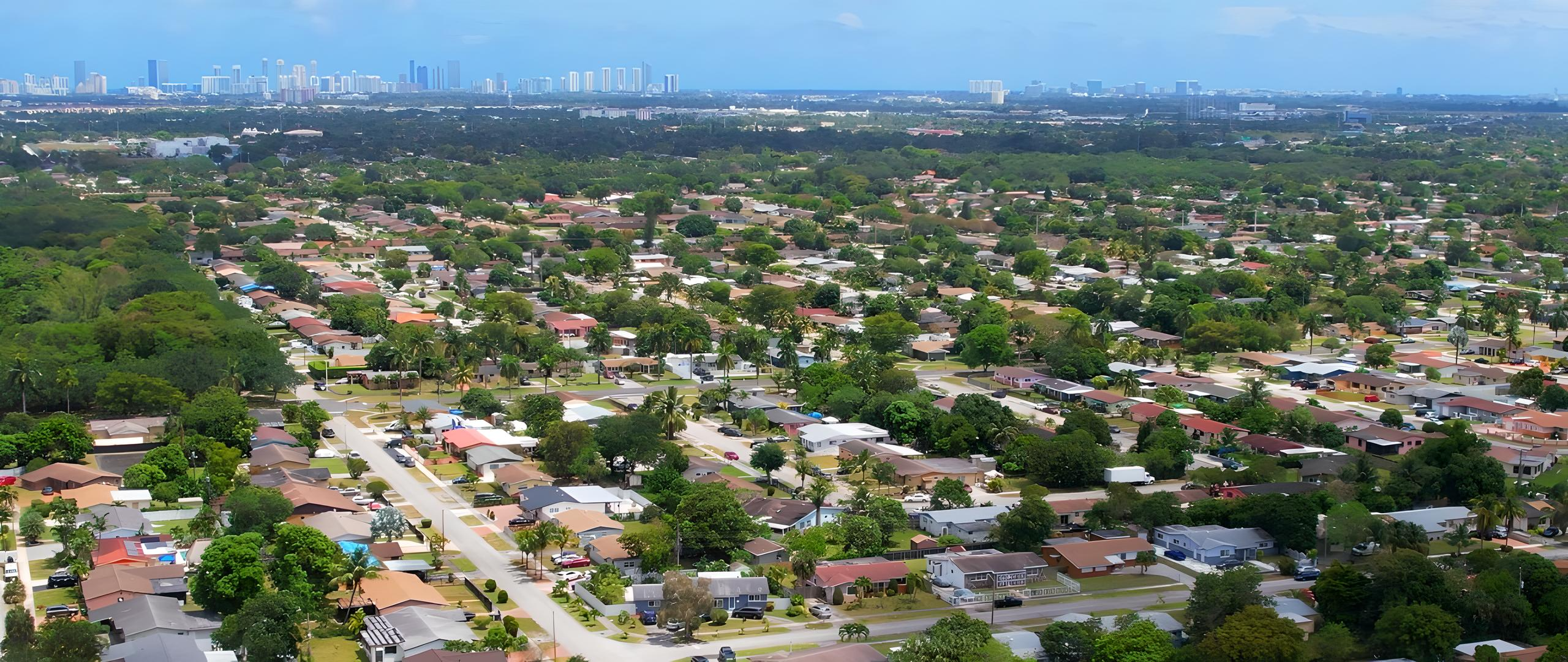
Miami Gardens, Miami, Florida - EVERYTHING You Want to Know
Congratulations on unlocking a virtual journey to the BEST of Miami Gardens! You're n...
.png)
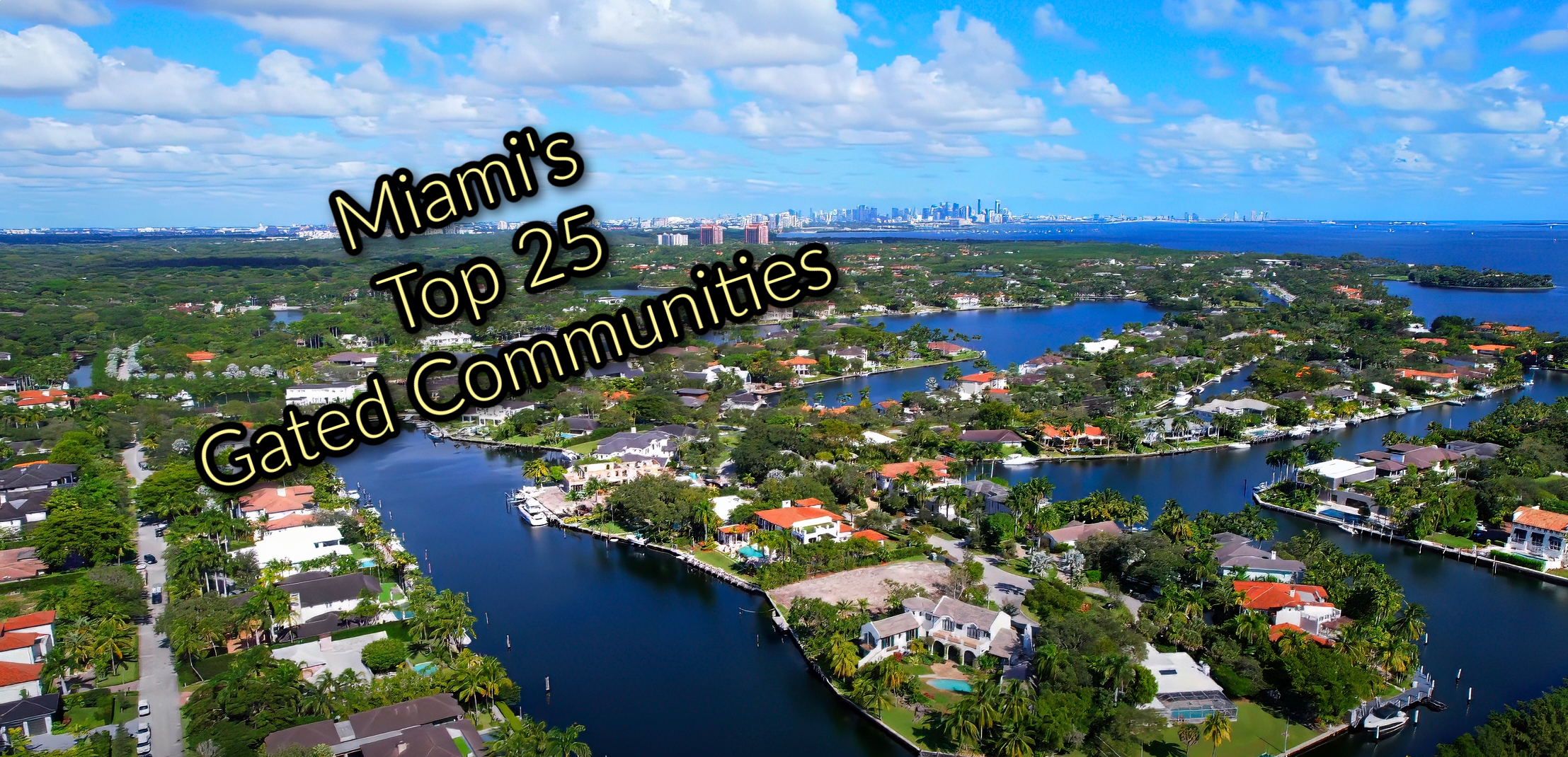
The Ultimate Guide to Miami-Dade's Top 25 Gated Communities for Single-Family Homes
Discover Miami's top gated communities in this essential guide for luxury home buyers...

Miami's BEST Restaurants in EVERY Neighborhood
Check out the absolute BEST restaurants in every neighborhood of Miami, including the best...
Selling Your Home?
Who are we?
We are the ALL IN Miami Group out of Miami.
We are Colombian, Filipino, Cuban, German, Japanese, French, Indian, Syrian, and American.
We are Christian, Hindu, and Jewish.
We are many, but we are one.
We sell luxury homes in Miami, Florida.
Although some of our clients are celebrities, athletes, and people you read about online, we also help young adults find their first place to rent when they are ready to live on their own.
First-time buyers?
All the time!
No matter what your situation or price range is, we feel truly blessed and honored to play such a big part in your life.