



What Daily Life Looks Like in The Moorings

Amit Bhuta
I use non-traditional marketing to inspire the most motivated buyers to pay the max for Miami luxury homes...
I use non-traditional marketing to inspire the most motivated buyers to pay the max for Miami luxury homes...
Whoever planned The Moorings in 1925 wasn't trying to give Coconut Grove drivers another shortcut.
Actually, it turned out to be quite the opposite.
A small private neighborhood with winding roads, a landscaped fountain, and spacious properties surrounded by tropical trees, The Moorings feels like its own evolving world.
Nearly a century later, its Mediterranean-style homes share the streets with newer estates, giving residents a little old Miami charm without asking them to live in the past.
Biscayne Bay is part of the appeal, of course, but living by the water doesn't mean everyone spends their days aboard a boat.
Thanks to the surrounding Coconut Grove community, residents enjoy waterfront dining options,
historic landmarks, an active sailing scene, and creative spaces that attract people with all sorts of interests.
And once they're done exploring, they can head home without worrying about half of Miami using their street as a shortcut.
Here’s what a typical day is like in The Moorings.
The Fountain-to-Footlights Designer
 (66).png?w=1140)
Early Morning — The Fountain as a Stage Entrance
Most people passing The Moorings' entrance fountain probably don't wonder how it would look on a theater stage, but she does.
As a theatrical set designer, she's always searching for interesting architectural details, and her own Coconut Grove neighborhood gives her plenty to work with.
The fountain, curved roads, and Mediterranean-style homes reflect the community's original 1925 design, when developers had grand plans for this little waterfront enclave.
She brings her sketchbook outside and draws the way the landscaping frames the fountain, imagining how a similar entrance could introduce an audience to a fictional mansion.
The challenge is capturing that grand appearance without building something that takes up the entire stage.
After a few sketches, she has enough ideas to start experimenting, but the fountain might need to lose a few feet before it fits inside a theater.
 (68).png?w=1140)
Late Morning — Cardboard, Curves, and 1925
A miniature fountain has been sitting crooked on her worktable for the past twenty minutes, and she's starting to question her glue.
She's building a scale model inspired by The Moorings' original architecture, using cardboard, foam board, and small painted pieces to recreate its grand entrance.
The curved walkway is particularly tricky because it needs to look natural while leaving enough room for performers to move around.
She adjusts the arches, rearranges the tropical scenery, and checks how the different elements look from the audience's perspective.
Her studio is filled with sketches, model-making tools, and pieces from earlier productions, so another idea is always waiting to be developed.
Once the fountain finally stands straight, she steps back to examine the model and decides to add a little more detail.
A full-size version would be considerably harder to fix with a glue stick.
 (67).png?w=1140)
Afternoon — The House That Got Lifted
Adding another floor to a house usually involves major construction, but Ralph Middleton Munroe took an especially unusual approach in 1908.
He had his home at The Barnacle raised using railroad jacks so a new first floor could be built underneath the existing structure.
Curious about that story, she joins the 1 p.m. guided tour at The Barnacle Historic State Park on Main Highway.
The house dates back to 1891 and offers a glimpse of Coconut Grove before its modern streets and waterfront neighborhoods took shape.
As the guide explains its history, she examines the wooden construction, architectural details, and practical solutions that helped the house accommodate a growing family.
The visit gives her a better understanding of how an old building can change without losing everything that makes it recognizable.
She leaves with several notes for future productions and a renewed appreciation that her own design projects don't require lifting an entire house.
 (69).png?w=1140)
Evening — Vintage Fabric, Circus Lights
The Woman's Club of Coconut Grove is hosting something far more colorful than an ordinary Thursday evening gathering.
She's attending Fashion ArtBeats: Le Cirque Couture, a November 19 fundraiser featuring vintage fashion, circus-inspired entertainment, and an art auction.
The event supports Elio's Kitchen and its work helping families facing serious childhood illnesses, so there's a meaningful purpose behind the creative presentation.
Still, her designer's eye can't help but examine the lighting, costumes, and how the historic venue is arranged for the occasion.
She sees how vintage clothing and dramatic presentation details work together without making the room look overcrowded.
After spending her morning building miniature scenery, a live event inspires fresh ideas about what works when real people move through a space.
By the time she heads home, she's already reconsidering a few details of the stage model waiting on her worktable.
The Sail-Number Scorekeeper
 (70).png?w=1140)
Early Morning — The Wind Gets the First Vote
The view across Biscayne Bay looks peaceful enough, but he's learned not to trust the water from a distance.
Sailing conditions can change throughout the day, so he checks the marine forecast before leaving his home in The Moorings.
He's volunteering with the race-management team for the Finn North American Championship, hosted by Coconut Grove Sailing Club from November 20 to 22.
Unlike someone preparing for a relaxing boat ride, he's more concerned about wind direction, the race schedule, and making sure his notes are ready.
The Moorings' private marina and waterfront setting have made boats a familiar part of his surroundings, but competing in sailing has given him a different appreciation for what happens out on the bay.
He reviews the day's information, packs his essentials, and heads toward South Bayshore Drive to meet the rest of the team.
 (71).png?w=1140)
Late Morning — Finn Boats, Not Fins
Plenty of sailboats are found in Coconut Grove, but today's competitors have brought something more specific to the water.
At Coconut Grove Sailing Club, sailors are preparing their Finn dinghies, small racing boats designed for a single competitor.
He joins the event volunteers and checks the materials needed for his assigned race-management duties.
Around him, sailors inspect their equipment, adjust sails, and prepare for conditions on Biscayne Bay.
He knows the importance of sail numbers, which help officials identify boats and log accurate race records.
With competitors and organizers moving between the clubhouse and waterfront, everyone needs to know their responsibilities.
He double-checks his notes before heading to his assigned position, knowing guessing won't be helpful once the boats start racing.
 (72).png?w=1140)
Afternoon — Sail Numbers at the Finish
Two boats are approaching the finish line close together, and there's no time to admire the view.
From an authorized race-management boat, he watches the competitors and helps record their finishing order.
Each sail number must be identified carefully, especially when several dinghies arrive within a short period.
He compares observations with another volunteer while race officials follow established procedures.
The work requires concentration, and even a small mistake could confuse them when they review results.
Biscayne Bay may be a beautiful place to spend the afternoon, but he's far more interested in the numbers passing in front of him.
Once the final competitors finish, he checks that his records are complete before returning to the sailing club.
 (73).png?w=1140)
Evening — The Results Get a Second Look
The boats are coming ashore, but the day's paperwork isn't finished yet.
At Coconut Grove Sailing Club, he joins other race-management volunteers to review the observations collected during the competition.
They compare recorded sail numbers, check the finishing order, and help resolve any questions through the event's official process.
It's less glamorous than watching colorful boats cross Biscayne Bay, but accurate results depend on this work.
Once complete, he catches up with the other volunteers and hears a few stories about what happened on the water.
Some competitors had a great race, while others are probably already thinking about what they'll do differently tomorrow.
He's satisfied knowing that the race didn't end with the last boat crossing the line; someone also made sure the results were recorded properly.
The Bay-to-Beat Sound Designer
 (74).png?w=1140)
Early Morning — One Minute of Bayfront Sound
A passing boat engine interrupts her recording just as the birds are getting interesting.
She's standing in an outdoor area of her Moorings home with a portable audio recorder, collecting sounds for a new creative project.
The waterfront provides plenty of material, from birds calling among the trees to wind moving through tropical leaves and boats traveling across Biscayne Bay.
She shifts her microphone to lessen wind noise and records again.
As a sound designer, she knows that ordinary places contain details most people stop noticing after hearing them every day.
Even the boat engine might help, but it wasn't quite what she was hoping to capture.
She finishes with several short recordings and heads inside to organize her files before visiting a nearby exhibition.
 (75).png?w=1140)
Late Morning — A Film in the Doctor's Office
Most people wouldn't expect to find an immersive art exhibition in an old doctor's office, apart from where she's headed.
At The Kampong on South Douglas Road, she's exploring Out of Darkness: The Ecology of Care, an exhibition by Miami artist Meg Wallace.
The installation occupies a room associated with Dr. Eleanor Galt Simmons and draws inspiration from South Florida's mangrove ecosystems.
Its central film, Whispers Beneath the Canopy, uses images and environmental sounds to explore nature's rhythms.
She pays close attention to quieter moments, noticing how small sounds can change the way a viewer experiences a scene.
The exhibition gives her a few ideas for her own project, especially when it comes to combining recordings that might seem ordinary on their own.
She takes time to examine the other works before heading outside, where the garden is another reminder of how much there is to notice when someone pays attention.
 (78).png?w=1140)
Afternoon — Poetry You Don't Just Listen To
A poetry program doesn't normally ask everyone to help create the atmosphere, but today's gathering at The Kampong is different.
She's attending Vespers, a special November 21 program led by Corey Davis of Maven Leadership Collective.
The session combines poetry, quiet reflection, call-and-response activities, movement, and collective sound-making.
Rather than sitting in an audience watching a performance, participants are invited to contribute to the shared experience.
She enjoys hearing how different voices and rhythms work together, especially when the group creates something nobody could have planned alone.
It's a refreshing change from spending hours editing recordings, where she can adjust every sound until she's satisfied.
For once, she isn't trying to capture or control the moment; she's simply taking part in it.
 (77).png?w=1140)
Evening — The Shoreline Becomes a Soundtrack
Her computer screen is filled with waveforms from the recordings she collected earlier, and one particularly stubborn gust of wind keeps demanding attention.
In her home studio in The Moorings, she listens through the clips, separates the useful sections, and begins arranging them into a short original sound piece.
Bird calls provide one layer, while leaves and distant boats add texture without overwhelming everything else.
She experiments with timing, leaving a little silence between certain sounds instead of filling every second.
The exhibition and afternoon gathering at The Kampong have reminded her that listening can be just as important as creating something new.
After several adjustments, the recording begins to capture the coastal atmosphere she enjoys about her neighborhood.
It won't replace the experience of standing beside Biscayne Bay, but it gives her a way to share a small part of that environment with someone who has never been there.
THE BIGGER PICTURE OF LIFE IN THE MOORINGS
What do these three different routines tell us about The Moorings?
It's easy to confine The Moorings to its expensive homes, private streets, and a beautiful waterfront location.
But the neighborhood's original design tells a more interesting story, since its curved roads, landscaped entrance, and shared dock access were planned long before Coconut Grove became the busy destination it is today.
Nearly a century later, those decisions still shape the neighborhood's character, giving residents a sense of privacy that's difficult to recreate in a growing city.
Of course, keeping that character intact is more complicated than maintaining an attractive fountain or trimming the tropical landscaping.
Older homes need careful attention, coastal properties come with weather-related responsibilities, and maintaining private facilities can add up.
Meanwhile, newer estates introduce a different architectural style, raising questions about how much a historic neighborhood should change.
Modern homes can bring comfort and practical improvements, but The Moorings' unique details are worth considering before they're replaced.
That balance matters throughout Coconut Grove, where redevelopment continues to reshape streets that have been part of Miami's history for generations.
Living behind private gates also means accepting that most shopping, dining, and entertainment happens outside the neighborhood.
Fortunately, residents don't have to travel for much of it, although Main Highway traffic and limited parking around popular Grove destinations can still test anyone's patience.
Nevertheless, the neighborhood can be quiet without being disconnected, and its residents don't need identical interests to appreciate the same surroundings.
Here, there's room for old Miami architecture and modern living, provided that change doesn't erase the history that makes the community recognizable.
For a neighborhood originally designed to keep unnecessary traffic off its streets, The Moorings remains remarkably connected to the life of Coconut Grove.
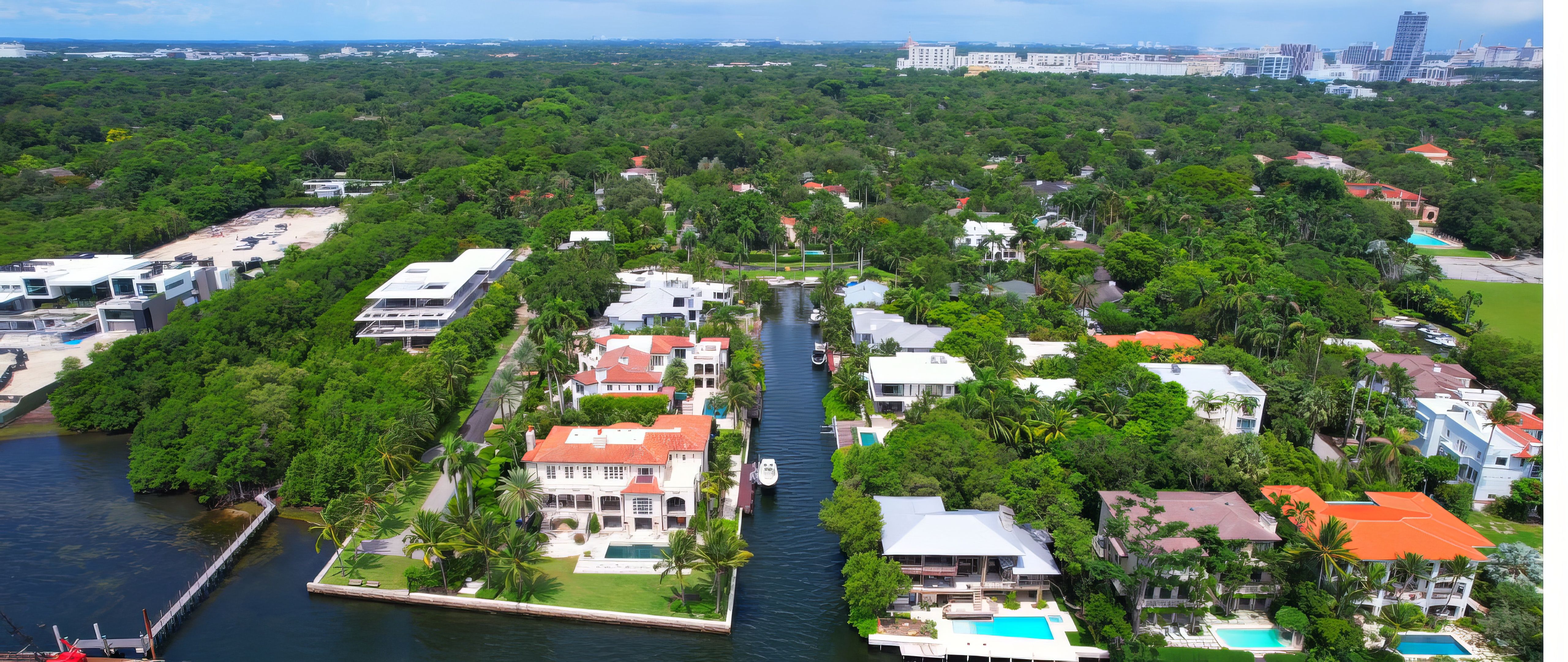
The Moorings, Miami, Florida - EVERYTHING You Want to Know
Whether you're longing for laid-back days or seeking hidden spots that amaze, let our...
The Ultimate Guide to Miami-Dade's Top 25 Gated Communities for Single-Family Homes
Discover Miami's top gated communities in this essential guide for luxury home buyers...


Miami's BEST Restaurants in EVERY Neighborhood
Check out the absolute BEST restaurants in every neighborhood of Miami, including the best...
Selling Your Home?
Who are we?
We are the ALL IN Miami Group out of Miami.
We are Colombian, Filipino, Cuban, German, Japanese, French, Indian, Syrian, and American.
We are Christian, Hindu, and Jewish.
We are many, but we are one.
We sell luxury homes in Miami, Florida.
Although some of our clients are celebrities, athletes, and people you read about online, we also help young adults find their first place to rent when they are ready to live on their own.
First-time buyers?
All the time!
No matter what your situation or price range is, we feel truly blessed and honored to play such a big part in your life.