



North Miami, Miami — A Cheat Sheet for Buyers, Visitors, & the Curious

Amit Bhuta
I use non-traditional marketing to inspire the most motivated buyers to pay the max for Miami luxury homes...
I use non-traditional marketing to inspire the most motivated buyers to pay the max for Miami luxury homes...
Not defined by Miami’s famous beachfront or a single polished district, plenty of questions have been brewing about North Miami.
Today, this guide unpacks what has been quietly building beneath the surface.
Known for its municipal identity, dense everyday corridor, waterfront pockets, older housing stock, and streets that can shift character from one block to the next, North Miami sits between Biscayne Park, Miami Shores, North Miami Beach, and Biscayne Bay, creating a city where location is only the starting point and the real story unfolds at the micro level.
It is a place where buyers, renters, and curious locals move past surface impressions and start asking sharper questions about flood zones, property values, neighborhood pockets, school options, traffic flow, and how North Miami actually functions day to day.
If you’re here, you’re already one step ahead—reading between the lines, connecting patterns, and getting a clearer picture of what living in North Miami truly involves.
Here's what you need to know about living in, visiting, and understanding North Miami.
-topaz-upscale-2.1x.jpeg?w=1140)
LIVING IN NORTH MIAMI
Where exactly is North Miami, and what does it border?
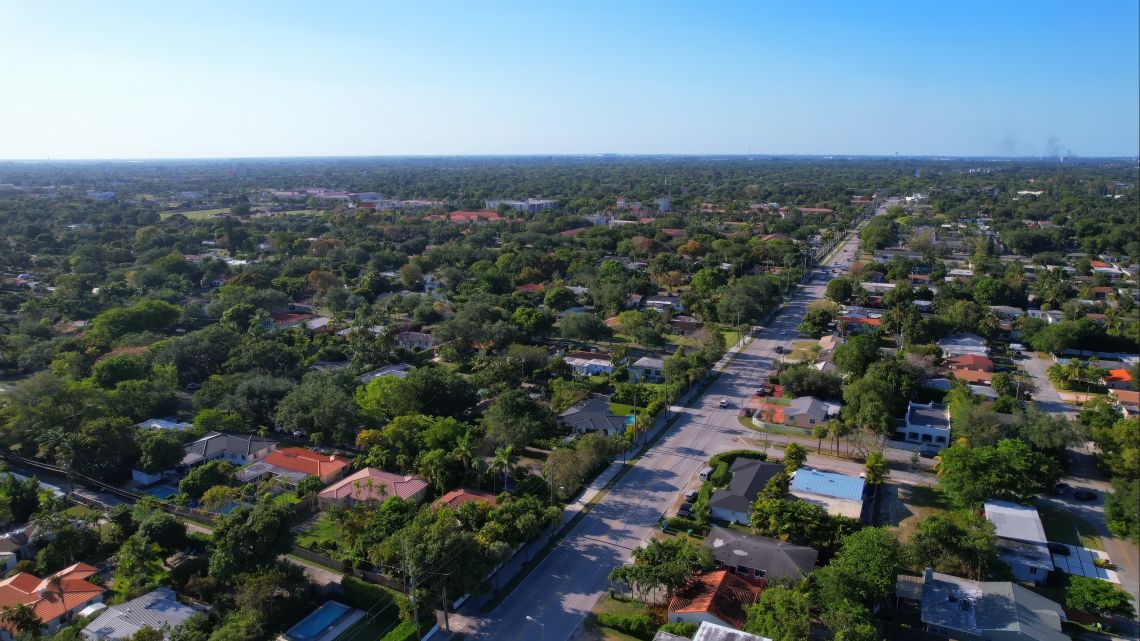
North Miami is its own city in northeast Miami-Dade County, positioned south of North Miami Beach, north of Miami Shores, east of I-95, and stretching toward Biscayne Bay on its eastern side.
Its best-known central corridor is NE 125th Street, while Biscayne Boulevard serves as one of the main north-south commercial spines residents use every day.
That placement puts North Miami in a practical middle ground, with relatively direct access to Aventura, Bal Harbour, Downtown Miami, and the beaches without being structured or priced like those areas.
What are the main residential sections of North Miami, and how do they differ?
North Miami is not one uniform neighborhood, which is why buyers who treat it like one usually miss the point.
Sans Souci and nearby eastern pockets feel more bay-oriented and condo-heavy, with canal edges, mid-rise buildings, and a more sheltered residential atmosphere in several sections.
Keystone Point is one of the city’s best-known controlled-access areas, with a stronger single-family identity, boating appeal, and a more insulated street network.
Central North Miami, especially around NE 125th Street and Biscayne Boulevard, feels busier, more mixed-use, and more convenience-driven, while western inland sections often offer older houses, duplexes, and more budget-flexible ownership opportunities.
What types of homes and condos are most common in North Miami?
North Miami has one of the more mixed housing profiles in this part of Miami-Dade.
You will find older low-rise condo buildings, mid-century ranch-style houses, postwar single-family homes, duplexes, small multifamily properties, canal-front homes, and larger waterfront residences in the eastern sections.
Condo sizes often begin around compact one-bedroom layouts in the 600- to 800-square-foot range, while many older two-bedroom units fall around 900 to 1,200 square feet.
Single-family homes vary more widely, but many inland properties are around practical living sizes rather than oversized square footage, while eastern waterfront homes often sit on larger lots with more ambitious renovations or rebuilds.
What is the price range like in North Miami?
North Miami pricing is driven heavily by micro-location, property condition, water access, and building type rather than one consistent citywide range.
Older condo units in less competitive inland or dated buildings can start around the low $200,000s to $400,000 range, while updated units in stronger eastern sections or better-maintained buildings often range from about $450,000 to $800,000+, especially for larger two-bedroom layouts or water-adjacent views.
Inland single-family homes typically fall between roughly $550,000 to $1.1 million, with smaller original homes on standard lots at the lower end and renovated properties with updated systems, larger interiors, or better streets pushing toward the higher end of that range.
Waterfront and canal-front homes, particularly in areas like Keystone Point or select eastern pockets, commonly start around $1.5 million to $2 million and can exceed $5 million to $8 million+ when features such as wide canal frontage, private docks, direct ocean access, larger lot sizes (often 7,500 to 10,000+ square feet), and high-end renovations come together.
Is North Miami a good fit for first-time buyers, families, or investors?
North Miami can work for all three, but not for the same reasons.
First-time buyers often focus on older condos, smaller inland houses, or western sections where entry pricing can be more manageable than in nearby prestige markets.
Families usually gravitate toward quieter residential pockets with more stable street patterns, more yard space, and less corridor noise.
Investors tend to look at duplexes, value-add homes, older condos, or properties near commercial routes, but North Miami rewards patient due diligence more than fast assumptions because condition, permit history, and street quality matter so much in this suburb.
What is daily life like around NE 125th Street?
NE 125th Street is one of the clearest real-life anchors in North Miami because it carries so much of the city’s everyday movement.
This is where many residents bank, grab food, run errands, pass through traffic, and interact with the city in a practical way rather than a lifestyle-marketing way.
Living very close to it improves convenience, but it also brings more noise, more traffic flow, more commercial activity, and a more urban pace than quieter side streets farther from the corridor.
That tradeoff is exactly why some buyers want to be near it, and others want just enough distance from it.
How walkable is North Miami, and can you live there without a car?
North Miami is more errand-accessible than fully walkable.
If you live near Biscayne Boulevard, NE 125th Street, or certain condo-heavy eastern sections, you may be able to reach groceries, pharmacies, banks, and casual dining more easily than in more suburban parts of the county.
But most residents still rely on a car for work, school runs, bigger shopping trips, and overall flexibility.
The city works better for people who want partial convenience rather than a fully car-free lifestyle.
What is traffic like in North Miami?
Traffic in North Miami is not equally intense everywhere, but it concentrates heavily where you would expect it to.
Biscayne Boulevard, NE 125th Street, and key east-west connectors carry the most pressure, especially during commuting windows and school-related traffic periods.
Residential streets in more insulated sections can feel dramatically calmer than the main corridors, which is why a house that looks close on a map can live very differently depending on whether it sits on a cut-through route or inside a more protected street grid.
How much should buyers worry about flood zones and insurance in North Miami?
They should take it seriously, especially in eastern and waterfront-oriented sections.
North Miami’s proximity to canals, bay-adjacent areas, and lower-lying eastern pockets means flood-zone review is not optional homework here.
Insurance costs can vary sharply by elevation, proximity to water, building type, age of systems, and storm-readiness features.
A condo buyer may be evaluating association exposure and building condition, while a single-family buyer may be looking at drainage patterns, older roofs, and the practical cost of carrying the property over time.
What should buyers know about permits, code compliance, and older housing stock in North Miami?
North Miami has enough older inventory that the history becomes part of the buying conversation far more often than in newer planned communities.
Buyers should expect to review roofs, electrical work, additions, enclosed patios, converted garages, plumbing updates, windows, and any major alterations that may or may not have been properly documented.
This matters not just for closing, but for insurance, resale, future renovations, and the basic question of whether the property is worth the extra post-closing cleanup.
North Miami can reward smart buyers, but it is rarely a market where skipping municipal due diligence is a harmless shortcut.
How do utilities and city services work in North Miami?
North Miami operates as its own municipality, which means services such as water, sewer, sanitation, and permitting are handled at the city level rather than through a larger regional system.
Residents typically set up water and sewer accounts directly with the city, while trash and recycling collection follow scheduled pickup routes depending on the neighborhood.
What makes North Miami different is that day-to-day ownership often includes interacting with city departments for permits, inspections, and property-related requirements, especially when dealing with older homes or renovations.
For many residents, the experience comes down to how well they understand the system, because navigating services efficiently is part of living in North Miami.
What are the school options like in and around North Miami?
North Miami gives residents a mix of traditional public schools, charter schools, and nearby private options, depending on the exact address.
Examples commonly associated with the area include North Miami Senior High, North Miami Middle, North Miami Elementary, and W. J. Bryan Elementary.
Some families also compare options in nearby municipalities such as Miami Shores, Biscayne Park, and North Miami Beach, especially when they are deciding whether to prioritize a public-by-right school, a charter strategy, or a private-school commute.
In North Miami, this is an address-level question more than a citywide one.
For more information, check out Best Schools in North Miami.
What are property taxes and overall ownership costs like in North Miami?
Property taxes follow Miami-Dade structures, but the real ownership picture depends on assessed value, homestead status, property type, and whether the home has been recently purchased or significantly improved.
Long-held homes can carry lower tax bases than recently traded or heavily renovated ones, which can make neighboring properties feel surprisingly different on paper.
Beyond taxes, buyers also need to think about insurance, maintenance, utilities, and deferred repairs, especially in older homes and waterfront properties where carrying costs can rise faster than expected.
What are HOA fees and condo realities in North Miami?
Many North Miami condo buildings are older, which means association quality matters just as much as the unit itself.
Monthly fees can range from relatively manageable to noticeably high, depending on building age, maintenance demands, reserves, amenities, and prior deferred upkeep.
Buyers should pay close attention to financials, reserves, pending repairs, special assessment risk, and the difference between a building that is merely affordable at entry and one that is affordable to carry long term.
Is it better to rent or buy in North Miami?
That depends on how certain you are about your location preference and how long you expect to stay.
Renting can make sense for people who want flexibility while they learn the city’s different pockets and figure out which section matches their routine.
Buying can make sense for people who understand the micro-location differences, want more long-term control, and are prepared to evaluate ownership costs beyond just the purchase price.
North Miami is usually easier to shop in when you know exactly what type of daily life you want.
What is the rental market like in North Miami?
North Miami offers a wide rental range depending on property type, location, and building condition.
Older one-bedroom condos can often range from roughly $1,600 to $2,200 per month, while larger or updated two-bedroom units typically fall between $2,200 and $3,200+.
Single-family homes, especially those with more space or better locations, can range from around $2,800 to $5,000+, depending on size, condition, and proximity to water or key corridors.
Rental demand tends to stay steady because of the city’s location between major employment areas, but tenants usually choose based on micro-location, building quality, and access to main roads rather than just price alone.
How safe is North Miami, and does it vary by area?
Safety in North Miami is highly pocket-dependent, which is one of the most important truths to understand about the city.
Some residential sections feel more stable, quieter, and more insulated from corridor activity, while areas closer to busier commercial routes or heavier through-traffic may feel more active and less buffered.
That is why serious buyers and renters usually evaluate specific streets, nearby uses, and surrounding patterns rather than relying on one broad citywide label.
How easy is commuting from North Miami to other parts of Miami-Dade?
North Miami’s location is one of its strongest practical advantages.
Residents can reach I-95, Biscayne Boulevard, and major east-west connectors without being cut off from the rest of the county, which helps with trips toward Downtown Miami, Aventura, the beaches, and other northeastern parts of the metro.
Commute quality still depends on the exact block, because being closer to major corridors can save time while also exposing you to more daily traffic pressure.
-topaz-upscale-2.1x.jpeg?w=1140)
VISITING NORTH MIAMI
What is North Miami known for if it is not a classic tourist area?
North Miami is known more for culture, local life, and practical city energy than for postcard tourism.
It does not present itself as a resort district, which is part of why people who enjoy finding everyday Miami rather than staged Miami often appreciate it more.
Its identity comes from places such as the Museum of Contemporary Art, the 125th Street corridor, waterfront edges, parks, and a local business rhythm that feels used rather than packaged.
Is the Museum of Contemporary Art one of the biggest reasons to visit North Miami?
Yes, MOCA is one of North Miami’s clearest destination anchors.
It gives the city a cultural focal point that many municipalities of its size do not have, and it helps separate North Miami from places known only for housing or traffic routes.
For visitors who want one strong stop that says something meaningful about the city, MOCA is usually near the top of the list because it adds a creative, public-facing layer to an otherwise everyday urban environment.
What is there to do around the downtown and 125th Street area?
This part of North Miami is less about checking off attractions and more about seeing how the city works in real time.
The downtown and 125th Street areas offer a mix of public spaces, local businesses, restaurants, service storefronts, and civic movement that reflects the city’s actual character.
It is a better area for wandering with purpose, grabbing food, and understanding the local rhythm than for expecting one polished entertainment district.
For a typical day in North Miami, visit Top 5 Things to Do in North Miami.
Are there worthwhile parks and outdoor spaces in North Miami itself?
Yes, and they matter more than outsiders often expect.
Enchanted Forest Elaine Gordon Park is one of the best-known outdoor references tied to North Miami and offers a green break from the heavier commercial corridors.
Arch Creek Park is another important local landmark because it combines a natural setting and a more rooted neighborhood feel than many standard urban parks.
These spaces help North Miami feel less boxed in for both residents and visitors who want outdoor access without heading far out of the area.
Meanwhile, for parks that allow dogs, visit Dog-Friendly Parks in North Miami.
Does FIU Biscayne Bay Campus shape the feel of North Miami?
It does, especially on the eastern side.
The campus adds student activity, academic presence, and a different energy than purely residential blocks have, influencing nearby rentals, traffic patterns, and surrounding commercial activity.
It also gives North Miami a relationship with the bay that is not only residential or boating-oriented, but educational and institutional, too.
What is the food scene like in North Miami?
North Miami’s food scene is spread out rather than concentrated into one neat district.
That is important because visitors should not expect one perfect strip where every worthwhile stop is lined up for them.
Dining is woven through major roads, plazas, side streets, and mixed-use pockets, which means the city rewards people who are willing to explore rather than only follow destination-style restaurant maps.
This scattered pattern fits North Miami well because the city is experienced in pieces, not in one single polished package.
Top 5 Places to Eat in North Miami names some of the best restaurants in the area.
Is North Miami worth visiting for a full day, or is it more of a stop along the way?
It can support a full day if the visit is built around local exploration rather than headline tourism.
A cultural stop such as MOCA, time around the core corridors, a park visit, and a food-driven route can easily fill a meaningful half day or full day for someone who enjoys seeing how a place really lives.
For visitors chasing beaches, nightlife, or luxury retail, North Miami is usually not the main event.
For visitors interested in local character, civic identity, and a less filtered version of Miami-Dade, it is more substantial than people first assume.
What kind of visitor usually enjoys North Miami the most?
North Miami tends to appeal most to people who enjoy discovering local texture rather than only hitting major tourist highlights.
Visitors who like neighborhood museums, practical city corridors, local parks, mixed-use streets, and a more lived-in atmosphere usually get more out of it than those looking for a resort-style day.
It is a better match for curious explorers than checklist tourists.
-topaz-upscale-2.1x.jpeg?w=1140)
UNDERSTANDING NORTH MIAMI
Is North Miami the same thing as North Miami Beach in terms of lifestyle and real estate?
No, and this is one of the most important distinctions to understand.
North Miami is a separate municipality with a different development pattern, a more mixed civic and commercial identity, and a housing profile that ranges from older inland houses to canal-side and waterfront sections.
North Miami Beach, despite the similar name, is a different city with a different layout, different pocket identities, and a different suburban-to-urban balance.
People confuse them constantly, but buyers should never assume they are interchangeable.
Is North Miami considered up-and-coming, established, or still block by block?
North Miami is best understood block by block.
It has long-established sections, recognizable civic anchors, and familiar local corridors, so it is not an unknown frontier market.
At the same time, some areas feel more improved, more stable, or more expensive than others, and certain streets clearly outperform nearby ones in housing condition, buyer demand, and overall feel.
Calling all of North Miami up-and-coming is too vague to be useful, but calling all of it fully established misses how uneven the city can still feel in practice.
Why do prices vary so sharply within North Miami?
Because the city contains too many different value drivers for one average number to tell the truth.
Waterfront access, canal frontage, controlled-access streets, lot size, house condition, condo building quality, renovation level, flood exposure, and proximity to busier corridors all create meaningful pricing separation.
That is why one buyer can be looking at a practical older condo at one end of the range while another is shopping for a much larger waterfront house at numbers that belong to a completely different conversation.
North Miami is not one market so much as several smaller decision environments under one city name.
How does North Miami compare with Miami Shores, Biscayne Park, and nearby eastern markets?
Miami Shores usually feels more uniformly residential, more architecturally consistent in many sections, and more traditionally neighborhood-driven.
Biscayne Park feels smaller, quieter, and more insulated, with less commercial intensity and a more enclosed village atmosphere.
North Miami is more mixed, more flexible, more municipal in its personality, and more varied in housing type.
Compared with more prestige-oriented eastern markets or bayfront luxury zones nearby, North Miami can offer more range and more entry points, but it also requires a sharper eye because not every section delivers the same living experience.
Is the eastern side of North Miami worth the premium?
For many buyers, yes, but only if they want what that premium is buying.
The eastern side tends to offer more water-oriented appeal, more condo inventory in some sections, stronger prestige perception in certain pockets, and greater interest from buyers who prioritize bay adjacency, boating convenience, or a more sheltered residential feel.
But the premium is not free value.
It can also bring more flood-related concerns, higher carrying costs, stricter condo realities, and a narrower buyer pool at resale, depending on price point.
The eastern side is worth it for buyers who want that exact package, not for those who only want a North Miami address.
Is North Miami more of a long-term hold market or a quick-flip market?
It generally makes more sense as a long-term market strategy than as a casual, quick-flip environment.
Some properties can be improved, repositioned, or upgraded, but North Miami punishes shallow analysis because older structures, permit questions, lot-specific issues, flood exposure, and street-level variation can eat into margins quickly.
Buyers who do best here usually understand that time, municipal homework, and section-by-section judgment matter more than hype.
What types of properties do investors usually target in North Miami?
Investors in North Miami typically focus on property types that offer flexibility, rental demand, and value-add potential rather than turnkey luxury inventory.
Duplexes and small multifamily properties, especially in western and central sections, are popular for generating steady rental income and allowing for phased improvements over time.
Older condo units in well-located buildings can also attract investors looking for lower entry prices, though building condition, HOA stability, and rental restrictions play a major role in long-term performance.
Single-family homes are often targeted for renovation or long-term holds, particularly when located on quieter streets or in sections with stronger resale demand.
In North Miami, the most successful investment strategies tend to focus less on hype and more on micro-location, property condition, and the ability to improve or reposition the asset over time.
Is North Miami seeing redevelopment or meaningful change?
Yes, but the pattern is gradual rather than dramatic.
North Miami sees corridor-level reinvestment, property-by-property improvement, and selective redevelopment rather than one sweeping transformation that changes the whole city at once.
That is part of why the city feels uneven in places, because some sections show stronger signs of reinvestment while others remain more static.
For buyers, that can create opportunity, but it also means the work of comparing one pocket to another never really goes away.
Who tends to do best living in North Miami?
People who do well in North Miami usually want more than perfection.
They are comfortable with a city that offers convenience and inconsistency in the same frame, several ownership paths, and a lot of variation from one section to the next.
A buyer who wants a polished, uniform, highly predictable environment may prefer Miami Shores, a newer planned area, or a more tightly branded market.
A buyer who wants options, location leverage, and room to make a more selective decision often finds North Miami more compelling.
Who might not be a good fit for North Miami?
North Miami may be a weaker fit for people who want an ultra-uniform neighborhood, mostly new construction, or a lifestyle that depends on being able to walk almost everywhere with ease.
It can also frustrate buyers who want every block to feel equally polished or who do not want to spend time evaluating permits, building conditions, flood exposure, or street-level differences.
North Miami usually rewards people who are comfortable being specific.
What do people misunderstand most about North Miami?
They often misunderstand it by trying to summarize it too quickly.
They assume the city should behave like a beach market because of the larger region around it, or like a suburb because of the name overlap with North Miami Beach, or like a simple value market because some prices start lower than in nearby prestige areas.
In reality, North Miami is a municipal, mixed-form, hyper-local city where civic systems, corridor activity, housing conditions, water adjacency, and address-level differences all matter more than quick labels do.
That is why the people who make the best decisions in North Miami are usually the ones who stop asking broad Miami questions and start asking North Miami ones.
%20(35)-fotor-20240530174816.png)
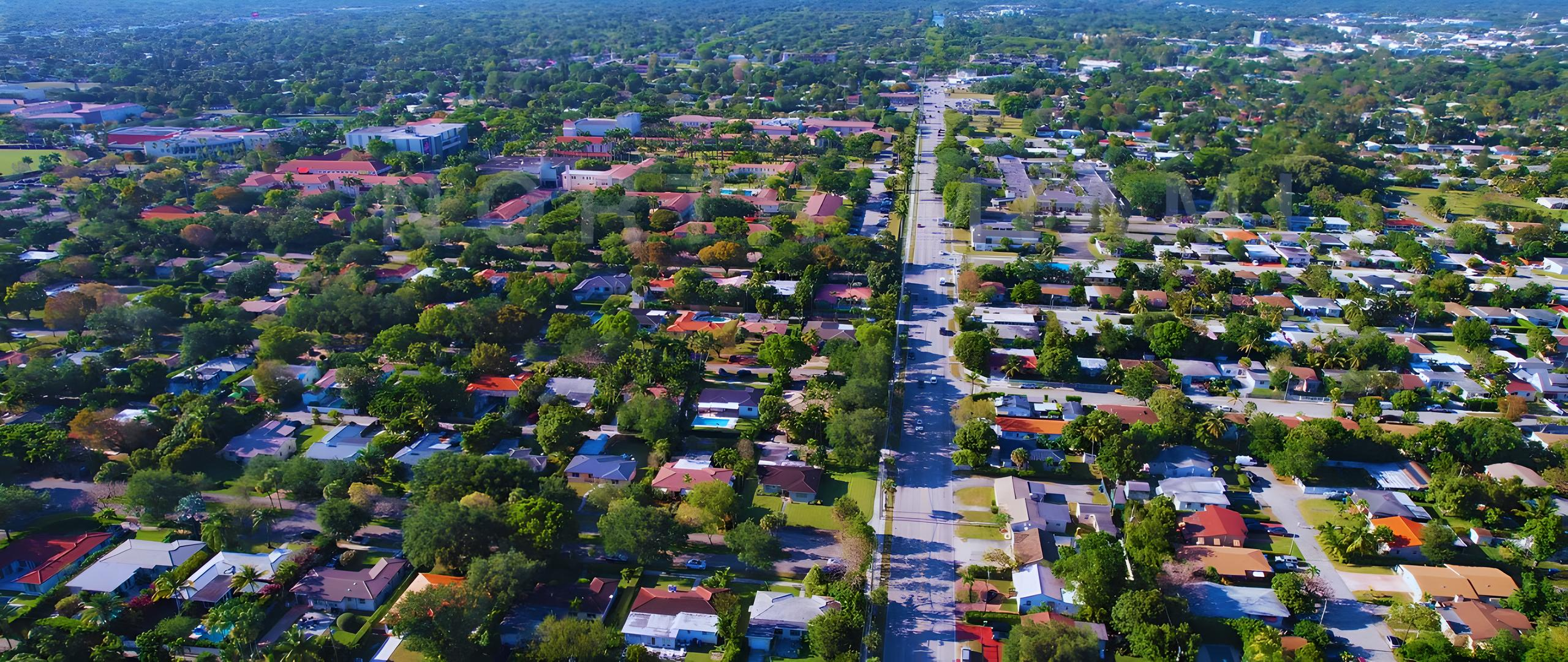
North Miami, Miami, Florida - EVERYTHING You Want to Know
Hop on this virtual journey across the best of North Miami. By the time you're throug...
.png)
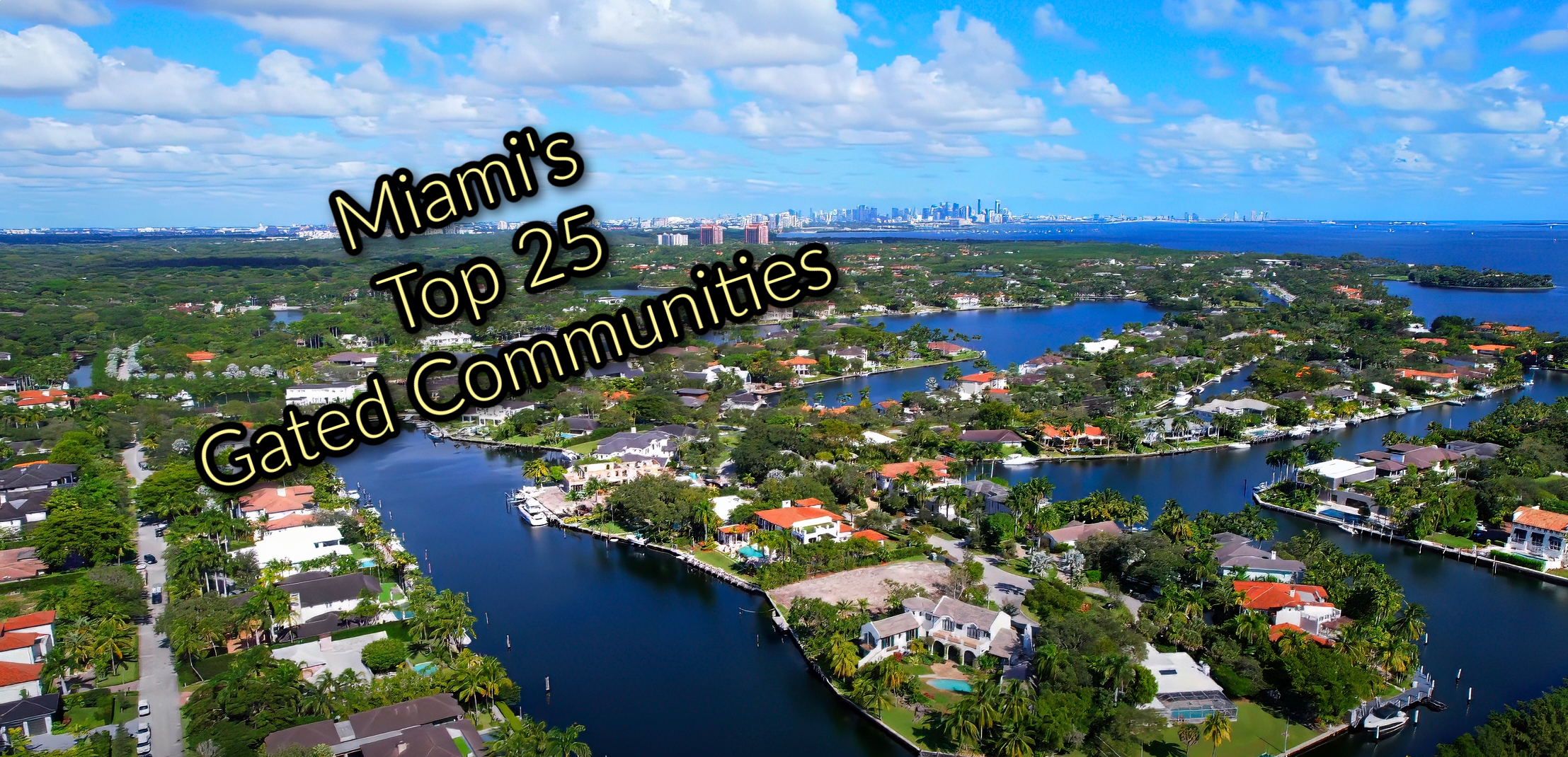
The Ultimate Guide to Miami-Dade's Top 25 Gated Communities for Single-Family Homes
Discover Miami's top gated communities in this essential guide for luxury home buyers...


Miami's BEST Restaurants in EVERY Neighborhood
Check out the absolute BEST restaurants in every neighborhood of Miami, including the best...
Selling Your Home?
Who are we?
We are the ALL IN Miami Group out of Miami.
We are Colombian, Filipino, Cuban, German, Japanese, French, Indian, Syrian, and American.
We are Christian, Hindu, and Jewish.
We are many, but we are one.
We sell luxury homes in Miami, Florida.
Although some of our clients are celebrities, athletes, and people you read about online, we also help young adults find their first place to rent when they are ready to live on their own.
First-time buyers?
All the time!
No matter what your situation or price range is, we feel truly blessed and honored to play such a big part in your life.